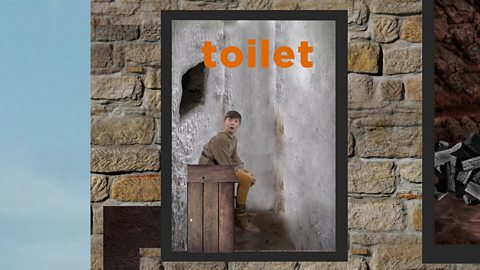
Castles were built for powerful people to live in and stay safe.
In this article you can learn:
- How people kept castles safe
- How enemies attacked castles
- Features of Caerlaverock Castle
- The impact of cannons on castle building
This resource is suitable for Castles topics for primary school learners.
Find out how people kept castles safe and how enemies attacked castles.
When did attacking and defending castles begin?
In the 1100s, King David I of Scotland wanted to let everyone know that he was the most powerful man in the land. Building lots of large, strong castles was a great way of showing everyone that he was boss.
There were lots of families or clans that didn’t want him as their king so they came up with clever ways to attack his castles.
The King’s castle builders had to keep coming up with new ideas to make their castles stronger and safer. This continued for hundreds of years after King David's reign.
How to defend a castle
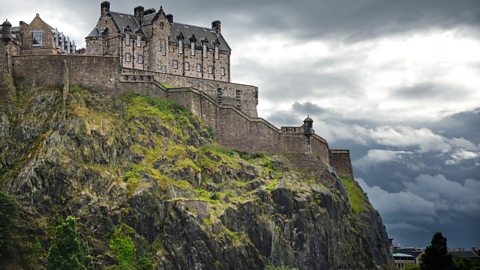
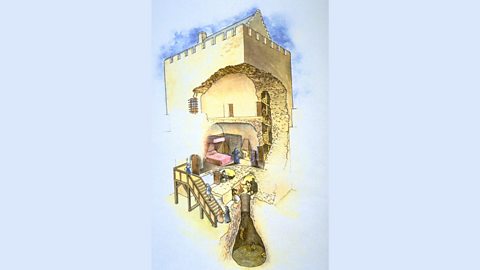
Image caption, Building up high
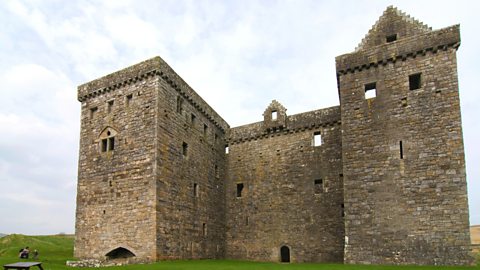
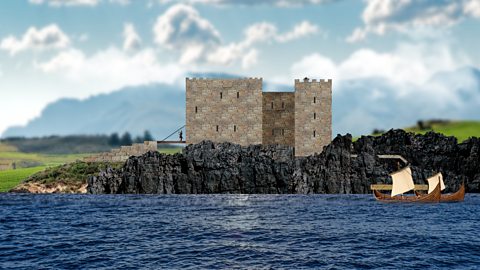
Building a castle up high made it difficult for enemies to get to the castle. Some castles were built on natural rocks and cliffs like Edinburgh Castle (above). Some other castles, like Duffus Castle in Moray, were built on man-made mounds.
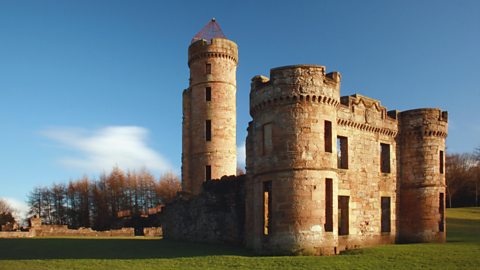
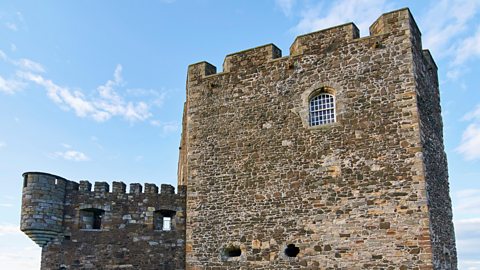
1 of 8
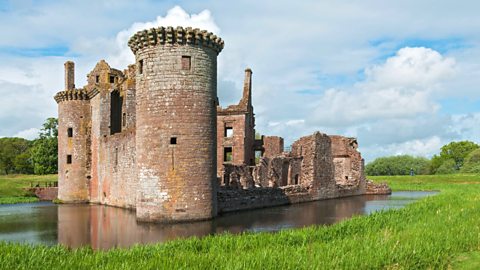
Defending Caerlaverock Castle
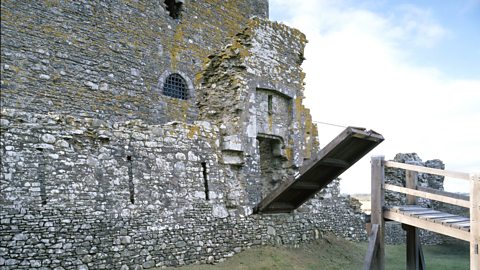
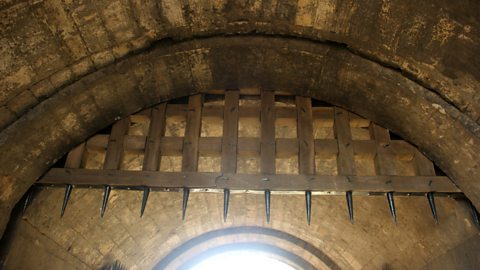
Look at this photo of Caerlaverock Castle in Dumfries and Galloway. It is a ruin now but can you spot which parts of the castle made it harder to attack?
Click on the labels to get more information about each feature.
With help from pupils from Brownhall and Caerlaverock Primary Schools, find out more about the history of Caerlaverock Castle.
A film about the history of Caerlaverock Castle near Dumfries.
How did cannons bring the time of castles to an end?
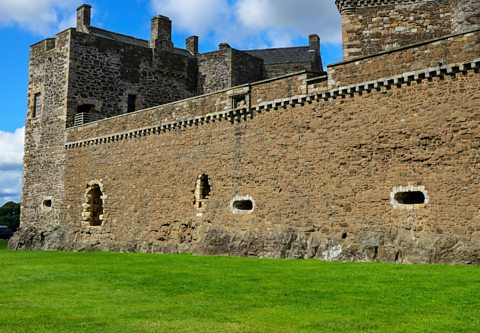
From the early 1400s, gunpowder and cannons changed the way castles were designed.
For example, narrow arrow slits were replaced with wider gunloops. These allowed defenders to shoot cannon balls out of the castle towards the attackers.
Attackers used cannons too. Cannons eventually became so powerful that castles couldn't defend against them any more and the time of castles came to an end.
Test your knowledge
Build a castle
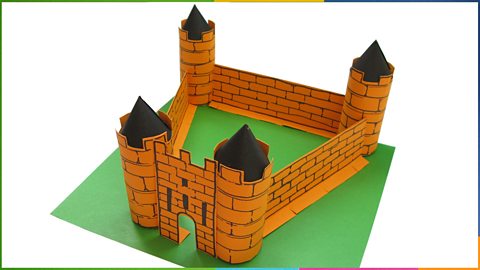
Using paper and other arts and crafts materials design your own The medieval times or Middle Ages describe a period of time in history. The medieval period lasted from around the year 500 AD to 1500 AD castle.
Some features you might want to think about for your castle:
- drawbridge
- towers
- battlements
- arrow slits
Make paper fringes - strips and tabs. revision-guide
Learn how to use paper tabs to help your castle stand up.
More on Castles
Find out more by working through a topic
- count7 of 16

- count8 of 16
- count9 of 16
- count10 of 16