What is a lifestyle?
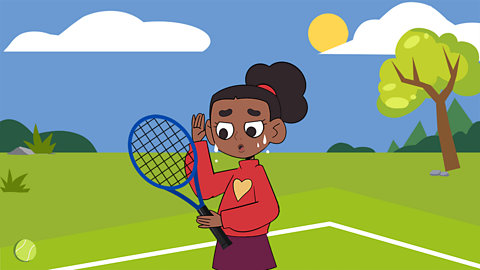
Keeping your body healthy is very important.
What we do and what we eat can make our body healthy or unhealthy.
These decisions make up a person's lifestyle. A person's lifestyle is the way that they choose to live.
In this guide, we will explore the effect of diet, exercise and drugs on our bodies.
Watch: Staying healthy
Humans need several things in order to stay healthy such as:
- a balanced diet
- regular exercise
- enough sleep.
Learn more about healthy living and the effects of diet and exercise.
Narrator: What healthy living is really all about is making sure that you’re in good shape.
Supposing when you needed exercise, you just sent your left leg to go off for a run. It wouldn’t keep you very fit would it?
Sometimes we’re so busy thinking about things with our heads, that we forget all about our bodies.
Body: Hey! What about me! I’m thirsty! I need to go for a run! Can you hear me?
Narrator: For a body to work properly, all the different parts need to be working properly. It needs a balanced diet, of course, and exercise, and enough sleep.
Sleep is very important for the brain and the whole body. It’s a bit like charging your batteries properly. Life an be rather difficult if your batteries aren’t charged…
But if you look after yourself you can feel great.
Fascinating facts
Exercising regularly has been found to benefit not only your physical health but your mental health too.
Exercise can reduce your risk of developing major illnesses.
Fish, seeds and nuts contain lots of omega-3, a fatty acid containing nutrients which support brain and body health and development.
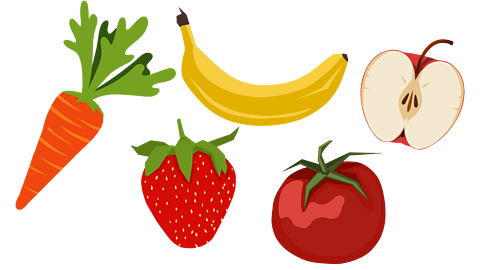
The NHS recommends that children eat five portions of fruit and vegetables every day to support growth and maintain a healthy diet.
We need to receive vitamins A, B, C and E regularly, as well as zinc, iron and selenium, as these help you keep the immune system strong.
Eating and drinking lots of calcium, which we get from milk, keeps our teeth and bones healthy and strong.
Antibiotics like penicillin work by killing bacteria cells. They can cure many bacterial diseases that would previously have killed people.
Painkillers like paracetamol do not fight infection but block pain signals from reaching the brain.
What does a healthy diet look like?
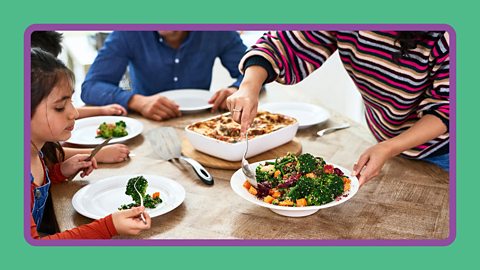
Humans need to have a healthy diet. A healthy diet is one that provides your body with the nutrients it needs to function at its best.
It involves consuming a variety of foods in the right amounts.
Fruit and vegetables
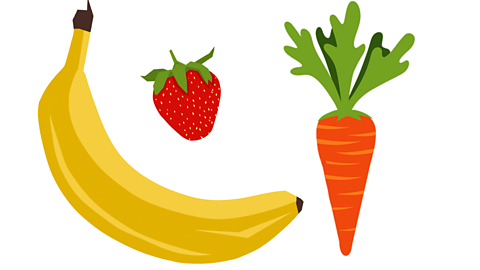
Fruit and vegetables are a good source of vitamins, minerals and fibre.
We should aim to eat at least five portions of a variety of fruits and vegetables every day.
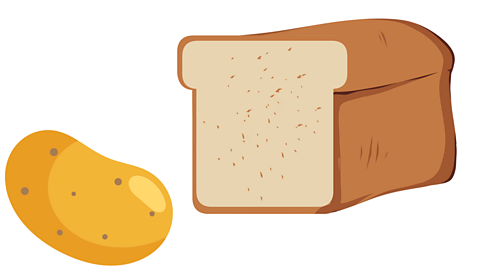
Carbohydrates
Carbohydrates (sometimes called starchy foods) provide the body with the energy it needs.
Potatoes, bread, rice and pasta are all examples of carbohydrates and should make up just over a third of the food we eat.
Wholegrain varieties, such as whole wheat pasta and brown rice are particularly good for our bodies.
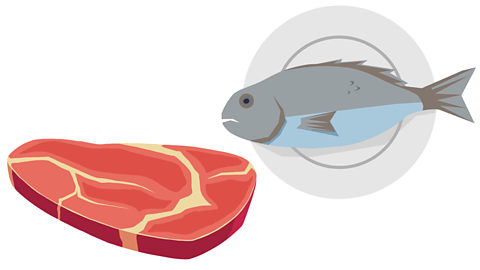
Proteins
Proteins build and repair muscles, bones and tissues.
Fish, meat, and pulses such as beans, peas and lentils are examples of proteins and should make up about a fifth of the food we eat.
We should try to eat less red and processed meat like bacon, ham and sausages.
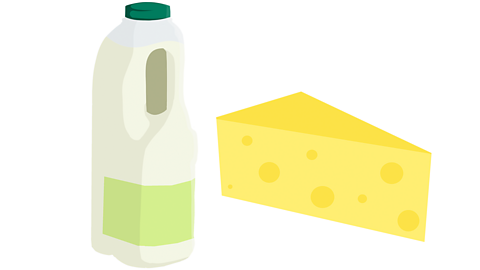
Milk and dairy
Milk, cheese, yoghurt and fromage frais are good sources of protein and some vitamins.
They are also an important source of calcium which helps keep our bones healthy.
Choosing semi-skimmed, skimmed or 1% fat milk, reduced-fat cheese or plain, low-fat yoghurt is particularly healthy.
Fats
Fats provide the body with energy but should be eaten in very small amounts. There are three types of fat:
Saturated fats (Found in red meat, full fat dairy products). These are not as good for the body and can cause cholesterol to increase.
Trans fats (Found in processed foods such as fried goods). These are bad for the body and is linked to an increased risk of heart disease.
Unsaturated fats (Found in avocados, nuts, fish and olive oil). These are good for the body and can help lower cholesterol and improve heart health.
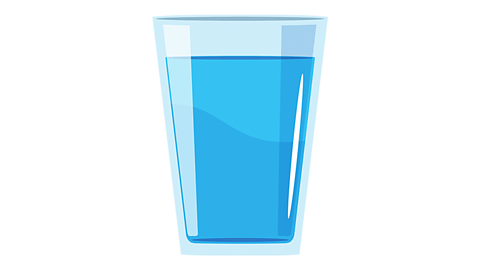
Water - Water is important as it helps the body to absorb nutrients, flush out waste products and supports brain function. It is recommended that you drink 6 to 8 glasses a day.
Sweet treats - Sweet treats, such as chocolate, cakes and biscuits, sugary soft drinks, butter, ghee and ice cream are not needed in our diet, so should be eaten less often and in smaller amounts.
Exercise
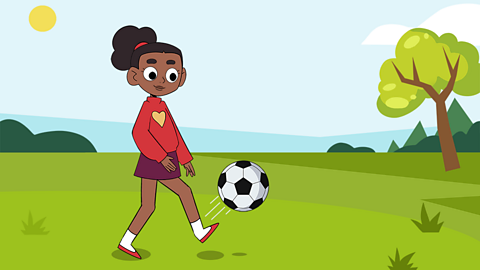
The NHS recommends that young people do around an hour of exercise per day. The benefits of this include:
- having more energy
- keeping your heart, lungs and muscles healthy
- greater flexibility and strength (meaning fewer injuries)
- being more able to fight off infections
- not becoming overweight
Slideshow: The effects of diet, exercise and drugs on the body

Image caption, Exercise
Young people need to do around an hour of exercise per day, if they are able, as there are lots of benefits for your health.

1 of 4
Sleep
It is important to have plenty of sleep to give your body time to recover and recharge for the next day.
Most people need around eight hours of sleep per night in order to wake up feeling refreshed and recharged.
A lack of sleep may lead you to feel a little grumpy the next day, lose concentration and it may have a negative impact on your mental wellbeing and overall health as you get older.
Did you know?
It is recommended that children and teenagers sleep for between 8 and 11 hours a night.
Drugs and medicines
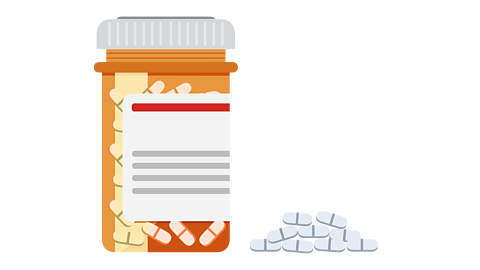
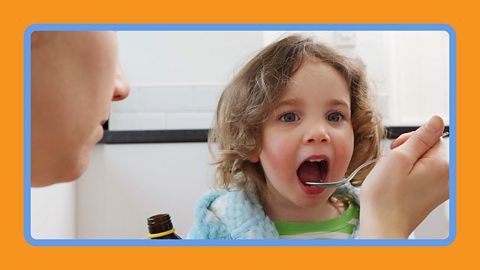
Drugs are chemicals that change the way our body or brain functions.
There are three main types of drugs.
- Stimulants are drugs which make you feel more awake and alert. These include caffeine, which is found in coffee and energy drinks and nicotine, which is found in cigarettes and vapes.
- Painkillers are drugs which dull pain. These include paracetamol and ibuprofen.
- Depressants are drugs which make you feel calm and drowsy. These include alcohol.
Some drugs are legal. This means that people at a certain age are allowed to purchase, sell or consume them. This includes cigarettes and alcohol.
Some drugs are illegal. They change the way our brains and bodies work in an unhealthy or dangerous way. It is against the law to purchase, sell or consume any illegal drug.
Watch: The effect of different drugs
Learn about drugs and medicines.
Narrator: Drugs change how the body works. Most drugs are used to help someone get better if they’re ill, and we call them medicines.
Exactly how drugs work is complicated. The effect they have can change a lot depending on how much is taken.
That’s why it’s important it’s given to you by a responsible adult.
Some drugs like cigarettes and alcohol can be bought in shops, but that doesn’t mean they’re safe, in fact they can be very bad for you.
Cigarettes for instance, can stop your lungs working properly. Besides if someone starts smoking they usually find it difficult to stop… because nicotine, the drug that’s in cigarettes, slightly changes the way the brain works, and urges the body to get more of it.
Did you know?
Misusing illegal drugs can be dangerous for three main reasons:
- You could become addicted to the drug.
- The drug could cause you physical and psychological harm.
- Drug abuse can have a negative effect on your quality of life and relationships.
Important words
Carbohydrates – Carbohydrates provide the body with the energy it needs. Carbohydrates can be found in potatoes, bread, rice and pasta.
Diet – The types of food we eat.
Drugs – Chemicals that change the way our body or brain functions. Drugs can be taken legally for medicine, or illegally for recreation.
Exercise – Any activity that needs a physical effort, such as playing football.
Healthy – To be in a in a good physical or mental condition.
Lifestyle – A person's lifestyle is the way that they choose to live.
NHS – The National Health Service, the UK's healthcare system.
Nutrients – Substances that are found in food and help an organism to grow and reproduce.
Proteins – Proteins build and repair muscles, bones and tissues. Proteins can be found in fish, meat and pulses.
Saturated fats – Saturated fats are bad for the body and can cause cholesterol to increase. They can be found in red meat and full fat dairy products.
Trans fats – Trans fats are not very good for the body and are linked to an increased risk of heart disease. They can be found in processed foods such as fried goods.
Unsaturated fats – Unsaturated fats are good for the body and can help lower cholesterol and improve heart health. Unsaturated fats can be found in avocados, nuts, fish and olive oil.
Activities
Activity 1 – What's in our food?
Click on the pictures below to find out what is contained in the foods and if they are healthy or unhealthy.
Activity 2 – A healthy lifestyle
Activity 4 – Sort the cards
New game! Horrible Science: Stinky Space. game
Join Pipette on her epic mission and learn some revolting facts about space along the way.

More on Animals including humans
Find out more by working through a topic
- count1 of 11
- count2 of 11
- count3 of 11
- count4 of 11