Vertebrates
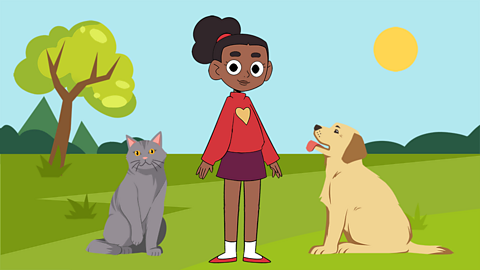
Vertebrates are animals that have a spine (backbone) inside their body.
The spine is made up of small bones called vertebrae. You have a backbone and so you are a vertebrate.
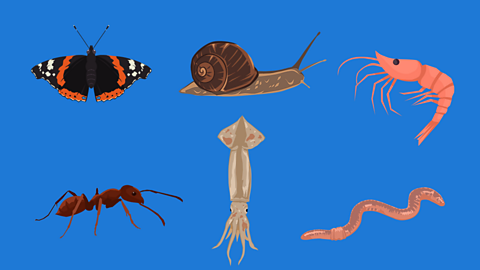
Other organisms, like spiders and snails, that don’t have a backbone are called invertebrates.
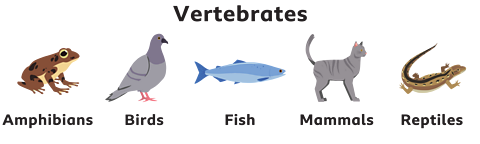
There are five main groups of vertebrates:
Watch: What are vertebrates?
Fran: Here at the farm there are lots of different animals.
They've got a chameleon, a bearded dragon, lots of chickens, goats, cows, alpacas and even Bluebell, the bunny rabbit.
Even though they look really different, all of these animals have one thing in common.
They're all vertebrates.
And that means they all have a spine inside their body.
They also have an internal skeleton made up of either bones, like us, or cartilage, like sharks.
And this internal skeleton helps to support their body, keeping it in shape, helping it move, and protecting it.
The backbone which is also known as the spine - is made up of pieces of bone called vertebrae.
Vertebrates can be fish, reptiles, mammals, birds and amphibians.
This cockroach is called a hissing cockroach and it's a type of invertebrate.
Invertebrates have no backbone.
Insects, spiders and worms like these are all invertebrates.
Some invertebrates, like snails, have shells to protect them.
And others, like spiders, crabs and these cockroaches, have what's called an exoskeleton, so a hard outer layer that protects their soft bodies.
Invertebrates like worms and octopuses have no backbone, exoskeletons or shells.
Instead they have a hydroskeleton, it's full of fluid.
So let's see what my investigators have learnt about vertebrates.
Child: I am a vertebrate.
That means I have a backbone.
My backbone supports my body and for most people it helps keep us upright so we can stand, walk and run.
My ribcage protects my organs like my heart and my lungs.
My joints help me move so I can climb. I can swing. And I can jump!
Fran: That's right, and the reason you can do that is because, us mammals, we have an internal backbone. Just like fish,amphibians, reptiles and birds, we are all vertebrates.
Fascinating facts
There are a lot less vertebrates on our planet than invertebrates.
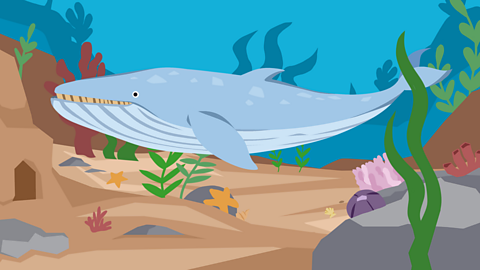
The largest animals on the Earth are vertebrates, like the blue whale.
The largest vertebrate group are fish, of which there are around 32,000 different species.
All vertebrates use their backbones for movement and to support their bodies.
Fish are the oldest known vertebrates, they've been around for millions of years.
Most vertebrates have backbones made of bone, but some fish, like sharks, have backbones from cartilage.
The main groups of vertebrates
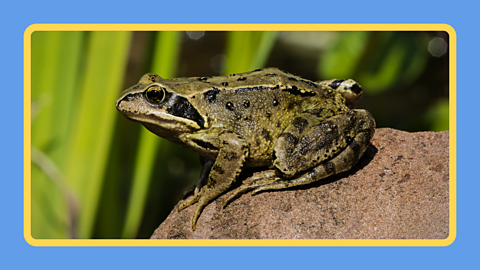
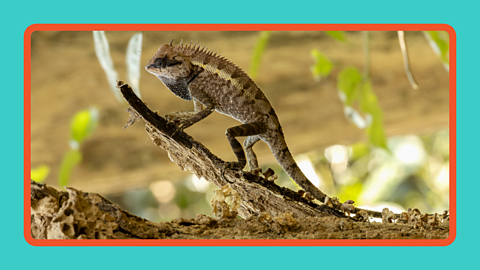
Image caption, Amphibians
Amphibians, like frogs and newts, are born with gills then develop lungs. They live in land and in water, are cold-blooded and lay their eggs in water.
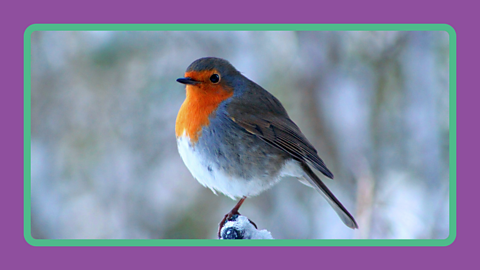
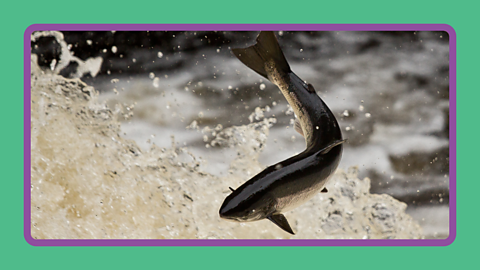
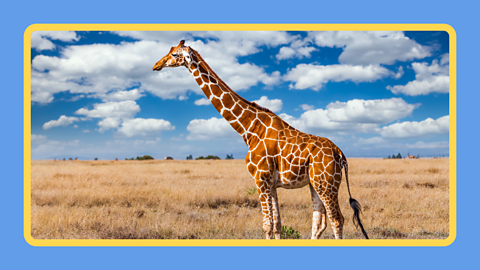
1 of 5

Did you know?
Vertebrates have an adaptive immune system which attacks diseases and infections.
An immune system can remember those infections and how to fight them in the future. This is how vaccinations work.
Vertebrates are the only animals that have this ability.
Differences and similarities
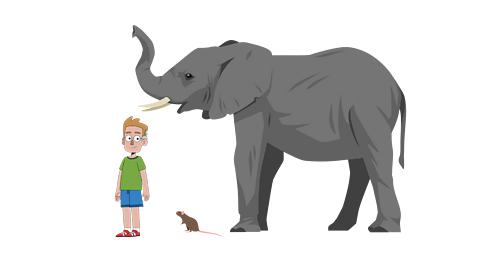
Different species of animals, including humans, can look and behave very differently from each other.
Lions live on land, eagles can fly and sharks live in water. Rabbits eat plants, and jaguars hunt other animals for their food.
Some are large, like an elephant, and some are much smaller, like a mouse. But they all have a backbone which makes them vertebrates, just like you!
Important words
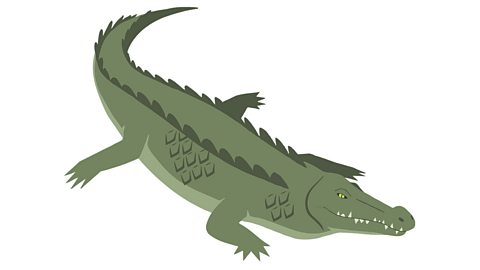
Backbone – A series of bones that extend from the base of the skull to the tailbone.
Cold-blooded (ectothermic) – Animals which are hotter or colder depending on the temperature around them. Reptiles, fish and amphibians are cold-blooded.
Exoskeleton – A hard outer layer that invertebrates have to protect themselves.
Invertebrates – Animals that do not have a backbone (spine).
Vertebrates – Animals that have a backbone (spine).
Warm-blooded (endothermic) – Animals which have a steady and warm body temperature, no matter what the outside temperature is. Birds and mammals are warm-blooded.
Activities
Activity 1 – Tap and find
Activity 2 – Quiz
Activity 3 – Sort the vertebrates
New game! Horrible Science: Stinky Space. game
Join Pipette on her epic mission and learn some revolting facts about space along the way.
More on Animals including humans
Find out more by working through a topic
- count2 of 11
- count3 of 11
- count4 of 11
- count5 of 11