What are invertebrates?
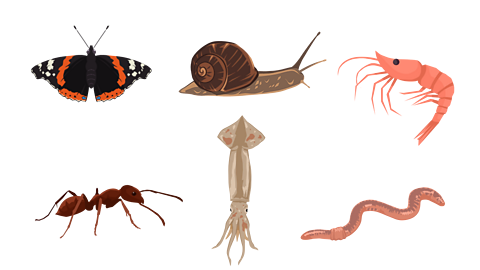
Invertebrates are animals that don’t have a spine or backbone inside their body.
Minibeasts like woodlice and centipedes are all small invertebrates but not all invertebrates are small.
Other organisms, like you, have a backbone and are called vertebrates.
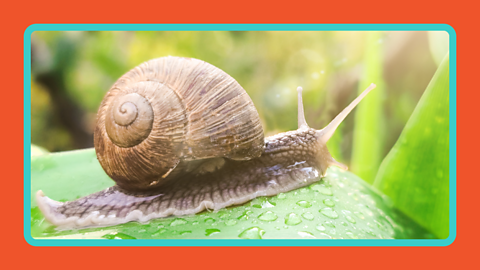
To protect themselves, some invertebrates, such as snails, have shells.
Others have a hard outer layer called an exoskeleton. The first part of this word ‘exo-‘ means outside, so an exoskeleton is an ‘outside skeleton’.
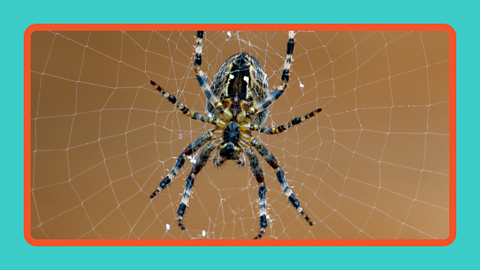
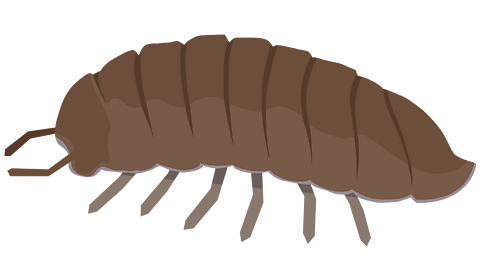
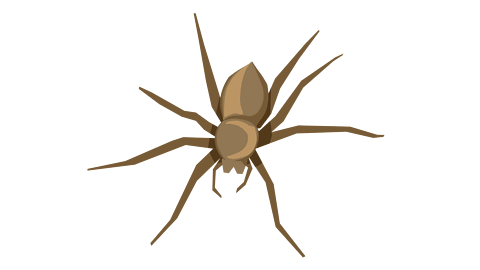
Ants, woodlice and spiders all have exoskeletons to keep them safe.
Can you imagine a bendy straw? Just like a bendy straw can move and twist easily because it doesn't have a stiff structure inside it, invertebrates can move their bodies even though they don't have a bony skeleton like we humans do.
Watch: Discover more about invertebrates
Learn about blob and their invertebrate friends.
Meet Blob. He is an invertebrate.
This means that he has no backbone
…or spinal column.
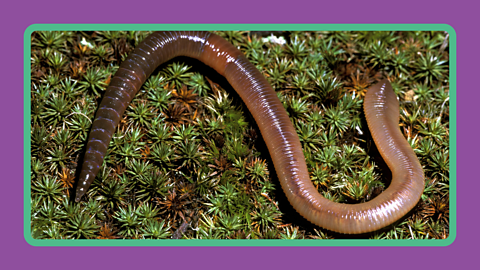
Blob is a very simple invertebrate, just like worms or jellyfish.
Over 96% of all the animal species on Earth are invertebrate.
They can be tiny like an insect or huge like the giant squid.
Fascinating facts
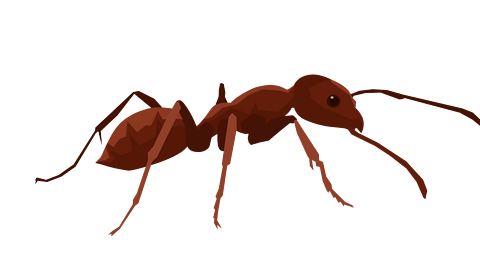
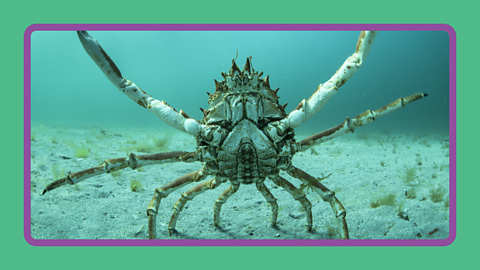
The largest group of invertebrates are the arthropods, which includes insects, spiders and crustaceans.
There are over a million described species of insect making them the most diverse group of animals on Earth.
The majority of animal species on our planet are invertebrates. There are lots more of these than vertebrates.
Scientists are unsure how many species of invertebrates there are, but it could be as high as 30 million individual species.
Invertebrates can be very small, like mites which are so small that you need a microscope to see them fully.
Invertebrates first appeared over 540 million years ago. We can see their evolution from fossils.
Many invertebrates, like butterflies, go through a metamorphosis which is a process where they change form when they reach adulthood.
The five main groups of invertebrates
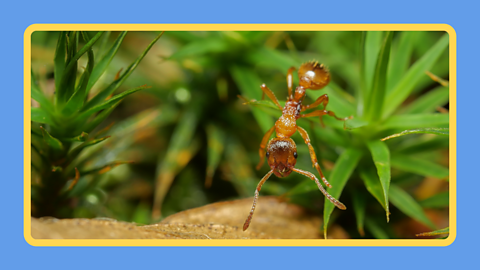
Image caption, Insects: Ants, beetles, and flies
Ants are insects which live together in large groups called colonies. Ants have a hard outer layer called an exoskeleton to protect them from predators.
1 of 5
Did you know…?
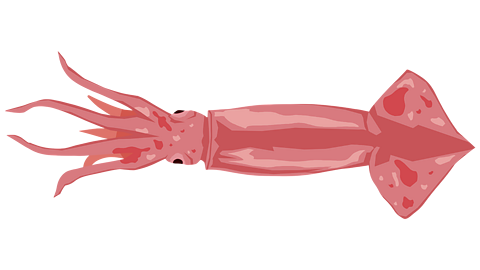
The largestinvertebrates is the colossal squid. They live in very deep areas of the Southern Ocean.
The combined length of their body and tentacles can be anything up to 14 metres. Despite their massive size, colossal squid can be prey for sperm whales and sleeper sharks.
Colossal squid were first discovered in 1925. They were not filmed in their natural habitat until 100 years later in 2025 by a team led by a scientist from the University of Essex.
Important words
Backbone – A series of bones that extend from the base of the skull to the tailbone.
Crustaceans – Invertebrates mainly found in water, such as prawns, crabs and lobsters, or occasionally on land such as woodlice.
Exoskeletons – A a hard outer layer that many invertebrates have to protect themselves.
Invertebrates – Any animal that does not have a backbone (spine).
Minibeasts – Small invertebrates like insects, crustaceans, millipedes, centipedes and arachnids.
Vertebrates – Animals that have a backbone (spine).
Activities
Activity 1 – Identifying invertebrates
Activity 2 - Quiz
Activity 3 – Hunting for invertebrates
Next time you take a walk with a grown up, around your garden, the countryside or your local park, make it into an invertebrate hunt. See how many you can find.
Remember that invertebrates are often small minibeasts.
You might need to look very carefully under stones, in trees or bushes, or under fallen leaves.
You could record your observations by:
- Taking photographs
- Keeping a tally chart of all the different invertebrates you saw
- Drawing the invertebrates that you find
Activity 4 – What is an invertebrate?
New game! Horrible Science: Stinky Space. game
Join Pipette on her epic mission and learn some revolting facts about space along the way.
More on Animals including humans
Find out more by working through a topic
- count3 of 11
- count4 of 11
- count5 of 11
- count6 of 11