Overview of Strawberries by Edwin Morgan
The speaker in this poem is recounting a memory of an afternoon spent with a lover, eating strawberries in the sun.
The memory is vivid as the strawberries, the colours, the weather and the setting are all described in strong and sensual detail. The identity of the speaker's lover is not made clear. There are clear indications however that his lover is another man.
This poem deals with themes of:
- love
- memory
You can read Strawberries by Edwin Morgan on the Scottish Poetry Library website.
Looking for some quick revision? Try an interactive quiz for National 5 English.
Context
There are clues throughout the poem that the couple portrayed are both men. This is possibly not made clear because for much of the poet’s life, and specifically in the 1960s when this poem was written and published, homosexuality was still illegal in Scotland and Morgan was gay. This adds a poignancy to the poem, as does the reflective, longing tone of the speaker.
Morgan states in an interview given in 1988:
Strawberries’ came out of eating strawberries on that French window there in fact (points), from which you can see the Kilpatrick hills, so that just comes from life if you like. It just happened really pretty well exactly as it is there.
He tells the interviewer that the poems are all about his long-term partner of the time, John Scott. That said, each reader will interpret what a poem means to them in their own way. Everyone's response is different. While Strawberries may be a personal reflection of Morgan’s on a memory that is important to him, the reader can separate the poet from the speaker and words of the poem and think about how they contribute to wider themes or feelings.
Form and structure of Strawberries
The only capital letter in the poem is at the very beginning, and the poem has no further capitals, punctuation (not even a full stop at the end) or regular metre at all, suggesting a direct stream of thought, without boundaries or rules.
The poet does use A poetic device where a sentence continues beyond the end of the line or verse. to keep the short lines flowing, reflecting the spontaneous rush of memory which comes to the speaker's mind. However, the natural flow of the poem also seems to match the relationship described, which seems comfortable, at ease, joyous and free.
The free nature of the poem also suggests that love itself should not have to follow rules or have boundaries, which could be read as being in deliberate contrast to the fact that gay relationships, like the one portrayed in the poem, were illegal at the time in Scotland.
There are three sections in the poem:
- the first longer section where they share the strawberries, "not hurrying the feast/ for one to come", which takes in the whole scene of the lovers enjoying the fruit together
- the second section, of six short lines, widens the scope of the scene, to the "summer lightning on the Kilpatrick hills" and brings in a brooding, ominous note about the oncoming storm
- the final line, which stands alone, where we see the plates abandoned as the couple's passion takes over, but also the washing away of the memory of this afternoon: "let the storm wash the plates".
Section I
Lines one to ten
The A way of speaking or writing that exaggerates for effect. of the first words of the poem suggests this is a very important and clear memory to the speaker.
There were never strawberries/like the ones we had…
As there is no punctuation in this poem, the line breaks and A poetic device where a sentence continues beyond the end of the line or verse. become very important as certain words are deliberately placed at the beginning or the end of lines for emphasis. In this case, the word "strawberries" at the end of the opening line highlights that the strawberries are unique in the poet’s memory but immediately the reader wonders if there is more to it.
The word "we" introduces the fact that this experience is shared, and this is the first clue that it is this relationship that is being remembered, as part of the wider scene.
The memory is clear, vivid and is made more significant by the word "sultry" in line three which suggests the heat of the day, and also has overtones of sexual attraction. It is clear now that the strawberries are only one part of the memory.
sitting on the step/of the open french window/facing each other
The Marked by alliteration - the repetition of a sound at the beginning of consecutive words, such as ‘the big, bold, blue sea' and Alliteration or repetition of s sounds, producing a hissing sound like that of 's' or 'sh'. of the repeated ‘s’ in line four ("sitting on the step") draws attention to the detail of the scene. Morgan uses a similarly detailed approach in his A phrase coined by Edwin Morgan to describe poems which capture an event like a snapshot. , where he builds up the layers of detail in a scene to provide the reader with a complete picture. This is a personal memory rather than an observational snapshot, but the picture is drawn just as clearly for the reader.
The French windows feel summery and exotic and the fact that they are open reminds us of the heat, which is important to the atmosphere created in the poem. This openness can also be a metaphor for the two people here being very open and relaxed with each other in this moment.
The first image of the couple is "facing each other", creating a symmetry here with them, which is continued through the poem. There is also intimacy as they are not awkward or embarrassed to be right in front of each other.
Through the use of ‘your’ we understand that the speaker is directly addressing the other person in the poem, and this again suggests a closeness. As well as facing each other, they are sitting incredibly close together ("your knees held in mine"). The image of how these two lovers are positioned is now very clear in the minds of the reader.
The speaker then returns to the strawberries of the title and in a poem where every word counts, we are told the plates are blue.
the blue plates in our laps
The use of colour in the poem adds to the sensory detail and makes the picture vivid, almost exaggerated as the blue contrasts strongly in the reader's mind with the red of the strawberries. This level of detail again highlights how this scene is ingrained in the speaker's memory. We are again aware this poem is not really about strawberries, but about the relationship.
The next line, "the strawberries glistening" provides that image and contrast in colour with the blue plate, and the description ‘glistening’ adds richness to the picture but also suggests something magical or full of promise.
This idea of anticipation, which Morgan develops over the coming lines, connects the strawberries and the lovers. The "hot sunlight" adds to the anticipation perhaps but the ‘sunlight’ adds a yellow colour and extra brightness to the already vivid and colourful description of the scene.
Lines eleven to twenty-four
we dipped them in sugar/looking at each other
The first act here, in line eleven, is dipping the strawberries in sugar, to make them even sweeter. The following line seems to be happening at the same time, they are looking at each other which adds to the feeling of anticipation. ‘Look’ would suggest a glance but ‘looking’ suggests a held gaze - they don’t ever look away, which is intense and sensual. They are lingering over the pleasure of the strawberries, which are described as a ‘feast’. This word has connotations of indulgence, excess, luxury, and we are told there is another ‘one to come’. Again this hints at the anticipation of sexual pleasure to follow. The two things – eating the strawberries and making love - are becoming synonymous now in the poem and the sexual tension between the speaker and lover is palpable.
The plates are put down, but the word ‘together’ suggests the previous closeness is still there. This is continued in line seventeen, as is the symmetry we have seen before, the "two forks crossed" subtly suggesting a same sex couple and the fact that they are crossed suggests they are joined or entwined in some way, as are the lovers.
and I bent towards you/sweet in that air
Again the speaker addresses his lover directly, clearly suggesting a kiss, as though they are remembering it together. The word ‘sweet’ reminds us of the strawberries and the sugar, and again suggests that these are actually representations of the love they feel for each other.
The line breaks and lack of punctuation allow this poem to describe a memory of an event; the images are fleeting and incomplete, which is often how memory works. What is left is an impression, and in this poem it is a powerful impression of a moment full of love, represented by the strawberries, the heat, and this intense connection. In line twenty-one, "abandoned" could refer to the poet or his lover in his arms, but what is more important is the feeling of this phrase which suggests that nothing else matters to them other than their connection.
The phrase "like a child" is important and stands out, as it suggests innocence, simplicity and the lovers' complete trust in each other. Given the sexual undertones of the previous lines this is a deliberate contrast. The lovers would be acutely aware of the dangers of expressing their love in public, as homosexuality was illegal in Scotland at the time of this poem. However, it could be interpreted that in this private moment they have abandoned all of this fear, and their love and connection can be expressed with an almost child-like openness.
The final couple of lines in this long first section have the couple kissing - a kiss so memorable the speaker can remember the taste of strawberries from his lover’s mouth. There are lots of sensory references in this poem, especially touch, taste and the sight of vivid colours which add layers to the experience and make it more powerful. The section ends with a plain appeal from the speaker to the lover, in simple language:
lean back again/let me love you
The tense has shifted from past tense to present tense, suggesting the memory is so strong for the speaker he is reliving it. He directly addresses his lover again, asking him to lean back, to kiss him again, to be there in that moment again. The appeal of "let me love you" is also a wistful attempt to reclaim this memory and hold on to it. To emphasise this line, making it even more powerful, the poet ends this long, pent-up section on this note.
Section II
The second section is much shorter, six short lines, and opens with another appeal:
let the sun beat/on our forgetfulness
The memory of this event, so clearly drawn from the sensory impressions in the first section, is not complete - the speaker here reflects on this wistfully. The speaker is imploring the sun here to shine on things that he has forgotten, to complete the picture but there is also the suggestion that the couple forgot how strong their love was; that this memory is all that remains of their relationship.
The eating of the strawberries – the core memory which forms the main event of the poem - has just taken an hour, yet it is such an important memory to the speaker that it is recalled in such vivid detail. These lines reinforce the sense that the moment is over, though, just as the heat of summer often ends or breaks with a thunderstorm.
The reference to place – "the Kilpatrick hills" - is a common device in Morgan's poems and adds an authenticity and extra layer to the memory, making it very specific. The reference to lightning adds an ominous tone as well, though it is softened by the addition of ‘summer’ and the fact that there is no mention of a rumble of thunder. The lightning also makes us think of the electricity between the couple, suggesting that the brooding intensity between them, that has built throughout the poem like the incoming storm, is reaching a peak.
Section III
This is confimed in the final line of the poem, which stands alone:
let the storm wash the plates
This is the third appeal beginning with ‘let’ in this latter part of the poem, the first at the end of the opening section: "let me love you" (line 26) was clear, simple, and impassioned; "let the sun beat on our forgetfulness" (line 27) suggests a frustration at the memory, at something lost; and "let the storm wash the plates" (line 33) suggests a letting go and an admission that this memory, and the relationship, is in the past.
The plates have been abandoned in the couple's passion, the implication is that they have gone to bed together, and the built-up sexual tension of the poem is therefore released in this final line.
The line standing on its own adds to this sense of release but also the finality of the memory and the relationship. The "summer lightning" from before has turned into a ‘storm’ which feels more severe and ominous. The image of the storm rain washing the plates suggests a clearing, a refreshing, as often a storm signals the end of a good spell of weather. This is also a change from the sun we had previously - the contrast in mood is clear. This last line is therefore bittersweet, reflecting both the passion of the couple and the loss of the memory.
Video: What is repetition?
Three key lines towards the end of Strawberries begin with 'let', creating a repetition and emphasis. Watch this quick revision video to find out more about repetition.
What is repetition? How and why would you use it?
Repetition, repetition, repetition!
Repeating words or phrases can really, really help make an idea more memorable. Really!
“The soup was stirred and stirred until it thickened”
If we say “the soup was stirred until it thickened”, it just gives us the facts.
Adding some repetition tells us more. Repeating the word ‘stirred’ suggests just how much time and effort has gone into the cooking.
In his most famous speech, Martin Luther King repeats “I have a dream”
“I have a dream that my four little children will one day live in a nation where they will not be judged by the color of their skin but by the content of their character. I have a dream today… I have a dream that one day every hill and mountain shall be made low”
Every repetition of this line builds on the one that has come before, reinforcing his passion and emphasising each point he makes.
Repetition can also be effective in poetry.
In his poem Visiting Hour, Norman MacCaig writes about going to see his sick wife in hospital. As he walks through the corridor he writes:
“I will not feel, I will not feel, until I have to.”
MacCaig is determined not to let his feelings overcome him. The repetition helps tell us how hard he is trying to remain numb.
Why not try adding repetition to your writing?
If you like it, you can use it again, and again, and again.
What are the themes in Strawberries?
Love
The poem may be called Strawberries and describe eating strawberries, but it is about love and specifically the speaker's feelings for a lover. However, the sharing of the fruit and the pleasure of that also reflects the other pleasure of the poem, where they eventually exit the scene to make love.
The symmetry we see from time to time in the poem – "your knees held in mine"; "two forks crossed" – alludes not only to the idea that this is a same-sex relationship but that it is reciprocal, and that they both feel equally strongly. The intensity of this encounter is such that it is mirrored in the oncoming storm. As the speaker looks back on this afternoon, his time with this man is remembered fondly and passionately, and there is more than a little sadness that it has ended. Unlike Love which discusses the general concept of love more philosophically, this poem feels extremely specific in nature.
Memory
This poem is also about the nature of memory. The strawberries appear to be the catalyst for the rest of the memory coming forth, almost as if the speaker has tasted a strawberry that reminds him of this afternoon and his past love.
When we remember things, two things happen at once:
there is the reliving of the event itself which is evident here in the vivid detail – ‘"blue plates", "hot sunlight", "Kilpatrick hills’" - as well as the emotions from that time – "sultry afternoon", "not hurrying", "abandoned like a child".
there are also the feelings about this event now, looking back – "There were never", "let the sun beat/on our forgetfulness", "let the storm wash the plates".
In those feelings the speaker has now, we see loss and regret alongside his past love and joy, which makes the whole poem more poignant.
Comparisons with other poems by Edwin Morgan
In terms of theme, the closest of the Morgan poems to Strawberries is Love which also focuses on love, but in a different way. Love considers the emotion in a general, more abstract sense, and in all its forms, whereas Strawberries is a very personal account of a love the speaker himself has had.
Love can also be an aspect of what we call ‘the human condition’ (which is another way to say ‘what life is like’). If we think about this then all of the other Morgan poems deal with this in some way in their treatment of love, empathy and human connection:
- In the Snack-bar discusses the vulnerability of a disabled man who needs assistance
- Death in Duke Street also discusses the idea of people helping someone in need
- Glasgow Sonnet (I) focuses on vulnerability as well, albeit more in terms of wider social poverty. Using the form of a Petrarchan sonnet, most often used in love poetry, suggests the poet's love for his city and its people.
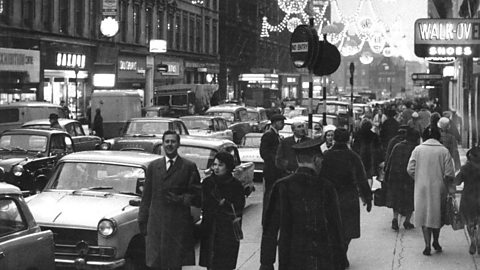
- Trio deals with the human condition in quite a pure form, as the happiness of three people is observed by the poet on Buchanan Street at Christmas.
Another similarity between the poems is the technique Morgan uses in his description – he builds up layers of vivid detail in the descriptions to create scenes and make it very clear to the reader what is going on. In Strawberries this is very connected to the senses, and the details come back to him one after another, in the act of remembering. In poems like Trio, or Death in Duke Street for example, there is no act of recall - the speaker is an observer, recording what is happening - but the tiny details allow the reader to imagine those scenes incredibly clearly.
Revise Strawberries by Edwin Morgan
Revise Strawberries and other poems by Edwin Morgan with interactive quizzes for National 5 English.
Quizzes - Edwin Morgan. quiz
Test your knowledge of the set texts by Edwin Morgan with interactive quizzes for National 5 English.

More on Edwin Morgan
Find out more by working through a topic
- count6 of 7
- count7 of 7

- count1 of 7

- count2 of 7