What is Refugee Boy about?
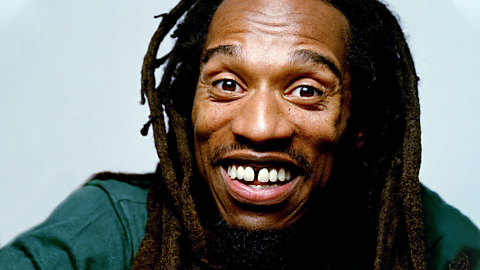
Refugee Boy was originally written as a novel by Benjamin Zephaniah and published in 2001.
It was adapted into a play by Lemn Sissay and published and performed in 2013.
Refugee Boy tells the story of boy called Alem. To protect him from the violence his family faces in Ethiopia and Eritrea, his father travels with him to the UK, then leaves him behind.
Whilst Alem tries to adapt to his new life as a A refugee is a person who has been forced to leave their country in order to escape war, persecution or natural disaster., his family’s past is revealed a series of A scene or chapter where a character remembers an earlier event that happened before the current point of the story..

Remember
In your exam you do not need to recount all the events in the plot. Focus on analysing when and why specific events happen.
Refugee Boy Plot overview
Timeline
This timeline shows 10 key moments from Sissay’s play Refugee Boy.
Activity
Scenes 1 - 5

Scene 1 is a flashback in which Alem and his father, Mr Kelo, are looking at the North Star.
In Scene 2, Alem wakes up alone in Mr Hardwick’s hotel in London. He is panicked and speaks in both A language widely spoken in both Ethiopia and Eritrea. and English: “Abetan yet alleh / Where is my father?” He finds a letter from his father explaining that he has left Alem there “until the fighting stops” between Eritrea and Ethiopia.
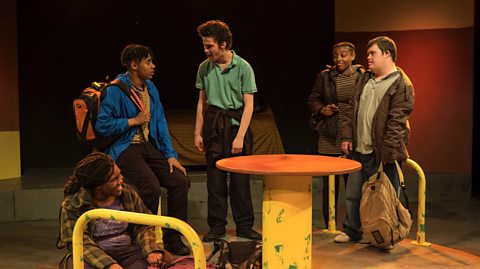
In Scene 3, Alem has been moved to a children’s home. He meets Mustapha, who is friendly towards him. He also meet Sweeney, who teases him and calls him “Ali” but warns that he will “slice” anyone who shortens his own name.
Scene 4 is set on the street. Alem and Mustapha are talking about cars and English slang words. Sweeney joins them. When Sweeney says that “family messes you up” and “family lies”, Alem disagrees and defends his parents. He accidentally insults Sweeney who becomes offended: “Woh, woh, woh… You calling my family sinners?”
In retaliation, Sweeney calls Alem “Refugee Boy” and says that all refugees are “poison” and “liars and thieves”. Sweeney hits Alem, pulls out a knife and threatens to “cut” him.
Scene 5 is a flashback, showing the Kelo family being attacked by soldiers in their home in Ethiopia. Alem is called a “mongrel” because of his Someone whose parents come from two or more different countries. and the Kelo family are forced to leave.
Remember
Mr Kelo is from Ethopia and Mrs Kelo is from Eritrea. At the time the play is set, there is armed conflict between these two countries
The Kelo family is unsafe in either country and faces violence wherever they try to live.
Both of Alem’s parents are involved in a political organisation that campaigns for peace and unity across Africa. It is referred to as EAST (the East African Solidarity Trust).
Mini quiz
Scenes 6 - 10
In scenes 6 to 10, we learn more about both Alem’s past and his kind and determined nature.
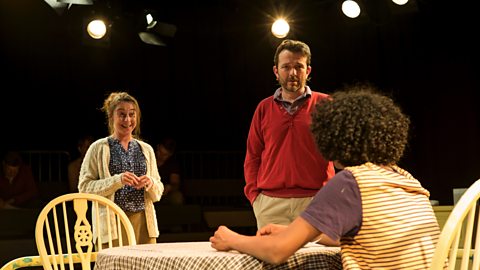
In Scene 6, Alem is living in Providing young people a home while their own family are unable to look after them, often with temporary foster parents. with the Fitzgerald family – Siobhan, Geroid and Ruth. It is dinner time and the family are talking about their week.
Ruth, the Fitzgerald’s daughter, says that Alem has settled into school life so well “its like he owns the place”. She makes comparisons between him and a boy called Themba.
Mrs Fitzgerald notes that the cheese knife has gone missing.
Scene 7 is a flashback, in which we see Alem and his father looking at the stars again. Mr Kelo encourages him to speak English and teaches Alem about life in the UK.

In Scenes 8 and 9, Alem prepares for and attends immigration court. Ruth explains to Alem that he needs refugee status. At court, there is a social worker, adjudicator and lawyer (played by the same actors who play the Fitzgeralds, as per the stage directions).
The adjudicator says that Alem would face “no personal threat” if he returned home whereas the lawyer argues against this saying that “the political circumstances” have not changed in Ethiopia or Eritrea. The An official document ordering that someone be deported from a country. is Put off or paused until a later time or date..
Alem shares that it is Christmas in Ethiopia and Eritrea that day and says that “if Christmas makes us nicer to each other, we should celebrate as many Christmases as we can”.
In Scene 10, Mustapha and Alem meet. Mustapha apologises for the incident with Sweeney and says he won’t betray Alem again.
Activity
Questions
In scenes 6 – 10, the audience learn more about the character of Alem.
What might each of these quotations reveal about him?
(In Amharic) Dear God we give thanks for this food and for this family
Answer
This quotation shows that Alem is grateful, even when going through challenges. He stays true to his religious roots. The use of Amharic here may also symbolise his longing for home, or remind the audience that he is still getting used to life in the UK.
I like Dickens. I’m reading Great Expectations.
Answer
Alem is an intelligent, curious boy who is determined to take advantage of any opportunity he is given. He is reading classic literature in a second language, showing how motivated he is. It may also remind him of his father, who talked to him about British culture.
I would like to wish you all a merry, merry Christmas.
Answer
Alem is trying to educate others about his culture whilst also trying to bring more kindness into the world. The court is confused when Alem says this, which exposes their lack of knowledge about Alem’s culture and situation.
Yo momma.
Answer
Alem is settling into the UK and trying to live a normal teenage life. Alem picking up English slang and teenage humour symbolises his adaptability and shows how people from all over the world could get on well together if they make small changes.
Scenes 11 - 15
In Scene 11, Alem receives a letter from his father explaining that his mother has been “killed by some very evil people”. He explains that EAST (the East African Solidarity Trust) has fallen apart and it is implied that she fell victim to political violence.
Mr Kelo says that he will try to return to the UK to collect Alem. This traumatic news sparks Alem’s memory and he imagines violent banging on the door, leading into a flashback.
Scene 12. In a flashback in Eritrea, we see soldiers violently attacking the Kelo family for being Ethiopian. Mrs Kelo is called a “traitor”. This scene mirrors events and dialogue from Scene 5, emphasising the impossibility of the Kelo family’s situation.
Ruth argues with her mum in Scene 13. She says that they need to “talk about Themba” but Mrs Fitzgerald struggles to even say his name.
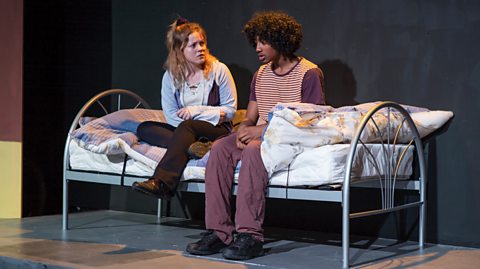
In Scene 14, Ruth comforts Alem. She explains that Themba was another foster child who she developed feelings for before he “killed himself”. She tells Alem that she is his “sister” now. It snows and it is the first time that Alem has seen snow. He “sobs his heart out” for the death of his mother.

In Scene 15, Alem is hanging out with Mustapha. They talk about enjoying school and Mustapha admits that his dad actually knew nothing about cars. But “was driven away in one”.
Mustapha leaves and Alem picks up his bike. He is confronted by a character known as “Hooded” who tries to steal it from him. Copying the behaviours and language he has learnt from his experiences with Sweeney, Alem pulls a cheese knife on his attacker, causing a dangerous stand-off. Sweeney arrives and defuses the situation. He tells Alem that he doesn’t want him to be “messed up” like him and warns Alem away from a life of crime.
Mini quiz
Scenes 16 - 20

Scene 16. Ruth and Alem discuss the mugging attempt. Alem pretends to re-enact the scene, making up gruesome details to shock and scare Ruth.
In Scene 17, Mr Kelo returns to collect Alem. He has had to search for him through social services and wants to take him to live with him. The Fitzgeralds explain that Alem is going through a court case and can’t be moved until Mr Kelo has the court’s permission. Mr Kelo says he has applied for refugee and To seek asylum means to ask for protection, especially if you feel unsafe in your home country. status for them both.
In Scene 18, Alem and his father appear in court. Despite the fact that the lawyer says there has been “massive escalation of the fighting between both sides” in Ethiopia and Eritrea, the adjudicator decides that “the risk to the lives of the appellants is minimal” and they should return home. Their appeal for asylum is rejected.
In Scene 19, Ruth and Mustapha help to organise a campaign and a rally to fight the deportation order.
Scene 20 follows, in which Alem and his father argue over the best course of action. Mr Kelo has arranged a meeting with the Refugee Council and wants to appeal, but Alem wants to campaign.
Questions - Who is Mr Kelo?
In these four scenes we see many different sides to Mr Kelo.
What are his characteristics?
Polite and gracious
Answer
The first thing Mr Kelo says to the Fitzgeralds is “Amasangalo” (“Thank you”). Even in his excitement to see his son, he still takes the time to acknowledge all the help the Fitzgeralds have given Alem. When they give him thirty pounds, his first instinct is to take them all out for dinner.
Optimistic
Answer
Mr Kelo believes in the British justice system and the kindness and unity of humans. He tells Alem, “We must ask this great country of Dickens and Shakespeare to let us stay and make a home for ourselves”.
Naïve
Answer
When he first arrives at the Fitzgeralds’ house, Mr Kelo thinks he will be able to take Alem with him immediately, without going through legal processes. Even after the court rules against their asylum application, he has faith in the law and authorities.
Fearful
Answer
Towards the end of the play, in contrast to his earlier campaigning and bravery, Mr Kelo tells Alem “We cannot afford to draw attention to ourselves”. Instead, Alem takes control of the situation and campaigns to save them.
Scenes 21 – 29

Scenes 21 – 29 are each very short. The action jumps between the scene of the rally and Mr Kelo, in an undisclosed location.
Scene 21. Mustapha speaks out passionately at the rally for his “best friend” Alem.
Scene 22. Mr Kelo is confronted by a man called Tewdros, from the political organisation EAST.
Scene 23. Ruth speaks Speaking in a fluent and persuasive way. against the deportation of the Kelo family. She says it is “time that the voice of the youth be heard”.
Scene 24. The action moves back to Mr Kelo. Tewdos implies that Alem is in great danger.

Scene 25. It is Alem’s turn to speak at the rally. He argues for a culture of peace and says “we must become that new generation of peacemakers”.
Scene 26. The stage directions instruct: “Man stabs Mr Kelo and lowers him to the ground”.
Scene 27. Alem is speaking at the West Indian Centre. He repeats that he would rather be celebrating than demonstrating with his friends. He invites his father on to stage to join him: “Father, are you here?”
Scene 28 is a radio news announcement. The police are investigating the murder of a man who held “both Ethiopian and Eritrean nationality”. They believe his death may have been politically motivated. The announcement references the rally for Alem and his father, but does not mention either by name.
Scene 29. The play ends as it began, with a flashback to Alem and his father looking up at the stars. Alem’s future is left uncertain.
Questions
Read these lines from the rally scenes.
What is each character’s message?
Mustapha:
What do they know about our world? What do they understand what it is like to live in fear?"
Answer
The contrasting pronouns ‘our’ versus ‘they’ emphasize the sense of division Mustapha feels between most of society, and children like him and Alem who have been through foster care.
The series of rhetorical questions forces the audience to consider their own experiences and viewpoints, asking themselves if they truly understand the experiences of people less fortunate.
Ruth:
We are all brothers and sisters.
Answer
Ruth is arguing for a united humanity, where all people should behave as one big family.
She is trying to convince the rally and wider society that we should all look after each other, no matter where we come from, what we believe or how we look.
Alem:
We must become that new generation of peacemakers.
Answer
- Alem uses the pronoun "we" to create a sense of togetherness, as he calls on young people in particular to learn lessons that the previous generation has not, and to instead work for global peace.
Flashbacks
Most of the play happens in real time in modern-day UK. However, we learn about Alem’s family history in a series of flashbacks.
| Scene | Flashback |
|---|---|
| 1 | Mr Kelo teaches his son, Alem, about the North Star. |
| 5 | The Kelo family are being attacked by soldiers at their home in Ethiopia. Mrs Kelo is physically assaulted because she is from Eritrea. |
| 7 | Mr Kelo teaches Alem about the stars again and encourages him to speak English. |
| 12 | The Kelo family are being attacked by soldiers at their home in Eritrea. Mr Kelo is physically assaulted because he is from Ethiopia. |
| 29 | Mr Kelo and Alem talk about the stars one last time. |
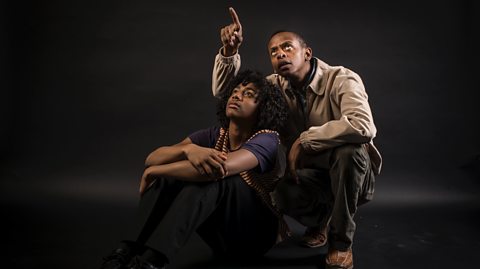
The two scenes containing the soldiers, scenes 5 and 12, start with loud stage directions, such as “Bang! Bang! Bang!”. In both cases, these flashbacks follow scenes in which Alem is under extreme pressure, such as after he is attacked by Sweeney and when he receives the news of his mother’s death.
Question
Why might Sissay have chosen to introduce these flashbacks in such a dramatic way?
Answer
The stage directions create a noisy, threatening atmosphere where violence can seemingly intrude at any time. These sounds help the audience to imagine the experiences of someone under attack.
The frequent flashbacks help us to imagine Alem’s mindset. By putting these scenes throughout the main narrative, they help show how Alem is trapped by his past, and how violence spills into Alem’s new life.
Quiz
Test your knowledge of the plot of Refugee Boy by completing this multiple-choice quiz.
GCSE English literature revision podcasts. audio
Whether you're at home or on the go, listen to these podcasts by Bitesize and BBC Sounds to refresh your memory of key texts.

More on Refugee Boy
Find out more by working through a topic
- count2 of 5
- count3 of 5
- count4 of 5