What are the key points about smart materials?
- Smart materials have the ability to respond to changes in their environment, adapting their properties based on external stimuli.
- Two notable examples of smart materials are thermochromic pigments and self cleaning glass.
The differences between smart, modern and composite materials
Narrator:
Mmm, breakfast time, I am so excited.
Nothing better in the morning than a fried egg sandwich.
Hey, I said fried.
Oh, so now there's none left.
Are you trying to unscramble them?
Yeah, I don't think that's going to work.
Okay then, just put them back.
Pretend like nothing has even happened.
I'm sure no one will notice.
Fortunately, there are some materials that can be returned to their original state.
Isn't that right, Alex?
Alex:
Yes, shape memory alloys are an example of a smart material.
They remember their original shape.
So even if you bend or distort them, they can return to that shape when exposed to heat, unlike scrambled eggs.
Smart materials, like shape memory alloys, have one or more properties that can be changed in a controlled way by things like stress, temperature, moisture, or pH.
Narrator:
So tell me, what are modern and composite materials?
Alex:
Modern materials are materials that have been developed through new or improved processes.
For example, titanium, which has a high strength-to-weight ratio, is tough, and has good corrosion resistance.
Composite materials are combinations of two or more different materials to create an enhanced material with improved functionality or properties.
For example, carbon fibre, which is used to create sports cars, high-end sports equipment, and is increasingly used in aircraft production.
So within the automotive industry, we use smart, modern, and composite materials all the time.
Cars like the ones made here are made with a carbon fibre tub, around which the cars are built.
The carbon fibre makes them incredibly strong, light, and stiff, allowing us to strip out weight and boost handling, agility, and performance.
Narrator:
Thanks Alex, I feel enlightened, but still hungry—no fried eggs for either of us then.
What are thermochromic pigments?
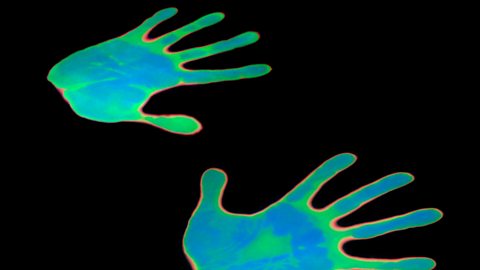
Thermochromic pigments are special pigments that change colour in response to temperature changes. Thermochromic pigments can be found in jewellery, specifically mood rings, which change colour based on the wearer's body temperature. These pigments can also be incorporated into temperature sensitive clothing that changes colour when worn.
Thermochromic pigments are used in a range of everyday products due to their ability to change colour based on temperature.
In mood rings, these pigments respond to the wearer’s body temperature, changing colours to reflect different temperature ranges.
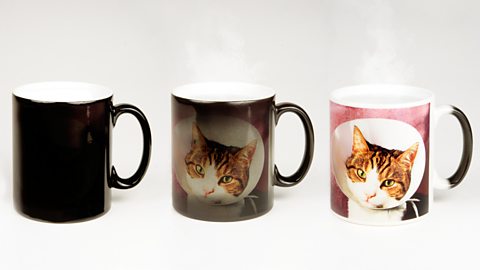
Mugs with thermochromic pigments reveal hidden designs or change colour when hot liquids are added, providing a visual cue related to the drink’s temperature.
In baby care, thermochromic pigments play an important safety role. Bath temperature aids, such as floating thermometers or bath mats, change colour to indicate if the water is too hot, ensuring safe bathing conditions for infants.
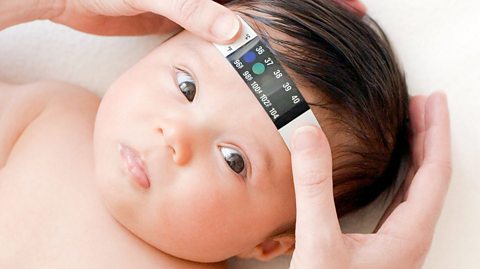
Thermometers that measure skin temperature also use thermochromic pigments to give clear visual indicators. For example, forehead strip thermometers change colour based on the skin’s heat, providing a quick and simple temperature reading without the need for digital displays or batteries.
Thermochromic pigments are often used on drinks cans or bottles to show when the drink has reached an ideal serving temperature, making it more convenient for consumers to know when their drink is chilled.
What is self cleaning glass?
Self cleaning glass is a smart material that utilises advanced technology to help keep it clean. This type of glass is treated with a special coating that makes it highly resistant to dirt. The coating causes water droplets to spread across the surface, forming a thin layer that effectively washes away dirt as it rolls off. This technology is commonly used in windows and glass doors.
Test yourself
More on Manufacturing - tools and processes
Find out more by working through a topic
- count3 of 7