Discrimination in education and employment
Discrimination in education
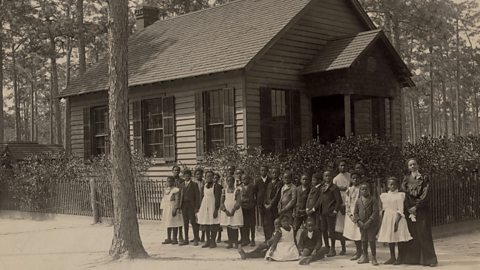
In the South, schools were segregated. Poor funding for African American schools meant that some buildings had only one room to educate all the children, with one teacher delivering lessons to all ages. White students usually had separate classes based on age, with a qualified teacher for each class, and facilities for sports. The facilities for African American and white students were separate but not equal and therefore not in keeping with the Plessy v Ferguson ruling.
The most Distinguished and well respected. universities in the South, such as the University of Mississippi, would not accept African American students. African American students who had an academic record good enough to enter these universities were denied entrance. This meant that they had to attend universities with lower reputations and poorer facilities.
Discrimination in employment
Racist practices meant that African Americans received less pay than their white colleagues and worked in poorer conditions. African American teachers in the South were paid an average of 30 per cent less than white teachers in the same area.
African Americans were more likely to be employed in low-paid jobs in comparison to white people. The table below shows US Bureau of the Census figures and lists the percentage of white and black Americans in two employment sectors with typically low incomes.
| Percentage of the white population working in this industry | Percentage of the black population working in this industry | |
| Agriculture | 12 per cent | 20 per cent |
| Service industries | 20 per cent | 32 per cent |
| Agriculture | |
| Percentage of the white population working in this industry | 12 per cent |
| Percentage of the black population working in this industry | 20 per cent |
| Service industries | |
| Percentage of the white population working in this industry | 20 per cent |
| Percentage of the black population working in this industry | 32 per cent |
More guides on this topic
- Anti-Communism c.1945-1954 - Cambridge OCR A
- Civil rights in the USA 1954-1964 - Cambridge OCR A
- Broadening of the campaigns for civil rights - Race - Cambridge OCR A
- Broadening of the campaigns for civil rights - Women's rights - OCR A
- Broadening of the campaigns for civil rights - Gay rights - OCR A
- Politics and protest - Cambridge OCR A
- Social problems and attempts to tackle them - Cambridge OCR A
