The position of African Americans in the early 20th century
Plessy v Ferguson
Near the end of the 19th century, the The ultimate court of appeal in the USA. It makes the final decision on whether a law is permitted by the US Constitution. reached a judgement that had catastrophic effects on many African Americans. It especially affected those in the southern states, such as Alabama and Mississippi.
This ruling meant that states could legally separate white people and African American people in society, if there were facilities for both. Examples of This meant that white people and black people had to live separately. The areas of society affected by segregation included churches, hospitals, theatres and schools. facilities included schools, buses and water fountains.
These segregation laws became known as the The laws that introduced segregation in the US South (the laws that kept black people and white people apart).
These laws were strictly enforced in the south of the country. This was because the South was where enslaved people had worked on plantations before the 1863 Emancipation Proclamation gave them citizenship.
In areas of society such as housing, education and employment, the Jim Crow laws meant that African Americans experienced significantly worse conditions than white people. For example, in Louisiana it was illegal to rent rooms to African Americans in houses that would also have white tenants.
African Americans and World War Two
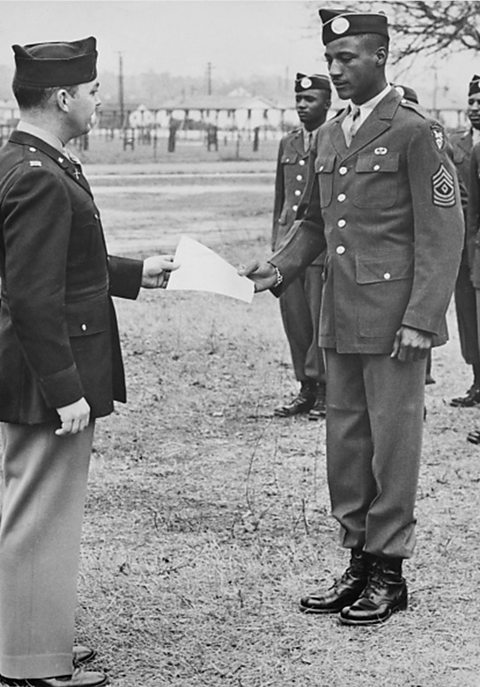
During World War Two, over a million African American men joined the US military. Many more worked in factories at home to support the war effort. The African American community hoped that the Jim Crow laws and the racism they experienced would end after the war.
The Double V campaign started in 1942. It focused on two things:
- gaining victory in the war
- gaining victory at home against the discrimination of African Americans
However, the impact of the campaign was limited to the desegregation of some areas of the military by 1948.
More guides on this topic
- Anti-Communism c.1945-1954 - Cambridge OCR A
- Civil rights in the USA 1954-1964 - Cambridge OCR A
- Broadening of the campaigns for civil rights - Race - Cambridge OCR A
- Broadening of the campaigns for civil rights - Women's rights - OCR A
- Broadening of the campaigns for civil rights - Gay rights - OCR A
- Politics and protest - Cambridge OCR A
- Social problems and attempts to tackle them - Cambridge OCR A
