Pure chemical substances
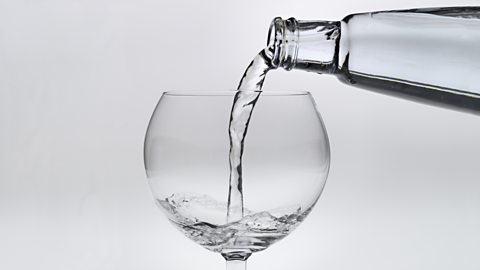
Food and drink may be advertised as ‘pure’. For example, you may see cartons of ‘pure orange juice’ or ‘pure mineral water’. This means that nothing else was added to the orange juice or mineral water during manufacture. However, these substances are not pure to a scientist. In science, a pure substance contains only one element or compound.
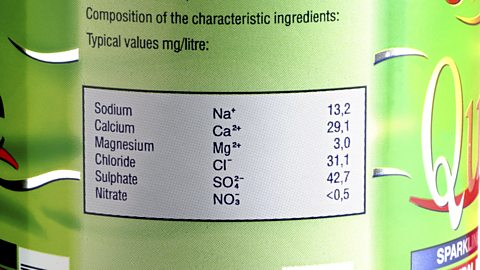
Mineral water is mostly water, but there are other substances mixed with it. These are the ingredients that you see listed on the bottle’s label.
If you could see the particles in pure water, you would only see water molecules. There would be no other particles. It is difficult to get completely pure substances – there will almost always be other substances mixed in. Even the most pure water will contain dissolved gases from the air. Impurities in a substance will affect its properties. For example, they may change its boiling point.
