More services
Concierge
In top class hotels there will be a A member of front office staff who looks after the wellbeing of guests on arrival, departure and throughout their stay by ordering taxis, providing directions and assisting with advice on attractions.. The concierge will have a distinctive uniform and will greet guests on arrival outside the hotel.
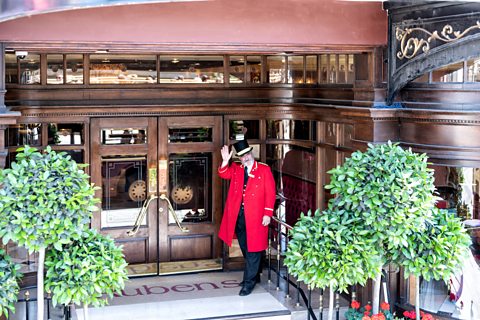
A concierge is an important person who looks after the wellbeing of guests on arrival and departure as well as throughout their stay by ordering taxis, providing directions and assisting with advice on attractions.
Advantages
- Guests are made welcome immediately when they arrive and are taken to reception which can be reassuring if it is their first visit
- The concierge can take pressure off reception staff by answering general enquiries from guests, make bookings from their desk so avoiding queues for guests checking in
- The concierge gets to know guests and by being helpful helps make them feel valued customers so they enjoy their stay and wish to return in the future
- The concierge is responsible for the porters and ensures high quality service throughout the guest’s stay
Disadvantages
- Some guests may find the level of help offered intrusive and over bearing.
- Guests may feel it is necessary to ‘tip’ the concierge and this adds to the cost of their stay.
- A full time concierge can add to the running costs of the hotel and may not be necessary at less busy times.
Leisure services
More hotels are adding leisure services. The services include spa treatments, swimming pools, fitness suites and golf. Some may also have riding stables and fishing.

These services are provided for residents and non-residents, with membership offered to non-residents who pay an annual fee for using the facilities.
Advantages
- Leisure facilities help to improve the star rating and attract customers
- More people are taking mini breaks and want to stay in the hotel for relaxation so leisure facilities are in greater demand and can provide a unique selling point for the hotel
- Some facilities are free to guests e.g. hot tub but others can be booked for a charge e.g. a facial or massage. These generate additional business and income
- Can generate more income for the hotel as non-residents may also use bars and restaurants
- Can generate publicity for the hotel because of advertising sporting events e.g. golfing competitions
- Can provide leisure facilities for the local area which enhance its reputation
- Can provide employment for staff trained outside the hospitality industry e.g. beauty therapists, swimming instructors
Disadvantages
- It can be a drain on hotel finances to establish leisure facilities, putting pressure on other areas of the business
- Additional staff are required to operate the facilities
- Must adhere to additional strict health and safety regulations so staff training will be necessary
- Require ongoing maintenance to ensure high standards of safety and ambience
- Increased noise can disturb other guests, leading to complaints
