Personal pronouns - dative
Personal pronouns (words like me, you, him, her, us, them) have to be in the dative after dative prepositions:
- mir – me
- dir – you (s)
- ihm – him
- ihr – her
- ihm – it
- uns – us
- euch – you (pl)
- Ihnen – you (formal)
- Ihnen – them
Question
What do these phrases mean?
- bei uns
- mit ihnen
- von ihm
- gegenüber von euch
- nach dir
- außer ihr
- von Ihnen
- außer mir
- bei uns – at our house, with us
- mit ihnen – with them
- von ihm – from him, of him
- gegenüber von euch – opposite you (informal pl)
- nach dir – after you
- außer ihr – except her
- von Ihnen – from you (formal)
- außer mir – except me
Did you know?
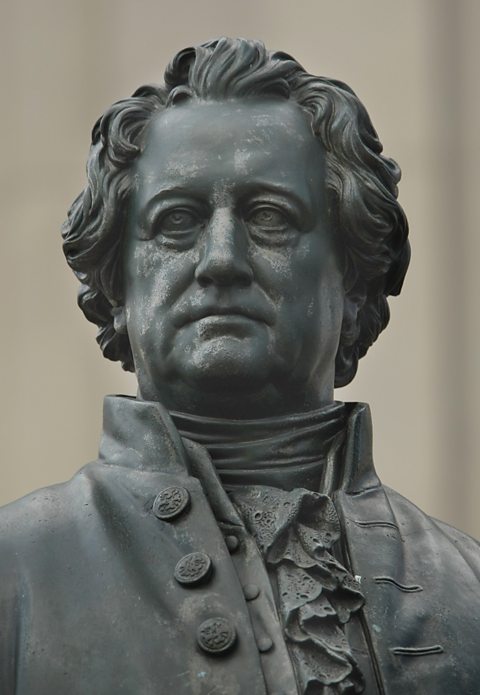
If a German surname contains the word von, it indicates that the family originally belonged to the nobility.
Some well-known people whose surnames contain the word von are Johann Wolfgang von Goethe (German playwright and poet), Alexander von Humboldt (German geographer, naturalist and philosopher) and Franz von Suppe (Austrian composer).
Since the abolition of the monarchy in Germany and Austria in 1919, there are no longer any privileges attached to having von in your surname and names are listed by the main name, so H for Humboldt, rather than V for von.
In the Middle Ages and early modern times, von could also indicate where people came from, for example Peter von Köln - Peter from Cologne.
Nowadays people use the preposition aus and say ich komme aus Köln - I come from Cologne - or ich komme aus der Schweiz - I come from Switzerland.
