Pilgrimage
A A journey which has religious or spiritual significance, usually to an important religious place. is a journey that has religious or spiritual significance, usually to an important religious place. Pilgrimage is not compulsory for Sikhs, and so many Sikhs choose not to visit religious sites. Many Sikhs believe that the money spent on pilgrimage could be used as part of The sharing of what somebody earns or the fruits of their labour, generosity; the giving of charity. It is one of the three main pillars of the teachings of Guru Nanak. and Selfless service to the community. to help others.
Someone may go to Ganges, Godavari, Kumbha festival, or bathe at Kaydaar Naat’h, or make donations of thousands of cows at Gomti; he may make millions of pilgrimages to sacred shrines, or freeze his body in the Himalayas; still, none of these is equal to the worship of God.
Nevertheless, for many Sikhs, going on a pilgrimage is important. Many Sikhs visit important sites in India and the Punjab, where Sikhism began.
The benefits of pilgrimage for Sikhs include:
- strengthening their faith
- providing time dedicated to spiritual reflection
- learning more about the history of Sikhism and the Gurus’ lives
- helping them better understand the principles of Sikhism
The spiritual wisdom given by the Guru is the True sacred shrine of pilgrimage.
The Harmandir Sahib
Many Sikhs make a pilgrimage to the Harmandir Sahib in A city in Punjab. Central to Sikhism., in North India. Harmandir means ‘The Temple of God’ and Sahib is a sign of respect. The Harmandir Sahib is also known as the Golden Temple and is the most famous place of worship for Sikhs.
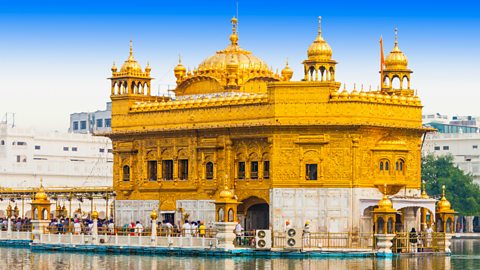
Sikhs want to visit the Harmandir Sahib because it helps them to remember the oneness of God and the oneness of humanity. It develops humility and understanding of others. Many Sikhs see it as a pleasure and an honour to be able to visit the Golden Temple.
Akal Takht
The Akal Takht is the primary seat of Sikh religious authority and the central altar for Sikh political assembly. means ‘Throne of the Timeless One’. It is the most important political building for Sikhs. It is the centre of religious government. Here, decisions about religious and spiritual importance are made, as well as decisions concerning more practical matters relating to the Sikh community.
