Technical textiles
Textiles have come a long way since the early days of natural materials cotton and silk. Today’s modern textiles have some very advanced and useful The mechanical, physical or optical properties of materials that define how they behave in use..
A major advance in textiles technology was the invention of polyamide, more commonly known as A thermoplastic that can be made into fibres for clothing, films for food packaging or shaped for electrical equipment.. This A material made by a chemical process, not naturally occurring. material can be pulled into very thin strands when heated and To make (yarn) by drawing out, twisting, and winding fibres. just like natural textiles, and is now used extensively as a fabric in clothing.
Modern textiles can be engineered to have numerous properties, such as additional strength or resistance to fire, water and even dirt.
A textile material that allows electrical charge to flow through. allow a small electrical current to safely pass through them. This technology is used to dissipate static charge or for touch-screen gloves, which allow a small amount of charge to flow through the glove to connect to the screen.

A textile material that is resistant to fire. are textiles that are more resistant to fire than others, through chemical treatment or manufactured fireproof fibres. They are often used in furniture and furnishings where fire safety is paramount.
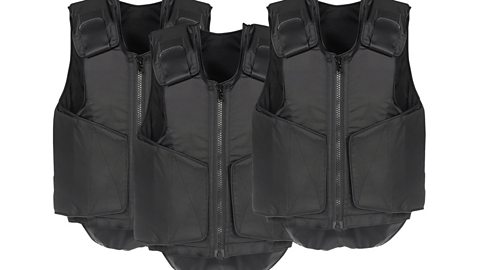
Kevlar (poly-paraphenylene terephthalamide) is a strong, lightweight material that has high tensile strength-to-weight ratio. is a tightly woven fabric that has great impact resistance. It is used in racing tyres, racing sails, gardening gloves and bulletproof vests.
Very fine fibres of fabric that are thinner than human hair. are much thinner than human hairs and can be coiled to provide a very warm, soft or absorbent material that can be used in winter clothes or products such as cleaning cloths.
A process in which tiny particles or droplets are surrounded by a coating to make small capsules. involves encapsulating liquid or solid substances in tiny thin-walled bubbles. These A microscopic hollow sphere, especially of a protein or synthetic polymer. gradually release active agents when rubbed, which rupture the thin-walled A thin, pliable sheet of material forming a barrier or lining.. This can bring benefits such as smelling good to cover body odours in sports clothing. A similar technology is used in the scratch and sniff perfume and aftershave samples in magazines.
Since the development of A material made by a chemical process, not naturally occurring. fibres, there have been numerous improvements in textiles technology, and new variations are constantly being produced. Like other engineered modern materials, properties can be combined or enhanced, so if you want something to be fire and water resistant while also being A material which allows charge to move easily through it., textiles can be engineered to meet those needs.
