Modals: dürfen and mögen
The verb 'dürfen'
Here is the pattern for dürfen – to be allowed, may:
| German | English |
| ich darf | I may, I am allowed to |
| du darfst | you may, you are allowed to (singular, informal) |
| er darf | he may, he is allowed to |
| sie darf | she may, she is allowed to |
| es darf | it may, it is allowed to |
| wir dürfen | we may, we are allowed to |
| ihr dürft | you may, you are allowed to (plural, informal) |
| Sie dürfen | you may, you are allowed to (singular or plural, formal) |
| sie dürfen | they may, they are allowed to |
| German | ich darf |
|---|---|
| English | I may, I am allowed to |
| German | du darfst |
|---|---|
| English | you may, you are allowed to (singular, informal) |
| German | er darf |
|---|---|
| English | he may, he is allowed to |
| German | sie darf |
|---|---|
| English | she may, she is allowed to |
| German | es darf |
|---|---|
| English | it may, it is allowed to |
| German | wir dürfen |
|---|---|
| English | we may, we are allowed to |
| German | ihr dürft |
|---|---|
| English | you may, you are allowed to (plural, informal) |
| German | Sie dürfen |
|---|---|
| English | you may, you are allowed to (singular or plural, formal) |
| German | sie dürfen |
|---|---|
| English | they may, they are allowed to |

'Ab 16 Jahren darf man in Deutschland Bier oder Wein trinken.' – From aged 16, you can drink beer or wine in Germany
Mit 18 Jahren darf man den Führerschein machen. – At 18, you can take your driving test.
The verb 'mögen'
Here is the pattern for mögen – to like:
| German | English |
| ich mag | I like |
| du magst | you like (singular, informal) |
| er mag | he likes |
| sie mag | she likes |
| es mag | it likes |
| wir mögen | we like |
| ihr mögt | you like (plural, informal) |
| Sie mögen | you like (singular or plural, formal) |
| sie mögen | they like |
| German | ich mag |
|---|---|
| English | I like |
| German | du magst |
|---|---|
| English | you like (singular, informal) |
| German | er mag |
|---|---|
| English | he likes |
| German | sie mag |
|---|---|
| English | she likes |
| German | es mag |
|---|---|
| English | it likes |
| German | wir mögen |
|---|---|
| English | we like |
| German | ihr mögt |
|---|---|
| English | you like (plural, informal) |
| German | Sie mögen |
|---|---|
| English | you like (singular or plural, formal) |
| German | sie mögen |
|---|---|
| English | they like |
Ich mag Schokolade. – I like chocolate.
Ich mag Wasser. – I like water.
Question
Using the modal verbs dürfen and mögen how would you say the following?
- I am allowed to
- we like
- you may (singular, familiar)
- she likes
- ich darf
- wir mögen
- du darfst
- sie mag
Did you know?
Wie schnell darf man auf der Autobahn fahren? – How quickly are you allowed to drive on the motorway?
It is often thought that there is no speed limit on German motorways, but this is not true. The limit is 130 km/h which is 82.5 miles per hour.
The same speed limit applies in Austria, but in Switzerland it is 120 km/h – 75 miles per hour.
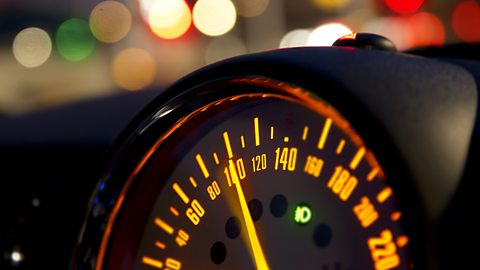
Contrary to popular belief, there is a speed limit on German motorways
