Local governments’ approaches to health in towns
There had already been moves in many English towns to improve public health. These did not stop after 1500. Additionally, there were no further outbreaks of the plague after 1670. This meant that towns were free to spend more time improving the urban environment. However, these changes tended to benefit the rich much more than the poor.
Case study: York
York was one of the country’s largest and richest cities. In the 1500s, the People who assisted mayors in running towns and cities. of York were already trying to keep the city clean:
- people were no longer allowed to build A toilet located in a small shed outside a house or other building. over the river that ran through the city
- householders were ordered to clean the street outside their property twice a week
- people who made dunghills in their alleys were fined
Case study: London
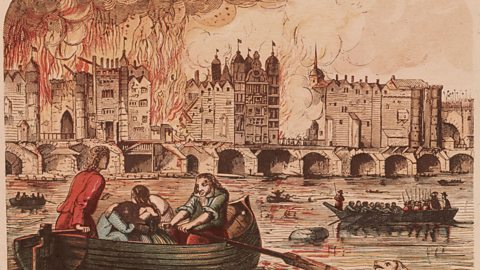
In 1666, around 10,000 houses were destroyed by the A major fire in central London that lasted for four days in September 1666. This brought the town authorities an opportunity to consider town planning as it rebuilt the city:
- brick, tile, stone and other fireproof materials were used to rebuild houses, which meant that there were fewer rats in people’s homes
- some streets were widened, meaning there was better ventilation and sunlight (as well as less risk of fire spreading)
By 1750 in London, there were several water companies that would pipe water into the homes of those who could afford it.
Other towns
By the 18th century, populations were increasing and there were more carriages on the streets. Many towns introduced measures to make them more pleasant for wealthier residents. For example:
- introducing oil-burning lamps on the streets
- building footways for pedestrians
- paving their streets with stone
- building large terraced housing around big open squares, such as Covent Garden in London
Impact
Overall, although the improvements made in the 18th century were numerous, many were only superficial, such as changes to lighting. These kinds of changes only really affected the wealthy areas, with poorer neighbourhoods remaining unpaved and without street lighting.
The huge problems with unsafe water and waste disposal that affected the majority of the population were not improved during this period.
