Plant products
Humans use plants in many ways:
- raw material, eg timber for building
- food, eg wheat for making bread
- medicine, eg foxgloves produce a medicine for treating heart problems
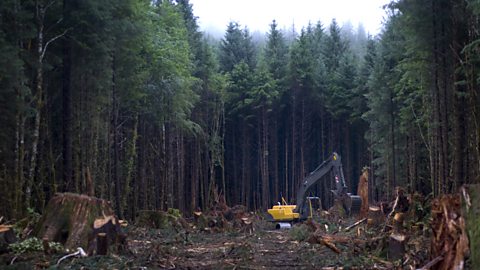
Production of a pure and usable plant product is often a lengthy process. For example, the commercial production of timber involves many stages. The seeds are sown and raised in nurseries where weeding and feeding are of prime importance. Then after two or three years the seedlings are planted outside to grow. The first small trees can be harvested after 15 years, but most of the trees will be felled after 40 - 50 years.
Other examples of processing are malting of barley, or the production of oil and margarine from rapeseed.
Malting of barley
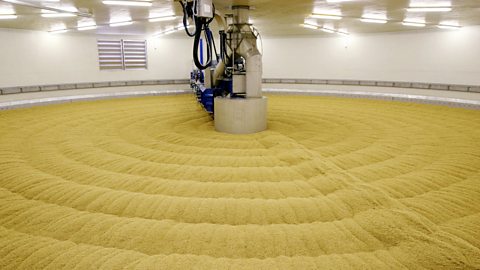
The brewing industry uses barley as the source of the sugar that the yeast ferments to make the ethanol (alcohol) in beer. However, barley stores sugar in the form of starch, which is a type of sugar that yeast cannot use. In order to solve this, the brewer allows the barley grains (seeds) to germinate. Enzymes in the barley then convert the starch into maltose sugar, which the yeast can ferment. This process is called malting.
Scientists are always working to find new uses for plants or plant products, such as new medicines, possible fuel sources, safer pesticides and new sources of food.
