Asexual reproduction in plants
It is possible for plants to reproduce asexually (ie without fertilisation in flowers).
Three methods of plant asexual reproduction are:
- An underground food store able to grow into a new plant. A natural method of asexual reproduction in plants. - underground food storage organs with fleshy leaves that store food and can grow and develop into new plants, eg onions and garlic.
- A slender fast growing stem that grows horizontally over the soil surface and puts down roots to form new plants eg strawberry - horizontal stems, eg strawberry or spider plants.
- A swollen, fleshy underground stem of a plant, such as the potato, bearing buds from which new plant shoots arise. - underground food stores. Groups of cells in the tuber use this food to produce the energy needed for cell division. These cells then grow and develop into new plants.
Humans are able to make plants reproduce asexually by Techniques used to artificially produce new plants e.g. cuttings, grafting and layering.. Taking Part of a plant stem, leaf, or root cut off and used for producing a new plant. An artificial propagation method. and A shoot or bud of one plant is inserted into or joined to the stem, branch, or root of another plant so that the two grow together as a single plant. are two methods for artificially propagating large numbers of genetically identical plants.
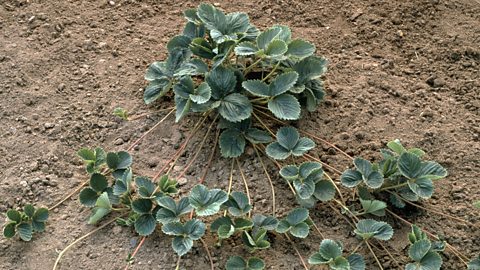
Strawberry runners branching off plant

Sprouting potato tubers
