Ergonomics and anthropometrics
The relationship between The study of body measurements. and The science of designing the product to fit the user, or the job to fit the worker. needs to be understood so that they can be successfully utilised by designers.
Anthropometrics
Anthropometrics is the practice of taking measurements of the human body and provides categorised data that can be used by designers.
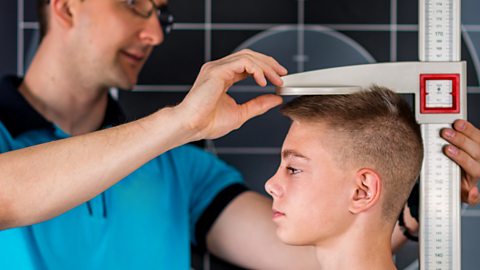
Anthropometrics help designers collect useful data, eg head circumferences when designing a safety helmet. In this example, as there is a large variation in size, the designer would need to build some adjustment into the safety helmet design.
Ergonomics
Ergonomics can incorporate the use of anthropometric data when designing products to improve the user experience. If a designer doesn’t use anthropometric data during the design process, it can lead to a poor user experience that causes discomfort, pain and potential injury. Ergonomics is a consideration that leads to a product being designed in a way to make it easy to use. Size, weight, shape, position of buttons and controls are all aspects that contribute to it being ergonomically designed. This is shown in practice in the image below of a woman sitting at her desk:
- table height makes it easy to reach the keyboard and mouse
- monitor height and angle of the monitor makes it easy for the user to see the screen reducing the strain on the neck, eyes and back
- seat height is adjustable so it can be set at a comfortable height for the user
- the user can sit at a comfortable distance from the desk so they do not have stretch to reach the keyboard and mouse
- position can be changed by adjusting the armrests and backrest - sitting in the correct position will reduce the strain on the body and increase the view angle of the screen
Designers should use anthropometric data to help make sure a product will be comfortable for the user. It is difficult to design a product that everyone will be able to use with comfort, so products are often designed for the majority of the population, considered to be between the 5th and 95th percentile:
- the 5th percentile are the 5 per cent of people who are smaller in size
- the 50th percentile are people of average size
- the 95th percentile are 5 per cent of people who are larger in size
Below is an example of a set of anthropometric data for adults.
Male aged 19 to 60:
| 5th percentile | 50th percentile | 95th percentile | |
| Elbow to wrist length | 266 mm | 289 mm | 316 mm |
| Forearm to hand length | 446 mm | 480 mm | 504 mm |
| Handbreadth | 85 mm | 90 mm | 98 mm |
| Hand length | 180 mm | 192 mm | 211 mm |
| Elbow to wrist length | |
| 5th percentile | 266 mm |
| 50th percentile | 289 mm |
| 95th percentile | 316 mm |
| Forearm to hand length | |
| 5th percentile | 446 mm |
| 50th percentile | 480 mm |
| 95th percentile | 504 mm |
| Handbreadth | |
| 5th percentile | 85 mm |
| 50th percentile | 90 mm |
| 95th percentile | 98 mm |
| Hand length | |
| 5th percentile | 180 mm |
| 50th percentile | 192 mm |
| 95th percentile | 211 mm |
Female aged 19 to 60:
| 5th percentile | 50th percentile | 95th percentile | |
| Elbow to wrist length | 237 mm | 262 mm | 283 mm |
| Forearm to hand length | 406 mm | 442 mm | 482 mm |
| Handbreadth | 71 mm | 78 mm | 85 mm |
| Hand length | 165 mm | 179 mm | 198 mm |
| Elbow to wrist length | |
| 5th percentile | 237 mm |
| 50th percentile | 262 mm |
| 95th percentile | 283 mm |
| Forearm to hand length | |
| 5th percentile | 406 mm |
| 50th percentile | 442 mm |
| 95th percentile | 482 mm |
| Handbreadth | |
| 5th percentile | 71 mm |
| 50th percentile | 78 mm |
| 95th percentile | 85 mm |
| Hand length | |
| 5th percentile | 165 mm |
| 50th percentile | 179 mm |
| 95th percentile | 198 mm |
Example
A designer is designing an emergency stop button for a machine, which must be able to be pressed quickly and easily with the whole palm of the hand by the majority of the population. Using the table above, what is the minimum size the emergency stop button should be?
The handbreadth data from both tables provides the lowest 5th and highest 95th percentile data. This is:
- lowest = 71 mm (female)
- highest = 98 mm (male)
Using this information, the size of the button should have a minimum width of 98 mm.
As the button will be larger than the female 5th percentile and equal to or larger than the male 95th percentile it will be accessible for the majority of the population.
Question
A designer is designing a pair of safety gloves for use in a factory, which must be able to be worn by any member of staff. Using the table above, what is the minimum length the gloves should be?
The hand length data from both tables provides the lowest 5th and highest 95th percentile data. This is:
- lowest = 165 mm (female)
- highest = 211 mm (male)
Using this information, the gloves should have a minimum length of 211 mm.
