Sign up to the BBC Bitesize newsletter! External Link
For home education news and stories plus updates on the latest Bitesize content, register for our newsletter today.

Teaching your child languages at home may seem daunting… especially if you don’t speak another language yourself. Or maybe you love languages and already have some knowledge of French, German or Mandarin, for example.
Whatever your own experience of languages, it’s an opportunity for you and your child to enjoy learning and discovering together. And they won’t just learn how to say ‘my name is’ but also history, geography, politics, literature and a wider knowledge of different countries and cultures.
Use our guide to teaching languages to get you started, and enjoy embarking on this journey together with your child.
How to teach kids new languages
“Try for an element of fun and humour… music and songs are great too.” – languages teacher Tamsin
Whether you’re teaching Spanish, French, German or any other language, before you get stuck into the learning, cover the basics:
- Make it fun
- Keep it brief
- Enjoy the experience together
- Use the language in everyday life
- Learn about the language's countries and cultures too
- Don't forget about the grammar!
Tamsin Anderson is a primary school teacher with a specialism in teaching languages. She recommends “short bursts of immersion” in the language: “Dinner time conversation, on a family walk, or on a car journey. With younger children, having a Spanish or French song to sing at teeth brushing time or bedtime works well, and also counting in the target language during everyday activities. For example, we used to count the steps while walking upstairs when our children were toddlers.”
Once you’ve thought about the basics, consider the different ways you can teach or learn a language.
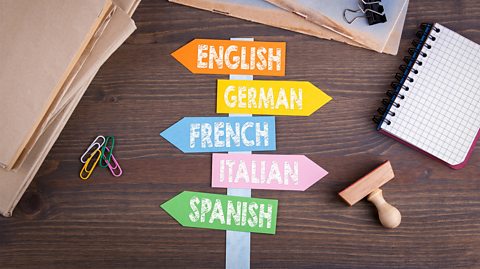
Language teaching techniques
You don’t need to get too hung up about using a particular language teaching technique, but it can help to understand the different ways we learn languages. Then you can apply a combination of techniques that best suits you and your child.
Some of the common language teaching techniques include:
- The direct method
- Communicative language teaching (CLT)
- Inquiry- or task-based learning
- Total physical response (TPR)
- The structural approach.
What is the direct method?
The direct method of teaching means you only speak in the language you’re learning. It’s useful if you already speak the language or you’re using a tutor who does. You can speak together in that language while you’re out and about, or doing other things such as cooking or playing sports.
It’s also an ‘audio-lingual’ way of learning, in that the language is usually ‘heard’ and spoken first, before being seen written down, and corrections can happen as you’re talking.
What is communicative language teaching?
Communicative language teaching (CLT) is more about practising things you’ll use in real life, such as greeting someone, ordering in a shop or cafe, asking for directions, etc.
CLT embraces role-play, which is a great way to reinforce language learning. It can be quite a natural way to learn, with an emphasis on understanding and fluency rather than perfect grammar.
What is inquiry-or task-based learning?
Inquiry-or task-based learning is great if your child enjoys learning independently. Do they really like Paul Cezanne’s art? Are they fascinated by German history in the last century?
Set them about researching something they’re interested in, in the relevant language, or using a mixture of English and the origin language. With the task-based aspect, it’s important they complete a project they’ve set their mind on.
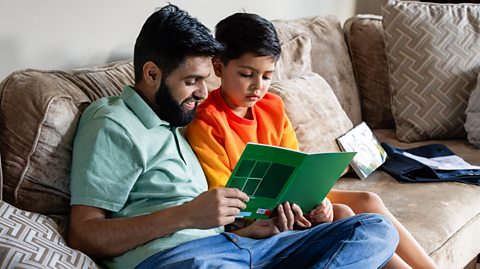
What is total physical response learning?
Total physical response (TPR) learning combines hearing the language with things like facial expressions and kinaesthetic learning i.e. movement and/or touch.
For example, you might pull a sad face or pretend to cry when learning the word ‘sad’, sing the song ‘heads, shoulders, knees and toes’ and do the actions in the language you’re learning, or play ‘Simon says’ and instruct your child to ‘sit on the floor’ or ‘open the window’.
TPR can be great for younger learners and some children with Special Educational Needs and Disabilities (SEND).
Try these Super Movers: Modern Foreign Languages videos which your child can move and sing along to.
What is the structural approach?
You can also try a more ‘structural approach’ which involves things like learning certain grammar basics at the start, such as ‘I am’, ‘you are’, etc. Many language learning apps start this way.
You could also focus on translating common everyday words from the new language into English (sometimes called a ‘grammar-translation’ approach).
How to teach sign language
If you’re teaching sign language at home, you’ll need to either understand British Sign Language (BSL) yourself or learn alongside your child. There are many online courses, videos and guides you can use to help you.
Hanisha Sandhu is a BSL tutor. She says that as a parent, if you can engage with family BSL sessions or learn the basics and use BSL at home, it can be hugely beneficial to your child.
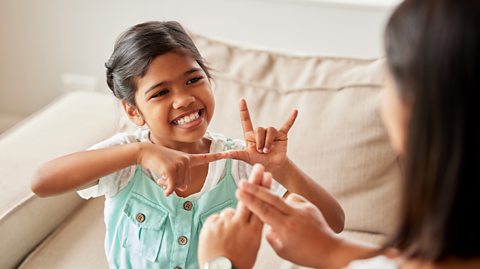
When teaching your child BSL, Hanisha recommends using flashcards showing everyday hand gestures and games with activities such as matching pictures to a BSL sign. She says that visual aids can help with vocabulary.
Hanisha adds: “Videos [as well as still images] are beneficial to see the placements and movements of a story, for example, and can assist with picking up signs and facial expressions.”
Here are some simple BSL signs to try and you can read this article about how learning simple BSL can make a difference.
Seven tips for teaching French, German and Spanish
Now you’ve learned about different teaching approaches, here are some more top tips for language learning:
Games, games, games! Most games can be adapted to learning a language, from word searches to quizzes, Scrabble, Hangman, Who Am I, ‘Kim’s game’, etc. Teacher Tamsin adds: “Matching pairs can be made very easily, and we play charades with different topics. ‘Guess Who' can be adapted and played in another language to practice describing people. You can also pretend to be an animal or pretend to do a sport and we guess the word or phrase.”
Use visual aids like pictures and cards. Tamsin says: “I use lots of visual prompts for teaching new vocabulary, like flashcards (a photo or picture of the object with the word underneath) or real objects.” You can also watch films, cartoons and videos on social media together to consolidate the language. Foreign language subtitles work well too.
Songs! Tamsin smiles: “I sing ALL of the time when teaching languages in school, this really helps the learning to 'stick'. There are lots of great versions of English nursery rhymes online. I get older pupils (aged nine to 11) to make up raps, which always goes down well.” Check out Bitesize's French songs, Spanish songs and Mandarin songs.

Get a pen pal or join a club. Organising an email pen pal is a great way to practise written language, and to learn about another person and culture. You could also enrol your child on a weekend language club, or join an evening course together.
Go abroad, or pretend to! Living or travelling in another country is a great way to pick up the language. You can arrange student exchange trips, where a family hosts your child and you then reciprocate, or there are many websites offering house swaps to different countries. If you can’t afford to travel, have a French-themed evening at home, with French music, food and activities.
Tie activities into the time of year. Tamsin says: “Seasonal activities always go down well: learning a Christmas song or writing a Christmas card, writing a recipe using a bilingual dictionary, or writing a list of presents they want for their birthday in another language.”
One final tip from Tamsin: buy or borrow a good bilingual dictionary. Remember: “Keep it relevant (e.g. vocab that they will use on holiday!) and try for an element of fun and humour… music and songs are great too.”
How can I use BBC Bitesize to support language learning?
You’ll find language teaching tips and resources for ages seven to 16 in our modern foreign languages collection.
You can also use these teaching resources for children aged seven to 11.
Children can try some of our fun games to help with learning French, Spanish and other languages.
7-11 years olds can play the Dash and Blink games: Vanished Spanish, Forgotten French or Missing Mandarin. Help Dash to rescue his trusty translator bot Blink by refilling her language banks with words and phrases.
11-14 year olds can play the Festilingo games series: a set of mini-games where you go to a festival, collect items, earn rewards and make friends. Available in French, German and Spanish!
If you and your child want to find out more about a particular language or country, check out IYKYK: The Facts, including Five fun facts about Paris, How to learn Spanish and Fun facts about Germany.
Where can I find more support for home education and parenting?
The BBC Bitesize home education collection is designed to support you and your child’s learning at home with free downloadable resources, advice articles and videos for children aged two-to-five years old, five-to-11 years old and 11-to-16+ years old.
Bitesize Parenting is the go-to place for the whole parenting community to find stories, expert advice and fun activities.
If your child has special educational needs or disabilities, be sure to check out the Parenting SEND collection. Bitesize has a collection of Sensory Stories, an immersive video series of unique sensory adventures for children with additional needs.
For more information about home education, this BBC News article covers the rise in families deciding to educate their children at home.
