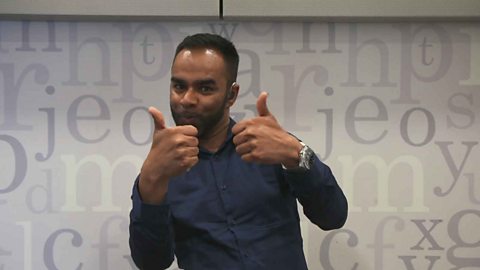
“I really believe sign language is not just for deaf people, it’s for everyone.”
It was this sentiment from actress and Strictly winner Rose Ayling-Ellis that drove her to make a new documentary for BBC One. Across two episodes of Old Hands, New Tricks, she and her team of BSL (British Sign Language) experts aim to take the residents of a retirement village on a six-week course about the difference signing can make to such a community.
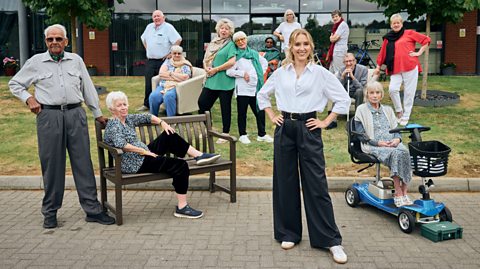
The class experiences several events such as signed bingo, a rave night designed for deaf people, a supper where all diners must order in BSL and a special visit from students of one of the UK’s 22 schools for deaf children.
The programme highlights the importance of BSL in certain situations. Students from the village, such as Sue who is partially sighted, and Tina, who lives with a brain injury which impacts her communication methods, found that signing helped them, whether it was understanding the numbers called in bingo, or making a speech to an invited crowd.
BBC Bitesize contacted the Royal National Institute for Deaf People (RNID), a charity established in 1911 which lobbied for deaf and hard of hearing people to receive free hearing aids back in 1948 and for newborn babies to be screened for hearing loss in 2000.
The documentary shows the joy that the class shared in learning how to sign and making friends with people who are deaf and hard of hearing. What can people do if they want to make BSL part of everyday life and also be more aware of the barriers deaf people face every day?
Frankie Garforth, the RNID's inclusion lead, said: “Research from RNID shows that deaf people and those with hearing loss often face negative reactions or are just ignored, which can have a big impact.”
She continued: “By being more deaf-aware, and learning just a few simple phrases in BSL, everyone can make a big difference. It makes people feel valued, and means they’re included in the conversation.”
What are public attitudes to BSL use?
An RNID survey of members of the public showed that 54% of those asked felt learning basic words and phrases in BSL would help them feel more confident. Just over half (52%) wanted information on how to communicate effectively with deaf people.
Their research has also found that 90% of BSL users encountered negative attitudes or behaviour when doing an everyday activity such as shopping or using public transport. Frankie said this could be due to a language barrier but the charity also has evidence that the wider public does not feel negative towards BSL users, but rather, people can feel rude and insensitive if they make an incorrect sign.
“There are loads of ways you can feel more confident communicating with deaf people and people with hearing loss,” said Frankie. “Three simple steps shared by our communities are, first: ‘get my attention’ – for example, by using simple gestures like waving. Second: ‘face me’ - because lots of people rely on lip reading to some degree to understand. And finally: ‘be patient’. Don’t be afraid to repeat or rephrase and try something different.”
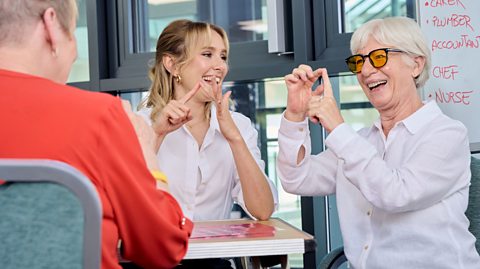
Frankie explained that BSL has been recognised as a language by the UK government since 2003. With its own syntax and grammar and tens of thousands of signs, it can take time to be fluent. However, there are common phrases that can be taught using online resources. One is this tool for learning how to finger-spell your name (picking out letters in the BSL alphabet) created in conjunction with Old Hands, New Tricks. Charities and organisations, including RNID, offer tutorials on their websites.
In the documentary, Rose noted the difference BSL classes made in the retirement village, not just between the students, but also the staff and businesses that operate there. She said: “You want the students to be able to go to the hairdresser and then meet up with Matt [the hairdresser], and Matt be able to sign. And also going into the shop and Sofia [member of shop staff] is there, or when you need some support, you’ve got a wellbeing officer, that can communicate in sign language. That is what a community is.”
“It may feel daunting,” said Frankie, “but no one’s expecting you to be fluent in BSL. By following some simple tips and having a little patience, all of us can improve how we communicate and ensure we include deaf people and people with hearing loss in all aspects of daily life.”
Old Hands, New Tricks is available to view on BBC iPlayer
This article was published in March 2025.
It’s actually a feeling we’re trying to reflect' - Interpreting music for deaf audiences
Find out more about the role music interpreters play at live events
British Sign Language
BBC Teach: Bring the Noise
How sign language changed my life
Esmail tells us how learning to sign opened a new world for him.