The human digestive system
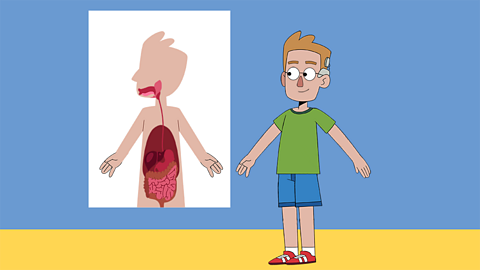
The digestive system is like a big food factory inside our bodies.
Its job is to break down the food we eat into smaller pieces so that our bodies can absorb the nutrients from the food to help us grow and stay healthy.
Watch: Why we have a digestive system
The digestive system helps to break down the food for the body to process and use.
Learn about the digestive system.
Narrator: Why do we eat food?
I mean, really, wouldn't life be far simpler if we didn't have to?
Well the thing is we need energy to keep on living.
Each part of our body needs to be recharged with energy, and we get that energy from food.
We could try and put the food straight into the parts of our body where it is needed…
…but that would be silly.
Because we have a digestive system!
…a series of organs that break food down in a useful way for the body.
And it gets rid of all the body's waste as well!
The average person produces around two pints of saliva each day.
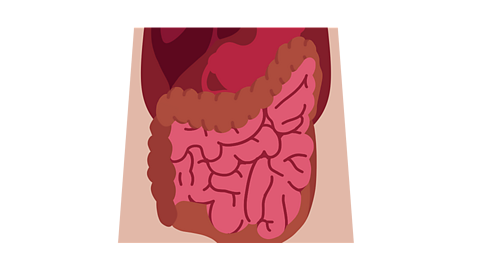
The second part of your small intestine is called the jejunum.
The stomach lining replaces itself every 3-4 days to protect against the acid that it produces.
The small intestine is around 6 meters long.
There are around 400 species of bacteria inside your small and large intestine.
Burping or breaking wind is the digestive system's way of removing excess air.
The digestive system
Without digestion, the food we eat would just come straight out in our poo.
Digestion happens because of our digestive system. This is a series of organs that break down the food so it can be absorbed into our blood and travel around to where it is needed.
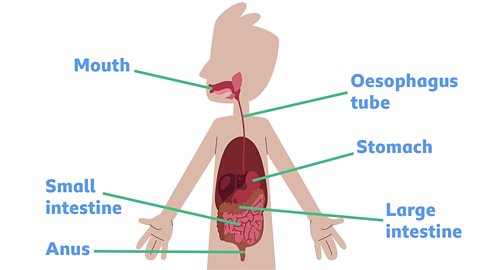
The mouth
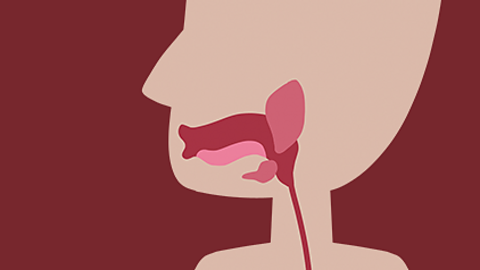
The digestion journey begins in our mouth. We chew our food with our teeth to break it into small pieces. Saliva then mixes with the food to make it wet and easy to swallow.
The oesophagus
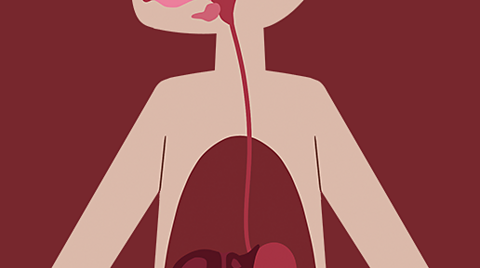
From the mouth, the chewed food travels down a long tube called the oesophagus, which carries the food to the stomach. It's like a slide that food goes down when we swallow.
The stomach
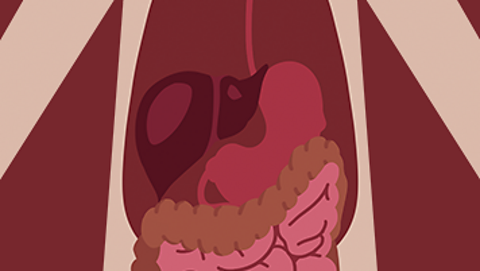
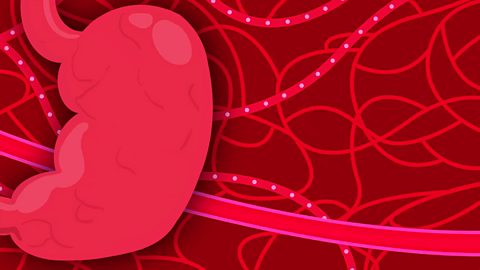
The stomach is like a bag that mixes the food with acids and juices to break it down even more. It's like a washing machine that churns and mixes the food.
The small intestine
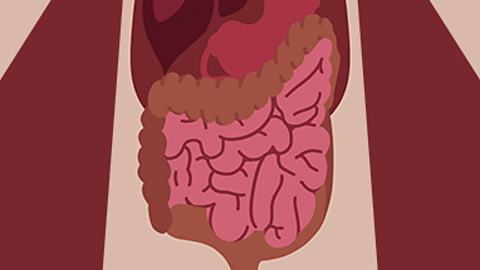
The small intestine is where food is sent to be broken down and digested. It's where all of the nutrients can be absorbed into our blood.
The large intestine
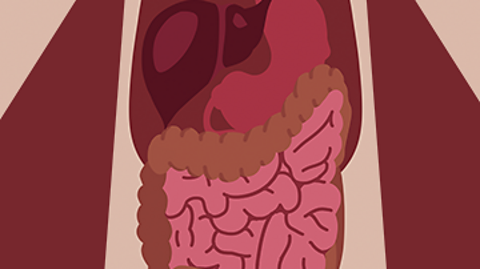
The leftovers that the body can't use go to the large intestine. This is where water is absorbed from the waste to make sure the body doesn't lose too much water.
The anus
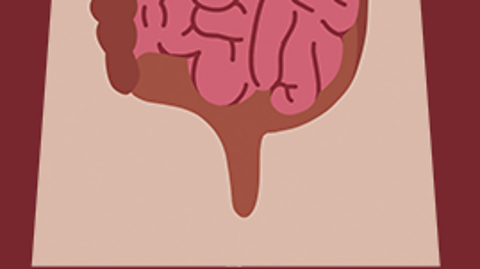
Finally, the waste that our body can't use leaves the body through the anus when we go to the toilet.
Watch: What happens to food in your stomach?
Learn about what happens to food in your stomach.
NARRATOR: Hello and welcome.
Today we are in a mouth, and we're going to talk to some food. Hi!
So what are you doing here today?
FOOD 1: Hi!
FOOD 3: Hello mum!
FOOD 1: Umm… Yeah… we're food, all squashed, and we're just waiting to be swallowed and travel down the pipe from the mouth to the stomach… Ooh!
NARRATOR: Now they're in the oesophagus, the pipe leading down to the stomach.
FOOD: Wheeee!!!
NARRATOR: Well let's leave them to it. The food can stay in the stomach for up to 4 hours, where it is slowly broken down into smaller pieces that our bodies can use.
FOOD 1: Did he say broken down?
Watch: What happens to food in your intestines?
Learn about the different roles the intestines play in the digestive system.
NARRATOR: We see the former apple, chocolate bar and sandwich have finally made it into the intestines from the stomach. What a lot of pipes!
This is the small intestine. Everything that comes in here has already been turned to liquid by the stomach.
Excuse me! Could I just ask you, how are you feeling right now?
FOOD: Erm, quite… watery… I think I might get absorbed soon… Ooh we're just going into the next bit… Ooohhhhh!!!
NARRATOR: Yes he's been absorbed through the intestine wall and we can see the blood vessels everywhere.
The nutrients are on their way to be delivered to a part of a body they're needed.
And now we're moving into the large intestine. This is where any food that can't get digested ends up.
Phew, this place has a lot of smelly gas.
And how are you feeling?
DIGESTED FOOD: Well, I was really hoping to get digested, you know, but it just didn't work out…So here I am…
Do I smell really bad?
And I look awful!
Oh no don't film me!!
NARRATOR: Well you've been on quite a journey.
Thanks for talking to us.
Did you know?
If you were to stretch them out, the small intestine of an average adult would be around 5–7 metres in length, whilst the large intestine would be around 1.5 metres long.
Important words
Digestive system – The digestive system helps to break down the food for the body to process and use.
Large intestine – Where water is absorbed into the blood.
Mouth – Digestion begins in the mouth when we use our teeth to chew food.
Nutrients – Substances found in food that carry out certain jobs in the body.
Oesophagus – A tube in our bodies which carries food from the mouth to the stomach.
Organs – Parts of an organism that have vital functions for the body, like a heart and lungs in mammals.
Small intestine – Where food is broken down and nutrients are absorbed into the blood.
Stomach – Where food is broken down into smaller pieces by acids and juices.
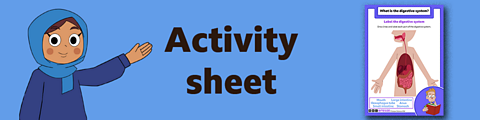
Activities
Activity 1 – A digestive journey
Activity 2 – Digestive quiz
Activity 3 – Place the words
New game! Horrible Science: Stinky Space. game
Join Pipette on her epic mission and learn some revolting facts about space along the way.
More on Animals including humans
Find out more by working through a topic
- count9 of 11
- count10 of 11
- count11 of 11
- count1 of 11