What is recycling?
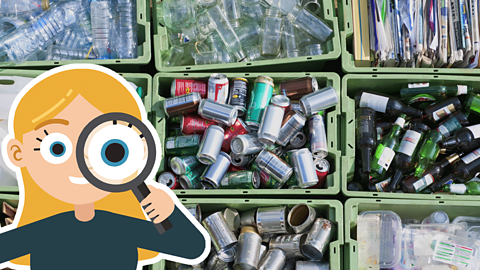
Recycling is the process of turning old materials and objects into something new.
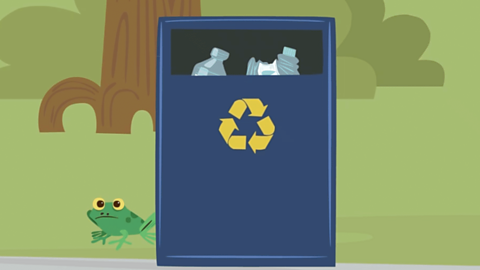
For example, many plastic water bottles are made from recycled plastic. This helps us to use less brand-new plastic.
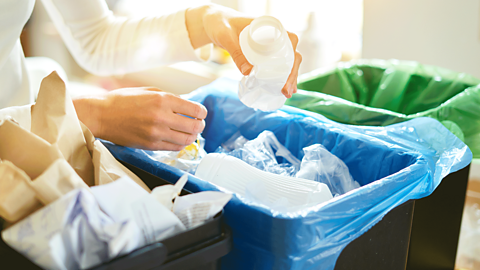
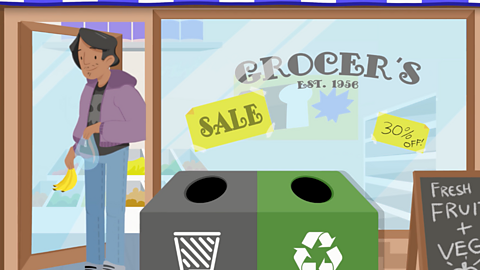
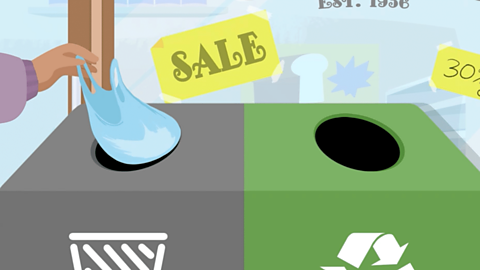
A lot of household waste can be recycled. Many houses and buildings have different coloured bins for different types of materials. Sorting your recycling into the correct bin helps make sure it gets reused properly.
Why not check with an adult to see which recycling bins you have?
Watch: Recycling and the environment
Watch this video to learn more about why recycling is important and what happens to the rubbish that is thrown away.
All that plastic and packaging you get with groceries and deliveries. All the cardboard from those takeaway pizzas. All those metal tins and cans. We create a lot of waste. But luckily we have ways of reusing those materials.
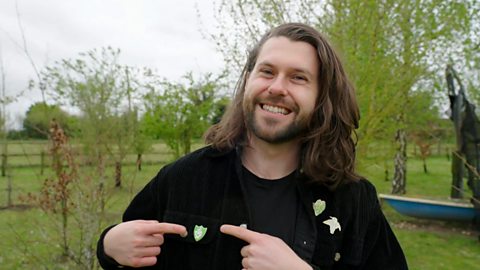
Hi, I’m Jude. Every time you throw something away, it ends up somewhere. That can have a bad impact on the environment. Lots of waste goes to landfill, where it just sits being… well, rubbish.
But at places like this recycling centre behind me, some waste can be turned back into raw materials and reused. That’s called recycling. Let’s investigate…
Either people paid by the government, or the public themselves, can bring waste here and it’s sorted in different areas, depending on what type of material it is.
Here they can recycle: garden waste, wood, bricks, carpets, cardboard, paper, various electrical items, types of metal like food tins and aluminium, and of course, plastic.
All that waste is then transferred inside, where it’s carefully sorted. It’s then taken to a recycling facility and put into recycling machines. They can turn the waste back into a material we can use.
Those are all materials that are recyclable, but many people feel not enough material is made to be re-used. So much plastic, like the bags at supermarkets, can only be used once and they take a thousand years to eventually break down into nothing. Until then they just sit around and harm the environment.
When people say ‘environment’, it describes not only the area just around us, but the world as a whole. It’s dangerous for animals if they swallow or get stuck in plastic, and plastic releases pollution into the water as it dissolves, and into the air if it’s burnt.
I’m back home now from the recycling centre. We have different bins at home to help sort between recyclable and non-recyclable materials. Your local council gives information to explain what those different materials are.
But with humans creating so much harmful waste, the public can’t tackle this crisis alone: we need our leaders to make laws so companies use recyclable material only.
The gas, oil and coal industries create plastic and all sorts of other things we need, like energy. But they have a negative impact on the environment.
Over time, the waste they create and chemicals they release heat up the planet, making our weather more unpredictable and more dangerous.
What can you do to reduce your impact on the environment?
What is Recycle Week?
Recycle Week is an event held in the UK every year to encourage people to recycle more and avoid waste.
Recycling is important because it means fewer things end up in the bin or landfill.
It also helps to tackle ocean pollution and protect wildlife, as there in less plastic in the environment.
We can all make a positive impact on our environment by recycling more.
Why is it important to recycle?
It is important to recycle in order to look after our planet and our future.
Recycling helps to:
Save resources – We don’t have to use as many trees, water, or metals if we recycle.
Keep the environment clean – Waste in landfills can produce harmful gases and pollute the land, air and sea.
Save energy – Making new things from recycled materials uses less energy.
Protect animals – Animals can become injured or trapped by rubbish in the environment.
Science
Plastic is a very useful material for us.
It is used in many everyday things such as clothes, food packaging and technology.
But when plastic is thrown away, it can harm the environment.
In this section, you’ll find fun activities, videos and facts to help you learn more about plastic and how it affects our planet.
Why is plastic a problem?
Plastic is not biodegradable, which means that it doesn't break down naturally. It can take hundreds of years to biodegrade.
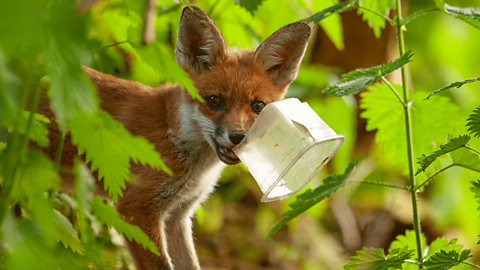
Plastic litter is very harmful to wildlife, both on land and in the ocean.
Animals on land can get trapped in plastic or mistake it for food. This can make them very sick. Plastic can also damage their homes and make it harder for them to find food.
Watch: The problem with plastic
Watch this video and let Kayla tell you more about how plastic affects our planet.
Kayla: Hey hey people in the past! Just wanted to make this video to say thanks! Thanks for not using so much plastic. The world got a lot better when you didn't.
You guys used to love plastic, I mean love, love, love it! Plastic is super useful, but you used to put it in chewing gum, stickers and t-shirts that you'd only wear a couple of times! Oh! I've got to show you guys this t-shirt. Just a sec.
I found it! From the 2020s, still going strong. Oh and this one I swapped with a friend and I just mended this one the other day. And this all started when you guys changed to be more awesome. Moving away from single-use plastics, not going through polyester clothes like loo roll.
Anyway, plastics get everywhere after you've used them, and back in your time lots went in the oceans. People dropped it, flushed it, sank it, some people are pretty clumsy if I'm honest.
And then the waves and weather broke the plastic into little pieces, and little fish would eat the little plastic, and then we would eat the little fish and then a bit of that bottle we threw out would be in us.
Weird, but true. So yeah, thanks for using less single-use plastics and recycling the plastic you did use.
Strange to think people didn't used to recycle. Like you dug stuff out of the ground, sent it to a factory, squished it into the shape of a bottle, popped a label on it, popped water in it, drove it to a shop, bought it, drank it, two seconds later, binned it.
All that for one bottle.
Kayla's Mum: Oh! Hey past people. Dinners ready. You want water with your dinner?
Kayla: Yep! Out of a tap please!
Kayla's Mum: Umm… yeah. Where else?
Kayla: What was I saying?
Oh yeah, thanks for recycling and not just using plastics once. You've saved the world's oceans and the fishies and you've saved me from eating plastic right now.
Activity - The Junkateers game
Play this fun science game and join Jack, Sam and Jo on their mission to tidy up the planet.
The Junkateers
KS2 Science game
Discover more on KS2 Science
You can learn more about our amazing planet and why it is important to protect it in the articles below.
What is the Earth?
KS2 Science
How do ecosystems work?
KS2 Science
How do human beings affect the environment?
KS2 Science
Geography

There are things we can do to be more sustainable and help the environment.
We can help the planet by recycling. We can also help by caring for nature and using clean energy, like wind or solar power.
Learn more about how you can help to reduce waste with the information, activities and videos below.
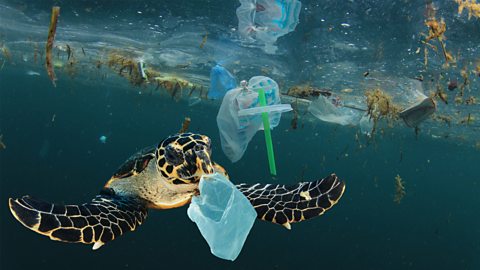
Ocean pollution
Around 70% of the surface of the Earth is covered by water.
Lots of plastic ends up in our oceans. We call this ocean pollution.
In the ocean, plastic breaks down into smaller and smaller pieces.
These tiny particles of plastic, known as microplastics, are eaten by fish and other sea creatures.
Watch: Plastic and sea life
Join Lindsey from Blue Peter as she finds out how plastic waste harms the seabirds living on Bass Rock in Scotland.
ALL: Hi, Lindsey! We've been busy cleaning the beach and helping the seabirds. Come help us.
ALL: Save our seabirds!
I'm totally up for getting involved, but if I want to help the seabirds, I've got to take to the sea. All aboard!
North Berwick in Scotland is home to some amazing wildlife.Puffin, puffin! Right next to the boat and I'm off to a place where 150,000 seabirds live.
Bass Rock. It's so white, it looks like it's covered in snow, but those are actually all birds, which is mind-blowing.
The birds covering Bass Rock are called gannets and there is one person who's been taking care of these birds for nearly 20 years. Meet Maggie.
Maggie, I've got to say, this is spectacular. Why have the birds actually chosen to live here? What do they love so much about this environment?
They've been here for centuries. They like the sheer cliffs and also, they've got good fishing out here, off the North Sea. If you've got food and somewhere nice to live - perfect.
LINDSEY: Happy birds. Except they do face a few issues, don't they?
MAGGIE: They do indeed.
One of the worst things we see is entanglement - when they get caught in fishing line or something. If it gets caught round their bill, they can't feed. If it gets caught into their nest, their chick maybe gets entangled and, sadly, it will just die. So these are things we've got to really look out for.Litter, litter! That was a bit…
LINDSEY: Get it!
MAGGIE: I'm going to have to go and get it. Got it!
LINDSEY: She's got it.
There are no people living on Bass Rock, so all of the litter has been washed ashore by the sea. Oh, yeah, the rope. Hadn't even seen that. That's what they get caught in.
LINDSEY: There's rope here.
Oh, you don't notice how much there is, do you, until you actually start looking for it? In the last five minutes, I've pulled a plastic straw out of a gannet's nest, a sweetie wrapper and a piece of rope out of another one. When we don't bin it, this is where it ends up.
The work doesn't end there. Potentially harmful rubbish isn't just found in the nests, it can be found all over the island, which is shocking, considering humans don't live here.
Oh, my goodness. Crisp packet, crisp packet. Another wrapper here. Look how old that is. It's really disintegrating. So has that been here for years and years, then? Probably years, yes.
It's shocking how, in just this space since we walked up the stairs, we've filled a bucket with plastic rubbish. It's actually pretty upsetting to see this much on an island like this which is just home to over 150,000 birds.
MAGGIE: 150,000 birds, yes. And they're having to live amongst this rubbish that we put here.
Beach cleans are, in some areas, paying off, there's no question, and I think we see this very much here in North Berwick. It's made an immense difference and when you get high tide, any rubbish that's on the beach just gets swept back out. We're still getting high tides, but we're not seeing as much rubbish floating in the seas. See? Slowly, slowly, we are making a difference.
There is a point going out to your beach, there is a point picking up litter, there is a point putting stuff in the bin. As you can see, protecting our seabirds is a big job, but, thankfully, Maggie isn't working alone.
ALL: Yeah!
I'm heading back to shore to meet these eco-warriors who are hunting tiny plastics known as nurdles, which are really dangerous to our coastal wildlife. Billions of these nurdles are used each year to make nearly all our plastic products, but many end up washing up on our beaches. Ada, explain to me, because I've never seen one, what is a nurdle?
Well, all these little plastic bits in this jar are nurdles. Some of them can be, like, small beads.
Oh, I can see, and why are they really bad news for our beaches and our coasts?
Well, some of them can be toxic and if, say, like, a seabird ate one of them, then it could die from the toxin in it.
So they really are bad news for our coasts, aren't they?
The wildlife club are not just searching for these tiny balls of plastic, they're recording everything too. I think we've got six so far. And the problem with nurdles is that they are teeny tiny, aren't they? And you don't exactly know if they're a tiny bit of plastic or not. Giles, are those nurdles?
GILES: Yeah, they are.
LINDSEY: Right, let's mark them down. Two nurdles.
The data we're collecting is vital when it comes to monitoring the amount of plastic on our coast.
Why is it really important that we come and clean up our beaches? This is the only planet we have. There isn't another planet over there, like, floating there with no humans on it. You know what? If I've learnt anything from this trip, it's just that a tiny, tiny bit of plastic can have a devastating impact.
But, as these guys are showing you, they're getting out there, they're making a huge difference and you can do that too. Could even earn one of these.
How can you help to stop ocean pollution?
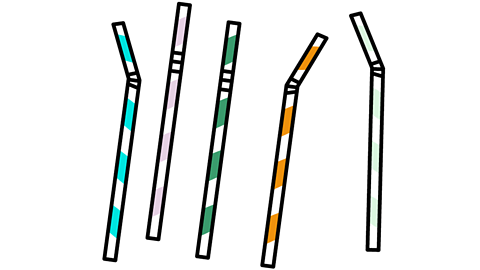
Some plastic items are made to be used once and then thrown away. These are called single-use plastics.
One of the best ways to stop ocean pollution is to reduce the amount of single-use plastics we use.
There are lots of ways you can do this and make a big difference to the planet.
Take a look at this slideshow to learn more.
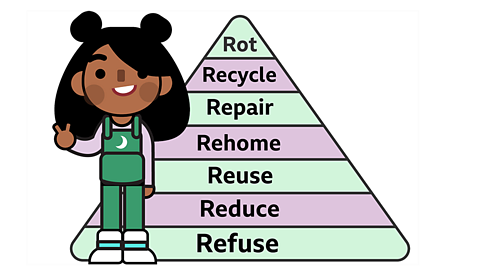
Image caption, Click on the arrows below or swipe the pictures to find out how you can make a difference.
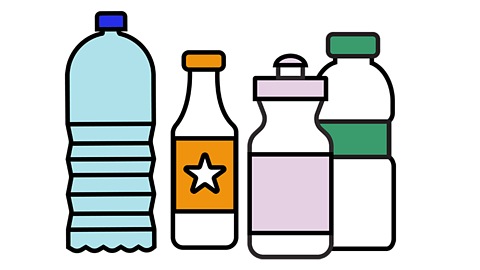
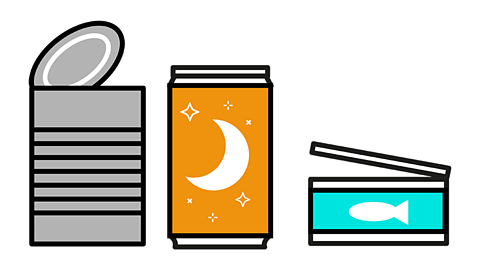
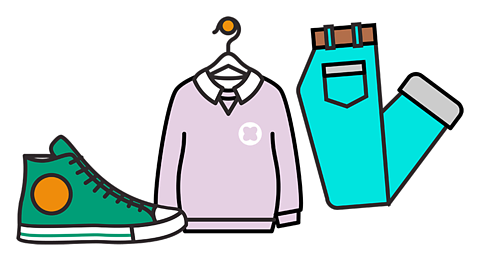
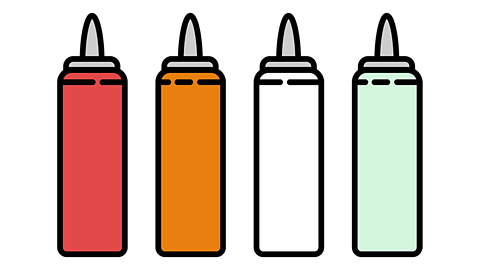
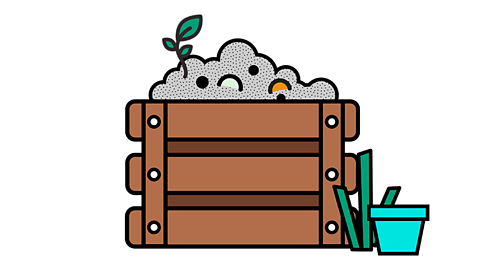
1 of 8
What can you recycle?
There are a number of materials that can be recycled. Look at this slideshow to learn more.
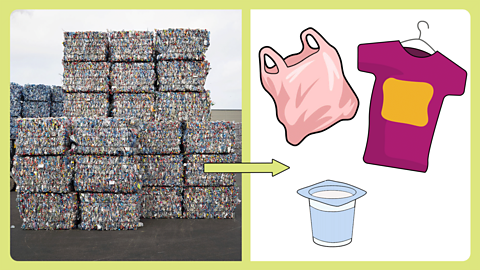
Image caption, Plastic
Lots of plastic can be recycled and made into things such as carrier bags, food trays and even some clothes.
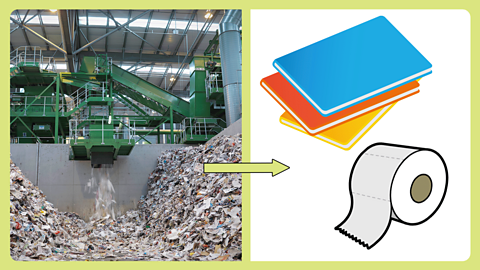
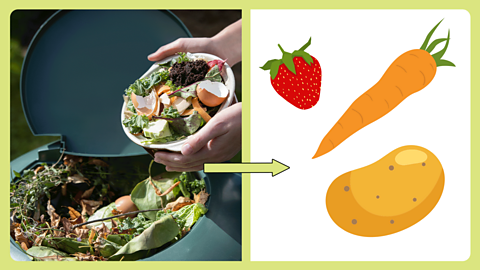
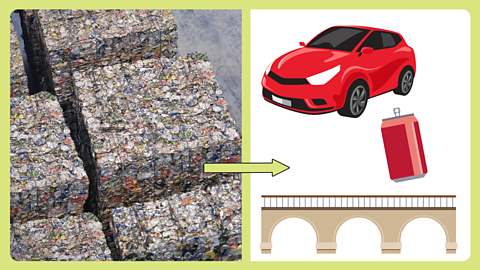
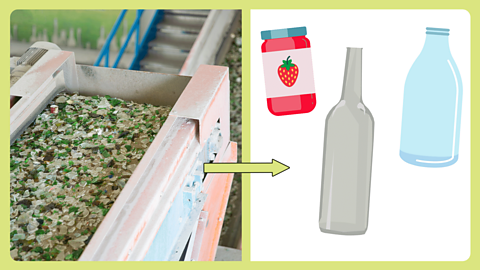
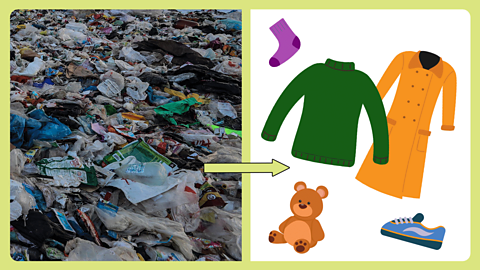
1 of 6
Discover more on KS2 Geography
You can learn much more about the planet and sustainability in the articles below.
What is sustainability?
KS2 Geography
Explore sustainability and plastics
KS2 Geography
Protecting the environment
KS2 Geography
English
When you persuade someone in your writing, your aim is to get them to agree with your point of view.
Persuasive writing can help us to talk about important topics, like plastic waste and pollution, and encourage the reader to take action.
Activity - Write a persuasive article
Write a persuasive newspaper article to encourage people to recycle their used glass, paper and plastic.
Include some of the important facts and information you have learnt that will help the reader to understand the importance of recycling and why they should do it.
Think about:
What do you want the reader to do after reading your article?
How do you want the reader to feel when reading your article?
How can you encourage the reader to recycle?
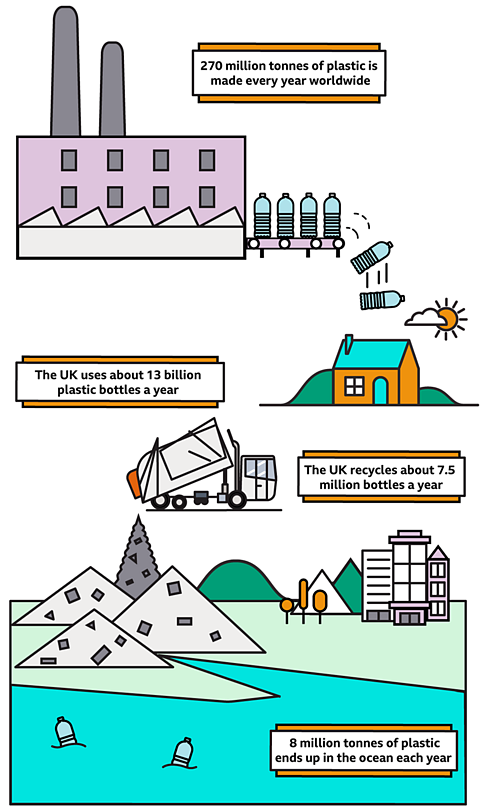
You can use some of the facts below to get you started.
Discover more on KS2 English
Have a look at the articles below to learn more on how to make your writing even better!
Exploring persuasive writing
KS2 English
Using punctuation marks
KS2 English

Proofreading and identifying errors
KS2 English
Quiz - Recycling
The Regenerators
Recycling isn't the only way we can help to care for the environment and reduce climate change.
Check out The Regenerators to find more great resources on how you can help and make a huge difference.
The Regenerators
BBC Bitesize

More resources from the BBC
You can find many more amazing resources about recycling from around the BBC.
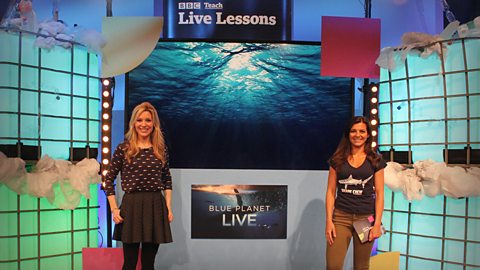
Blue Planet live lesson
BBC Teach

The waste-free challenge
BBC Teach
Where next?
Play BBC Bitesize educational games! game
Fun, interactive games for children aged 4-11, with maths, English, science, history and many more subjects.