Welcome to The Regenerators.
Introduction
Deep in the ocean there are over 250,000 different species of animal!
However, many of these creatures are in trouble because of the pollution and waste that humans have produced.
Don’t worry, there are lots of things we can all do to make less waste and help our oceans.
What lives in the ocean?
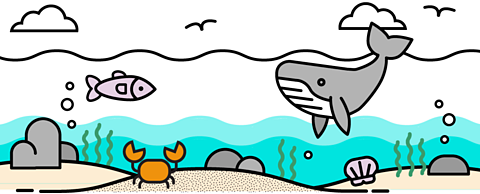
The ocean covers most of the planet that we call home. Around 70% of the surface of the Earth is covered by water.
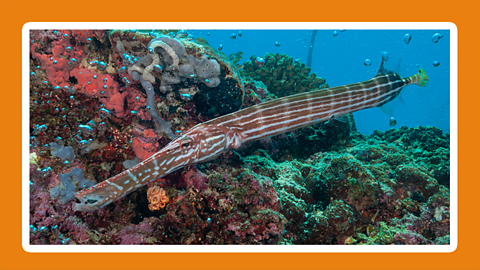
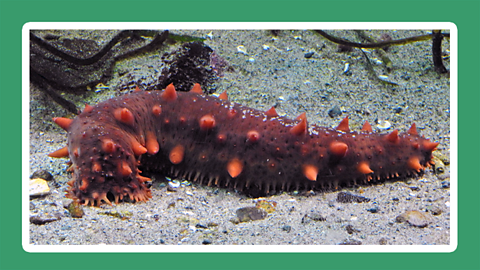
There are many strange and wonderful living things in the world's oceans.
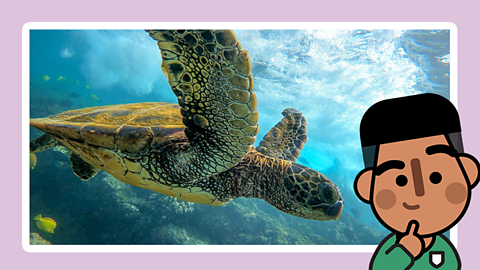
Image caption, Green sea turtles
Unlike other turtles, green turtles are herbivores. This means they eat plants and algae rather than other living creatures.
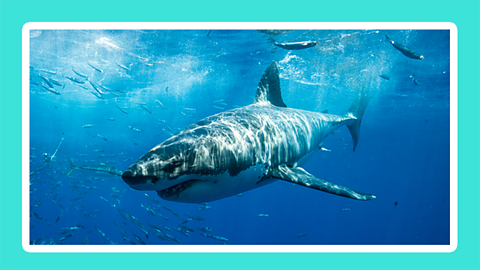
1 of 4
Classifying living things in the ocean
You've probably noticed the creatures that live in the ocean can look very different from each other.
We can sort them into different groups according to the features that they share. We call this classification.
Keeping the ocean clean
Just as we take care of where we live by keeping it clean and tidy, we need to keep animals' homes clean and tidy too.
Sadly, lots of the plastic we use ends up in the ocean.
Watch this video to find out why plastic is a problem.
Narrator: Plastic is useful and we use it everyday.
It's found in games, clothes, drinks bottles, bags computers, phones, food trays, signs, pipes, multicoloured plastic bananas… err what? Well yeah, the point is we use plastic A LOT!
Plastic can be made in to anything and it's super strong. But that also makes it really difficult to break down if it gets into the environment
Over time, a real banana will turn brown, rot and break down into the soil. A multicoloured plastic banana, like this, could take hundreds and hundreds of years to break down. And even then, it's still plastic just in smaller bits.
So what do we do with our plastic? Well, we can throw it in the bin and it gets collected by a lorry. But with so much plastic around, Some of it, unfortunately, ends up in the sea.
The sea creatures can confuse those colourful plastics with a tasty meal, or even get trapped in plastic waste. But plastic doesn't only end up in the ocean. Sometimes that waste plastic is burnt. Which pollutes our air and harms wildlife. Or we dump it somewhere and pretend it doesn't exist.
We need to make a change together. We can use less plastic to start with. I never should have bought this plastic banana.
The best thing we can do is reuse it.
A plastic drinking bottle makes a great… Plastic drinking bottle. Or we can use it for something else, like turning it into a planter for your garden. But if we can't reuse it, we can recycle it.
Recycling is taking waste and turning it into useful materials for something else.
We can send the waste plastic to recycling centres. Here it's sorted, shredded and used to make new things. This can be expensive and difficult, but it does mean some old plastic can become new bags, rugs, plant pots, dog collars even shoes.
We can help the planet because we're reusing what we already have. Use less plastic, make less waste and no more 400 year old bananas in the sea.
Plastic should not be in the ocean, so we call this pollution.
Ocean pollution can make animals very ill, ruin their homes and make it harder for them to find food.
How much plastic do you think goes into the ocean every year?
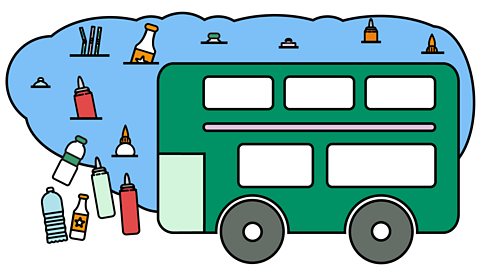
Around 8 million tonnes of plastic ends up in the ocean every year.
That’s the same as 100,000 double decker buses’ worth of plastic!
Plastic and wildlife
Join Lindsey from Blue Peter as she finds out how plastic waste harms the seabirds living on Bass Rock in Scotland.
ALL:Hi, Lindsey!We've been busy cleaning the beach.And helping the seabirds. Come help us.ALL: Save our seabirds!
LINDSEY:I'm totally up for getting involved,but if I want to help the seabirds, I've got to take to the sea.All aboard!
North Berwick in Scotland is home to some amazing wildlife.Puffin, puffin! Right next to the boat.And I'm off to a place where 150,000 seabirds live: Bass Rock.It's so white, it looks like it's covered in snow,but those are actually all birds, which is mind-blowing.
The birds covering Bass Rock are called gannets,and there is one person who's been taking care of these birdsfor nearly 20 years.Meet Maggie.
LINDSEY:Maggie, I've got to say, this is spectacular.Why have the birds actually chosen to live here?What do they love so much about this environment?
MAGGIE:They've been here for centuries.They like the sheer cliffsand also, they've got good fishing out here, off the North Sea.If you've got food and somewhere nice to live – perfect.
LINDSEY:Happy birds.Except they do face a few issues, don't they?
MAGGIE:They do indeed.One of the worst things we see is entanglement –when they get caught in fishing line or something.If it gets caught round their bill, they can't feed.If it gets caught into their nest,their chick maybe gets entangled and, sadly, it will just die.So these are things we've got to really look out for.
LINDSEY:Litter, litter!That was a bit…
MAGGIE:I'm going to have to go and get it.Got it!
LINDSEY:She's got it.
There are no people living on Bass Rock,so all of the litter has been washed ashore by the sea.Oh, yeah, the rope.Hadn't even seen that.That's what they get caught in.
LINDSEY:There's rope here.Oh, you don't notice how much there is, do you,until you actually start looking for it?
In the last five minutes,I've pulled a plastic straw out of a gannet's nest,a sweetie wrapper and a piece of rope out of another one.When we don't bin it, this is where it ends up.
The work doesn't end there.Potentially harmful rubbish isn't just found in the nests,it can be found all over the island, which is shocking,considering humans don't live here.
Oh, my goodness. Crisp packet, crisp packet. Another wrapper here.Look how old that is. It's really disintegrating.
LINDSEY:So has that been here for years and years, then?
MAGGIE:Probably years, yes.
LINDSEY:It's shocking how, in just this space since we walked up the stairs,we've filled a bucket with plastic rubbish.It's actually pretty upsetting to see this muchon an island like this which is just home to over 150,000 birds.
MAGGIE:150,000 birds, yes.And they're having to live amongst this rubbish that we put here.
Beach cleans are, in some areas, paying off, there's no question,and I think we see this very much here in North Berwick.It's made an immense difference and when you get high tide,any rubbish that's on the beach just gets swept back out.We're still getting high tides,but we're not seeing as much rubbish floating in the seas.See? Slowly, slowly, we are making a difference.
There is a point going out to your beach,there is a point picking up litter,there is a point putting stuff in the bin.
As you can see, protecting our seabirds is a big job,but, thankfully, Maggie isn't working alone.
ALL:Yeah!
LINDSEY:I'm heading back to shore to meet these eco-warriorswho are hunting tiny plastics known as nurdles,which are really dangerous to our coastal wildlife.
Billions of these nurdles are used each yearto make nearly all our plastic products,but many end up washing up on our beaches.
LINDSEY:Ada, explain to me, because I've never seen one, what is a nurdle?
ADA:Well, all these little plastic bits in this jar are nurdles.Some of them can be, like, small beads.
LINDSEY:Oh, I can see,and why are they really bad news for our beaches and our coasts?
ADA:Well, some of them can be toxic and if, say,like, a seabird ate one of them,then it could die from the toxin in it.
LINDSEY:So they really are bad news for our coasts, aren't they?
The wildlife club are not just searchingfor these tiny balls of plastic,they're recording everything too.
CHILD:I think we've got six so far.
LINDSEY:And the problem with nurdles is that they are teeny tiny, aren't they?And you don't exactly knowif they're a tiny bit of plastic or not.
LINDSEY:Giles, are those nurdles?
GILES:Yeah, they are.
LINDSEY:Right, let's mark them down.Two nurdles.
The data we're collecting is vitalwhen it comes to monitoring the amount of plastic on our coast.
LINDSEY:Why is it really important that we come and clean up our beaches?
CHILD:This is the only planet we have.There isn't another planet over there,like, floating there with no humans on it.
LINDSEY:You know what? If I've learnt anything from this trip,it's just that a tiny, tiny bit of plasticcan have a devastating impact.But, as these guys are showing you, they're getting out there,they're making a huge difference and you can do that too.Could even earn one of these.
What can we do to help?
One of the best things we can do is to make less waste.
This picture shows us some of the easy things we can do instead of throwing things away.
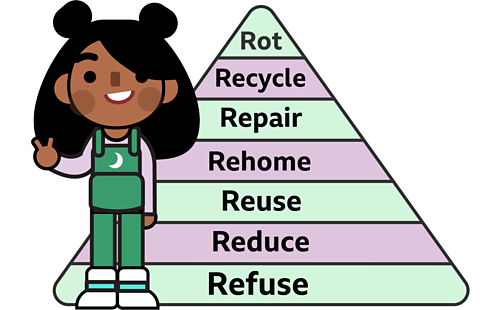
Lots of materials cause pollution, including plastic. We deal with them in different ways.
How many types of materials can you spot?
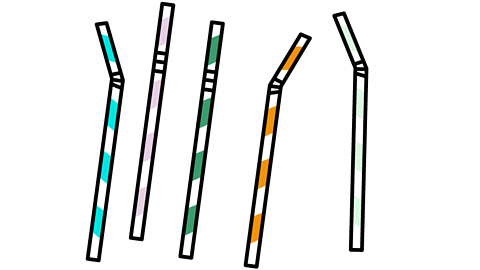
Refuse
Many shops offer paper straws. Paper is better than plastic as it breaks down faster, but it still creates waste.
Maybe there are times when you don't need a straw at all? It's good to say no to things which you don't really need.
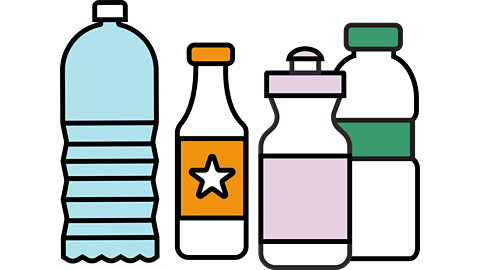
Reduce
Try to carry a water bottle with you that you can keep refilling instead of buying bottled drinks every time you go out.
Plastic bottles can be cleaned after use, so they won't wear out by being used again and again.
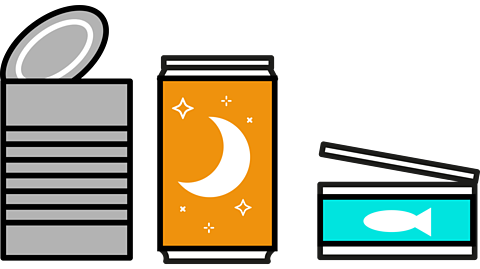
Reuse
Lots of food comes in metal cans and glass jars.
After being emptied and cleaned, they can be used as small plant pots. The strong material will hold the soil, water and plant safely inside.
Top tip: put stones at the bottom of the jar before adding soil. This will help water to drain.
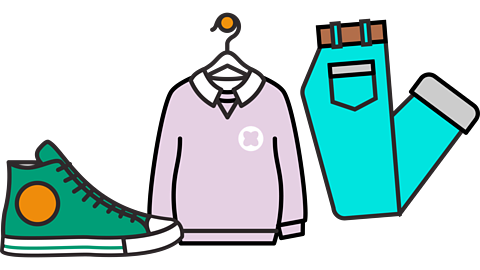
Rehome
You can give clothes that you don’t want any more to charity shops.
Fabrics like cotton and denim cannot be melted and reshaped like metals or plastic, but they can be cut up and redesigned.

Repair
Shoes, bags, models and toys are often made with plastic bits. Strong glue can give broken items a second chance.
Ask an adult for help when using glue.
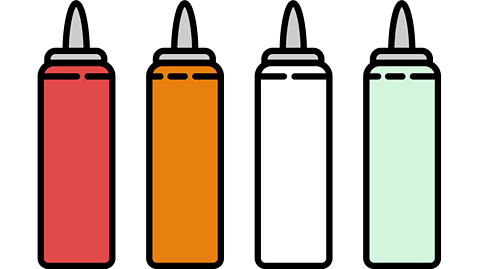
Recycle
Shampoo, sun cream and sauce bottles are usually made from plastic, but they're harder to re-use.
Instead, check for the recycle symbol and put the bottle in the correct recycling bin.
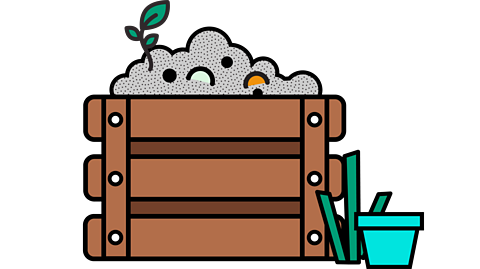
Rot
There are some materials which can't be reused, repaired or recycled.
We sometimes have to throw these items away, but only if we are sure there is no other choice.
Remember that leftover food can be used for compost to help in the garden.

We can help ocean life
If we all try hard to deal with waste materials in the right way, there will be less pollution in the ocean.
Then the many creatures who live there will have a better chance to thrive.
Lesson complete
Well done Regenerator, you've completed this lesson. Now let's see what you can remember.
Plastic bottle bird feeder
Upcycling is another word which means to reuse something.
Watch this video from Springwatch Wild Academy to find out how to turn a plastic soap dispenser bottle into a bird feeder.
Remember to ask an adult for help when cutting plastic.
MADDIE:So, Billy, earlier, we were sorting our plasticsinto recyclables and not recyclables,and we discovered that soap dispensers—I think we've got one here…
BILLY:We have.
MADDIE:This is a tough one.Because one part of it can be recycled, the other can't.So we're going to re-use it instead. That's one of our three Rs.We're going to turn it into a bird feeder.
(Billy chuckles)
MADDIE:Fancy it?
BILLY:Let's give it a go.
MADDIE:OK. First, we've cut one large hole in the front of the soap dispenser,and then we've cut two small holes—one underneath that first large one,and then if we turn it round, there's a small hole at the back.If we take out the pump, that's the bit that isn't recyclable,we can pop it through those two small holes……and it becomes a perch for a bird!
So if I hold this for you… we've got a piece of string,a bit of twine, and all we need to do is tie that around the top.
MADDIE:Ooh, look at that! Were you a Boy Scout?
BILLY:Perfect. Yeah.
MADDIE:You had a knot ready!
BILLY:I've done this before.
MADDIE:The last thing we need to do is fill it with seeds.When we were doing our seed-bombing, we had some seeds left over,so we thought, make sure we use them up.So let's pop the seeds in there. That's it!Top it right up, and…
MADDIE:All right, a bit keen, Billy!
BILLY:This is fine. If they go on the floor, the birds will pick them up.
MADDIE:But the good thing is…Go on, then, you can take this.
BILLY:Thank you.
MADDIE:They're all falling out. But a bird can come along, eat the seedsand perch there on the dispenser.So there you go, really, really simple thing that you can do.
Now, we actually made one earlier.This time, we used a large bottleand some leftover bamboo canes from when we made our insect hotel.We haven't had anyone come and visit it yet, though.However, we're hoping that we will get some birds coming to visit.
BILLY:As soon as they find that, they'll be right on that.
MADDIE:I think they will. I really hope so!
Equipment
- Soap dispenser
- Scissors
- Twine
- Seeds
- A cup
Duration
Approximately 20 mins
Once you've put your bird feeder outside, why not keep watch and draw the birds which turn up to eat there?
Plastics and the environment worksheet
Complete this differentiated worksheet from Twinkl all about about the problem plastics are posing to the environment and how you can help make a difference.
There's more to learn
Explore more lessons from The Regenerators and content from around the BBC.
How has my local area changed?
GREEN CLASSROOM
Which pollinators visit my garden?
GREEN CLASSROOM
Year 1 - 2 and P2 - P3
GREEN CLASSROOM
More from The Regenerators
BBC BITESIZE