Learning focus
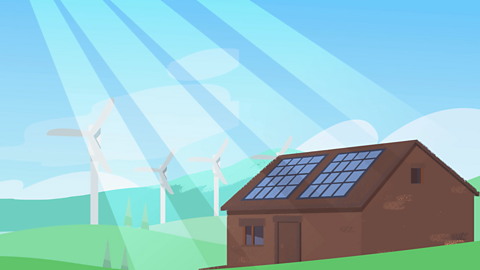
Learn how you could help protect the environment and the steps you could take to protect it.
This guide contains:
six videos looking at why it's important to protect the environment and different ways which you could help.
three activities to think about and test your knowledge on protecting the environment.
How humans impact the environment
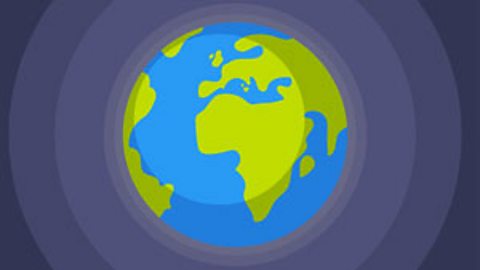
Humans affect the environment in positive and negative ways.
Watch the clip below and see if you can spot the different positive and negative ways humans are affecting the environment.
All the creatures on planet earth affect each other. That's what we call ecosystems.
Usually they affect each other in quite small ways. But there's one creature who affects all the others in quite an extreme way.
It's called the human being.
Because there are so many of us, and because we've learnt to make very powerful tools, we can make huge changes, like cutting down all the trees in a forest.
Or sometimes we make changes that we hardly even notice, like throwing litter away.
When plastic ends up in the ocean it gets eaten by lots of creatures.
But it's not just them who get poisoned by the plastic, it's all the bigger creatures who eat these as well.
But because as humans we can think about these things and understand them, we can also change ecosystems in a positive way…
Like build marine parks to protect endangered species.
There are also many things that you can do that make a difference, like recycle or grow your own vegetables.
These things might seem small, but if enough people do it, it can have a huge impact on the planet's ecosystem.
Activity - Positive or negative?
Did you spot which things have a positive and negative affect on the environment?Try this activity to see if you were correct!
Cutting down trees and littering have a negative effect on animals and plants.
Protecting endangered species and cleaning lakes and seas has a positive effect on the environment.
Negative impacts of plastic
There are many different things you can do to help the planet. With the help from The L.A.B , let's find out what we can do to help the planet.
Plastic is one of the most problematic materials which have a negative effect on the environment, the pupils at Highpark Primary school look at how solutions to how we can solve the problem. Watch the clip - Can you think of ways to solve the problem?
The problem with plastic
We are Highpark Primary and we need to to talk to you about plastic.
Every day about 8 million pieces of plastic enter the ocean.
Plastic can kill animals and ruin their natural habitat.
The world produces 300 million tonnes of plastic each year.
Plastic is made from harmful fossil fuels.
People can be harmed by eating fish contaminated with plastic.
Plastic can stay in the ocean for a very long time.
We need to change the way we think about plastic.
Here’s how YOU can help!
At Highpark we eat our snacks inside so we don’t litter.
Take your own cup when you’re going to get a cup of coffee.
Drink from re-usable bottles.
We can invent a machine that picks plastic up in the ocean.
Buy food that isn’t wrapped in plastic.
We could have more bins.
Re-usable bottles for things like shampoo.
Organise a litter-picking event.
Use metal straws instead of plastic ones.
Instead of using plastic milk cartons, just use a cow!
Together we can solve the problem of plastics.
Recycling
By recycling you can have a positive effect on the environment. Learn about recycling and its effect on the environment with this video.
Learn what to do with your rubbish.
What should I do with my rubbish? Rubbish. Eurgh. It's not very nice. Usually it's smelly and sticky and can be dangerous too. No wonder we throw it away.
But have you ever thought about what happens to rubbish when you throw it in the wrong place? Throwing it away without thinking can mean someone else is harmed by it…or something else.
People and animals can be trapped or injured by litter. It's not just animals who are affected by litter. Their habitats can also suffer. All because people don't think before throwing their rubbish away.
Putting your rubbish in a bin is easy. It's so much better for people, animals and the environment. And lots of litter, like plastic, paper, glass, metals, even food and garden waste can be recycled. To be used again and again and again.
So the next time you need to get rid of some rubbish, think about what you're doing. Because if we want a healthy world, we need to work together to protect it.
Recycling at school
As well as recycling at home, you may recycle at school. Learn how Stow Primary school have developed a mission to become more sustainable by using plastic less and recycling more in this clip.
Stow Primary School’s mission to become sustainable
Hi, I’m Pierre, and welcome to Stow Primary School.
Today I’m going to talk to you about Stow’s sustainability story.
The people in our school have been working together to disrupt and raise awareness on single-use plastics.
We’ve also made lots of changes here at school.
I caught up with some of my other school mates to find out what they have been doing.
Good morning, what is your name and what class are you in?
I’m Milo and I’m in Form P1
I’m Iona and I’m in P1.
What have you guys been doing in your class to stop using single-use plastics?
We had plastic toothbrushes and now we’ve changed them to bamboo toothbrushes.
That’s really good. Wow!
We made this cow, called ‘Reece the Recycled Cow’ and he’s made out of recycled pom-poms and newspaper.
Can you tell me one fact that you’ve learned about sustainability?
Black plastic is bad for the environment because it can’t be recycled.
Good afternoon, what are your names and what class are you guys in?
I am Michael and I’m in P6.
And what have been the objectives of your class?
Well, our classroom has really been trying to recycle as best as we can. We’ve actually got our own water bottles. It said ‘disrupters’ on them because we were part of the disrupters event.
How do you think our work influenced the wider community?
Oh, it’s influenced a tonne, like, all the time we have just random people coming in, dropping off their stuff to be recycled.
So, what is your name and what class are you in?
I’m Rory and I’m P6 also.
Can you tell me something you’ve learned about sustainability along the way?
By 2050 there will be more plastic and pollution in our oceans than there are fish.
Thank you very much.
You’re welcome.
Thank you.
What are your names and what classes are you guys in?
I am Reece and I am in P3.
My name is Matthew and I am also in P3.
What have you guys been doing in your classroom to reduce single-use plastics?
We’ve been plastic investigators.
We have a recycling centre round by the office and we recycle batteries, pens, ink cartridges, milk carton lids and crisp packets.
Can you tell me something you’ve learned about sustainability?
Plastic is bad for the environment and it’s bad for our wild and sea life.
It is killing animals isn’t it?
Especially fish.
Matthew?
Since the fish are eating plastic, and we eat fish, maybe we might even be eating plastic.
Wow! Thank you very much guys. Well done!
You’re welcome.
Good afternoon, what are your names and what classes are you all in?
My name is Imogen and I’m P5.
My name is David and I’m P5.
My name is Lewis and I’m P4.
What have been the objectives of your classroom?
We’ve been cutting crisp packets and washing them.
We’ve been learning about the food chain and how plastic can affect it. Like, how fish eat plastic, we eat fish, and that can cause us to get cancer and diseases and so on.
How do you think our work influenced the local community?
I think it has influenced it a lot because we’ve been doing a lot of litter-picks and it’s made Stow a lot prettier.
Thank you all very much.
You’re welcome.
Good morning. What is your name and what do you do?
I’m Debbie Mathewson and I’m Principal Teacher at Stow Primary School.
How has the work of the disrupters changed your attitude towards plastics?
The work of the disrupters - I’m certainly much more conscious of single-use plastic and the volume of single-use plastic that we’re using in the World. And when I’m out shopping, I’ve made some significant changes myself. I try to buy loose fruit and veg, I always use a refillable water bottle and I try to avoid black plastic.
What do you think the affect has been on the school community?
The affect on the school community has been huge Pierre. Not only have we changed the mindset of our pupils, but through the pupil voice which has been incredibly important we’ve changed the mindset of our parents, the Stow community and the wider world.
Thank you very much.
You’re welcome.
That’s what we’ve been doing here at Stow, but what have you been doing? Our future and time is running out.
Save our planet!
Stop using all this plastic.
Save our planet!
That would be fantastic.
Save our planet!
Our future’s in doubt.
Save our planet!
I think we need to shout.
Save our planet!
Stop making all this plastic.
Save our planet!
Make changes, be drastic.
Save our planet!
We’re all in this together.
Save our planet!
I want to live forever.
This rap today comes straight from the heart, we’ve gotta do something, we’ve gotta make a start.
Plastic takes a thousand years to decompose, so listen up this is what we propose.
Check the symbols on bottles and packets, buy the simple package and stop this racket.
Dispose of properly in the blue bin, to chuck anywhere else is a cardinal sin.
Maybe together we can come out on top, and say to manufacturers PLEASE STOP!
How can you help the planet?
Re-cap today's learning with the pupils at Stow Primary School as they let us know how we can help the planet in this clip.
Saving the planet with Stow Primary School
Here at Stow Primary we want to save the planet.
I think we should get young people to make a difference by being role-models.
Use reusable water bottles.
Don’t put your bottles in the general waste bins.
Persuade supermarkets to stop using plastic packaging.
I think we should stop cutting down trees in the rainforest for palm oil and you could just use sustainable palm oil.
I think we should recycle things properly and put them in the right bin.
I think we should reuse plastic.
Know what a good recycling product is by checking the label on the product.
Pick up litter.
I think we should cut to zero emissions and install more car charging points.
Don’t use single-use coffee cups.
Stop using plastic bottles.
Reduce your carbon footprint.
Stop climate change.
Recycle as often as you can.
I think we should get rid of all pollution and get sustainable alternatives.
Always use your own reusable containers.
I think we should use reusable nappies.
I think we should change people’s thinking on how we use plastics.
Practise
Have a go at these activities to enhance your learning on protecting the environment.
Activity - Quiz
Test your knowledge on what you have learnt with this quiz.
Activity - Things you would save
Watch this video from Pupils at Oakgrove Primary school telling us about all of the things that they think should be preserved.
Learn why pupils think the Earth is worth saving
What would you save?
Write a list of at least 5 items you would save.
You could say why you would save them and draw a picture too.
Where next?
Find out more with Help me out by going green on CBBC.
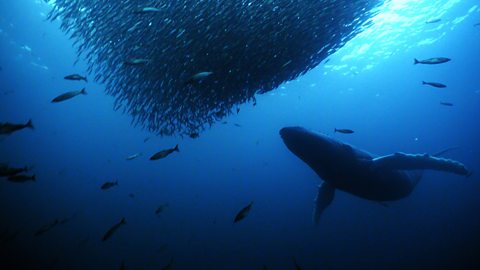
Blue Planet:Live lesson
Guided by CBBC's Naomi Wilkinson and expert wildlife biologist Lizzie Daly, we explore what constitutes a healthy ecosystem and discuss the threats to our oceans such as plastics and overfishing.
BBC Bitesize for Teachers:How to explain climate change to children
CBBC Newsround:What is the problem with plastic?
Race Across the Continents game - new update! game
Help this team of adventurers race their way to victory. Explore the globe in this exciting game update to discover new audio voiced by Ade Adepitan and fun animations. Challenge yourself with brand-new achievements and become a high-flyer!
More on Sustainability
Find out more by working through a topic
- count1 of 9
- count2 of 9
- count3 of 9
- count4 of 9