History
What is Remembrance Day?
Remembrance Day, also known as Armistice Day, commemorates the end of World War One when an agreement to stop fighting was reached on the 11th hour, of the 11th day, of the 11th month in 1918. The truce is called the Armistice.
It is now held to remember all those who have died in wars and is marked by a two-minute silence at 11:00am every 11th November. It is also an opportunity for people to learn from history and to think about the importance of peace.
Remembrance Day.
It's a very special day. It's Remembrance Day.
Every year, on the 11th hour of the 11th day of the 11th month, people all around the world stop what they're doing to be silent for two minutes to remember all those whose lives have been affected by conflict and war and in particular, those who have died.
The first Remembrance Day was held on the 11th of November 1919 to honour the lives of the soldiers, sailors, and airmen who died fighting in the First World War.
Today, over 100 years later, Remembrance Day is about all people whose lives have been affected by war and conflict, including wars since the First World War.
Remembrance Sunday is held on the second Sunday of November every year. Ceremonies are held all over the country to honour servicemen and women and the sacrifices they have made. The biggest ceremony takes place in London at the Cenotaph.
There are parades and members of the armed forces are joined by veterans and civilians, young and old, who have come to show their respect.
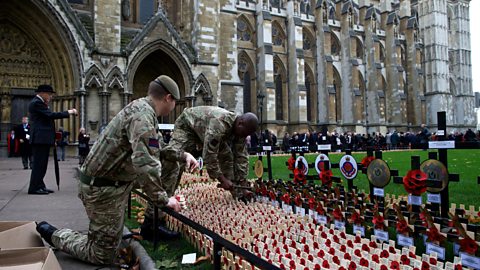
And people also lay wreaths made from poppies. The wreaths can include messages, expressing gratitude for the service people have given.
Remembrance Day is a day about respect, reflection, and peace, and that's important for lots of people, young and old.It's a day to remember all the sacrifices people have made. Respect the ones who fought for your freedom and died for you.
[Girl] Yeah.
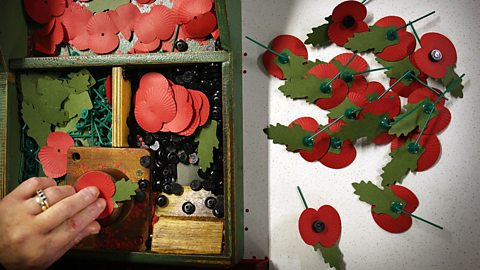
[Narrator] You'll see lots of poppies on Remembrance Day. That's because after the First World War ended, poppies were one of the only flowers that grew on the battlefields after the fighting had stopped, so they became a symbol of remembrance and hope for a peaceful future.
Today, people wear poppies in November to remember the sacrifice of past generations and also to show support for men and women in the armed forces and the poppies people wear also help others.
Volunteers like Bill sell them for donations and the money goes towards helping war veterans who are in need.
But wearing poppies and holding ceremonies aren't the only ways we can show respect. This school was bombed in World War One. So today, the pupils honour the memory of those who died here by celebrating peace. They make special posters and drawings, write poems,
“I dream of a world of peace where people can live a life of ease.
A world where there's no difference between rich and poor.”
[Narrator] and reflect on what peace means to them.
Remembrance Day is an important event in our country and for lots of young people, it's important to remember the sacrifices
that people have made to protect our freedom. Keira's great, great granddad died fighting in World War One over 100 years ago.It's incredible how many people sacrificed their life for us. It's honestly amazing and I don't know how to thank them.But at the same time, he would have been thinking about me and my future and I just want to honour him and remember him.
[Narrator] On Remembrance Day we remember the sacrifices of others, but remembrance isn't just about the past, it's also about learning from history so that we can continue to live in peace in the future.
Remembering World War One
KS2 History
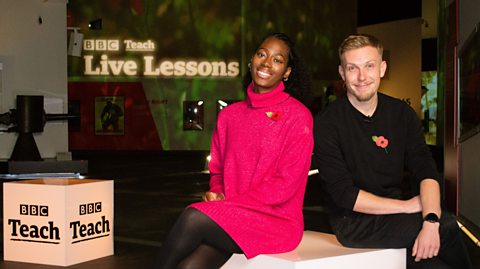
Remembrance 2023 Live Lesson
BBC Teach: Live Lessons
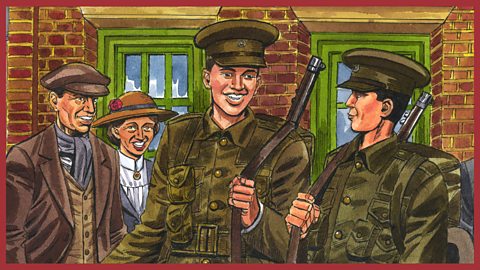
Remembrance Day - A Soldier's Tale
BBC Teach: School Radio
What happens on Remembrance day?
After World War One, many people felt it was wrong to celebrate at the end of the war because so many had died.
When the church bells struck 11 o’clock on 11 November 1919, one year after the war, people all over the country bowed their heads; buses and trains stopped moving; shopkeepers stopped serving; and the electricity was cut off to stop trams from running.
A number of traditions have come from Remembrance Day including reading poetry, poppies and even jelly babies- they were originally called peace babies.
R is for Remembrance
BBC Teach: KS2 History World War One A to Z
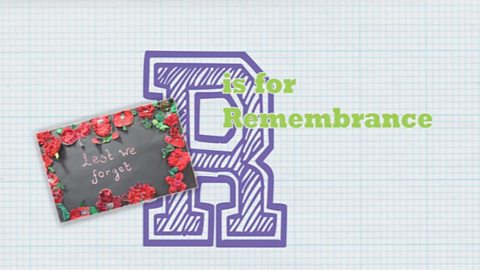
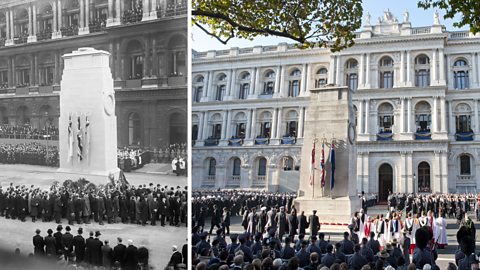
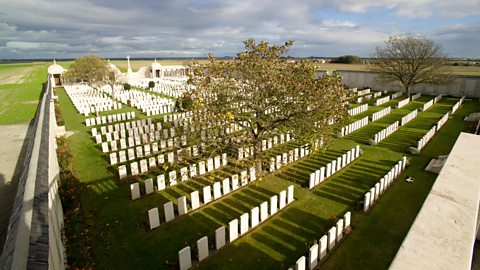
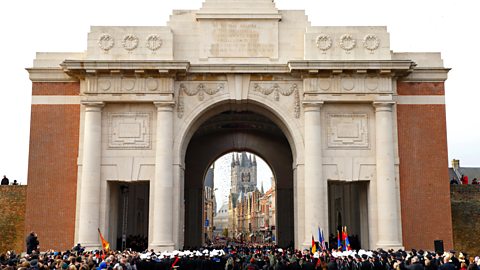
Image caption, Memorials
When the Cenotaph in London was built in 1920, people laid flowers there in memory of loved ones. The tradition continues to this day.

1 of 7
Key Vocabulary
| Word | Definition |
|---|---|
| Armistice | An agreement made by opposing sides in a war to stop fighting and find a truce. |
| Poppy | A flower that was found to grow on WW1 battlefields after the war which came to symbolise remembrance. |
| Cenotaph | A memorial to commemorate servicemen and servicewomen who have died in war. One of the most famous ones is The Cenotaph in Whitehall, London. |
| Veteran | Somebody who used to serve in the Armed Forces. |
World War One: Learn more
Discover more about World War One. Find out:
- How World War One started
- What life was like in the trenches
- How children helped the war effort
Why did World War One start?
KS2 History
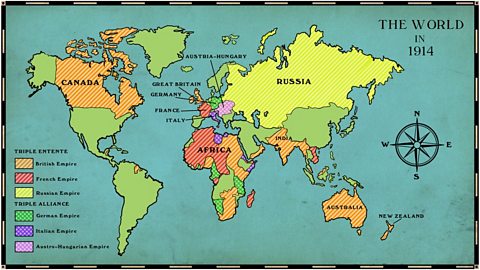
How did children help in World War One?
KS2 History
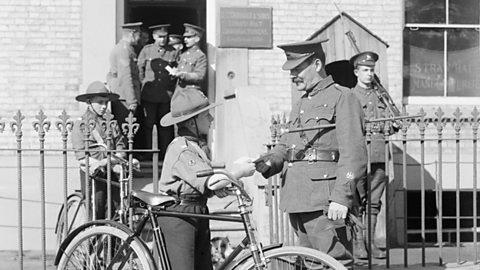
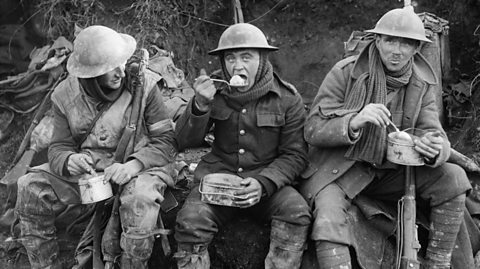
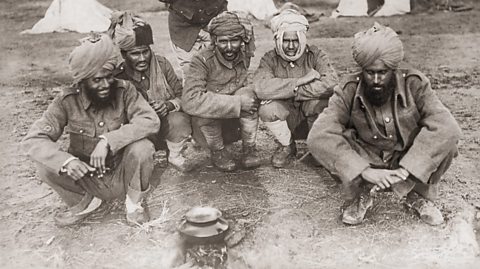
The role of the British Empire in WW1
KS2: History
Women in WW1
KS2: History
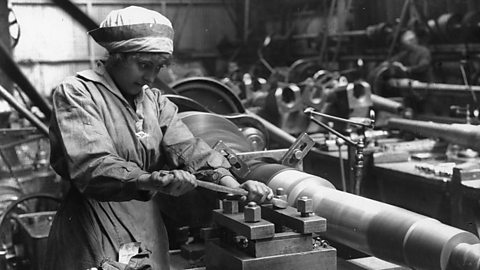
Sergeant Stubby, the war hero dog
KS2: History
World War One with BBC Teach
World War One A - Z
BBC Teach
Life in the Trenches
BBC Teach: KS2 History
World War 1 Performance Pack
BBC Teach: KS2 Music / Dance / Drama / History
Art
Poppies

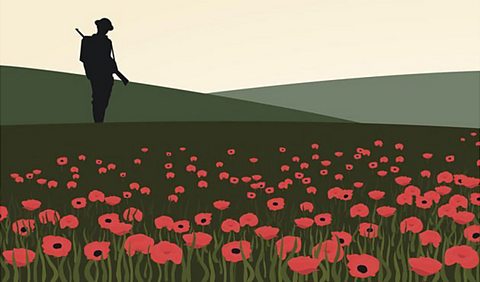
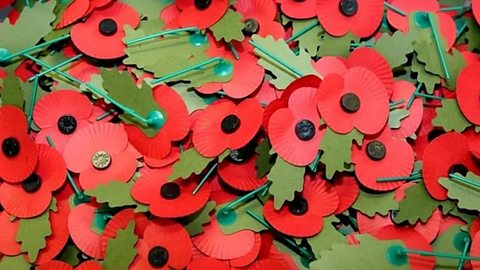
Poppies have become a globally recognised symbol of Remembrance Day. The reason poppies are used to remember those who have given their lives in battle is because they are the flowers which grew on the battlefields after World War One ended.
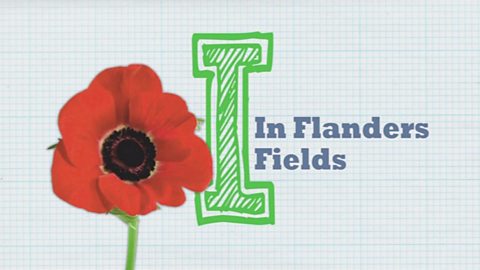
John McCrae, a famous wartime poem, referenced poppies in his famous poem 'In Flanders Fields'.
"We shall not sleep, though poppies grow in Flanders Fields".
The poppy is still worn by millions of people every November.
Activity: Paint a poppy
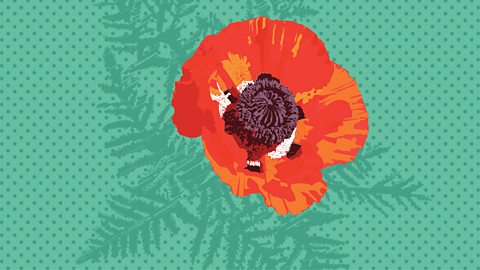
The poppy has been a flower that artists have drawn, painted and sculpted over many decades.
Create your own poppy artwork in a style of your choice.
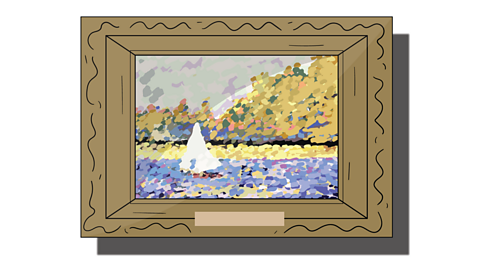
Pointillism: Georges Seurat was one of the most famous pointillist artists.
Pop Art: Andy Warhol was a famous pop art artist.
Mixed Media: Use a combination of styles, tools and materials to create your masterpiece.

English
War Poems
Some soldiers wanted to describe the horrors of the war so that people at home could understand how it felt.
Laurence Binyon was an English poet. In 1914, he wrote 'For the Fallen'.
Watch: 'For the Fallen' by Laurence Binyon
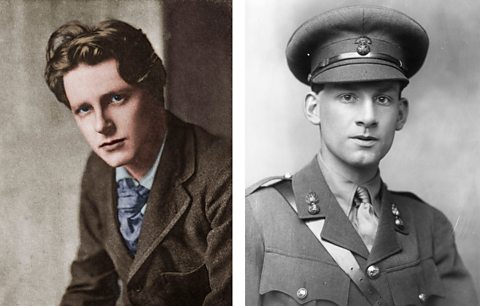
Rupert Brooke and Siegfried Sassoon were also British soldier poets as well as Lieutenant Colonel John McCrae, a Canadian field surgeon who wrote one of the most famous poems, In Flanders Fields.
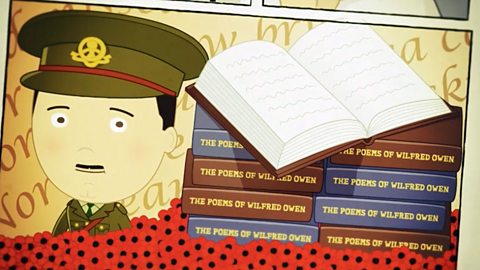
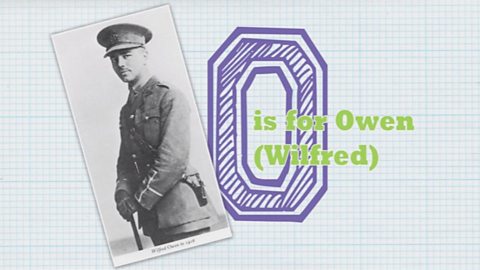
Wilfred Owen is one of the most famous poets of WW1. He wrote one of the most famous war poems ever written, Dulce et Decorum Est which is still studied and read today.
Who was Wilfred Owen?
Bitesize: KS2 History
O is for Owen (Wilfred)
BBC Teach: KS2 History World War One A to Z
I is for In Flanders Fields
BBC Teach: KS2 History World War One A to Z
Activity: Write a poem review
Read and listen to 'For the Fallen' by Laurence Binyon or 'In Flanders Fields by John McCrae.
Think about how the poem makes you feel. What can you see or hear? What kind of language do the poets use to create these feelings?
Analysing poetry
KS2: English
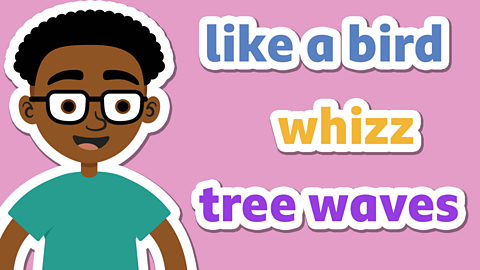
Figurative language in poetry
KS2: English
Activity: Remembrance Day Quiz
Activity: Thinking points

Have a look at the thinking points below and think about your answer to each question. You could even write them down on a piece of paper or discuss them with somebody else if you want to.
Why is it important for people to remember those who served and died in wars?
Why is peace important?
Why do you think people continue to wear poppies over 100 years later?
Activity: Game
Step back in time and embark on an exciting adventure to explore the wonders of ancient civilisations! In this interactive history game, you'll travel to the heart of legendary societies like Ancient Egypt and the Maya Civilisation. Become an explorer, archaeologist, or ruler as you solve puzzles, collect fact cards, and unlock secrets of the past.
But history doesn’t stop there! The game also takes you to the battlefields of World War I. Move through the trenches, discover life in wartime Britain and take part in the Christmas Day Truce.
Are you ready to uncover the mysteries of the past and make history come alive? Your adventure through time begins now!
Play Bitesize Primary games. game
Fun and educational primary games in science, maths, English, history, geography, art and design, computing and modern languages.