In Flanders Field is a famous poem.
Written by Lieutenant Colonel John McCrae.
John McCrae was a Canadian field surgeon.
He wrote the poem after his friend was killed in battle.
In Flanders fields the poppies blow
Between the crosses, row on row,
That mark our place; and in the sky
The larks, still bravely singing, fly
Scarce heard amid the guns below.
We are the Dead. Short days ago
We lived, felt dawn, saw sunset glow,
Loved and were loved, and now we lie
In Flanders fields.
Take up our quarrel with the foe:
To you from failing hands we throw
The torch; be yours to hold it high.
If ye break faith with us who die
We shall not sleep, though poppies grow
In Flanders fields.
Video summary
This short film is for teachers and review is recommended before use in class.
Newsreel, photographs and commentary about Lieutenant Colonel John McCrae, a Canadian field surgeon who served on the Western Front.
He wrote a famous poem, ‘In Flanders Fields’, on the death of a comrade.
Extracts of the poem are read, over footage showing aerial views of war graves today and images of death and burial during the war.
This clip is from the series WW1 A to Z.
Teacher Notes
Pupils could read together the full text of McCrae’s poem.
Why do they think it is still so well-known today? What do they think the message of the poem is
The children could go on to compile a digital slideshow of images from a range of sources to illustrate a poem of their own choice by another poet of the First World War.
This short film is suitable for teaching history at Key Stage 2 / Second Level or above.
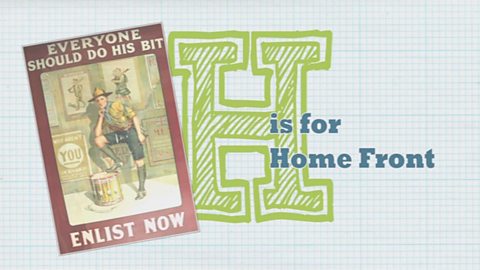
H is for Home Front. video
Newsreel and a dramatic monologue illustrate life on the Home Front in Britain during WW1.
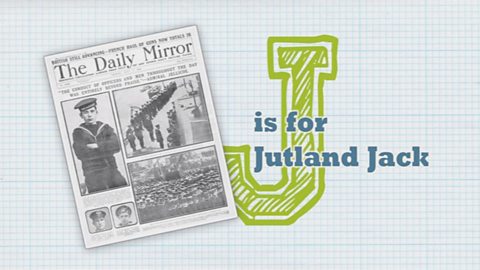
J is for Jutland Jack. video
Newsreel and commentary about the role of patriotic songs in World War One, plus a dramatic monologue about the songwriter Ivor Novello.
K is for Keep The Home Fires Burning. video
Newsreel and commentary about the role of patriotic songs in World War One, plus a dramatic monologue about the songwriter Ivor Novello.