The Homefront was the name given to people helping with the War back in Britain.
Lots of people worked in factories to make things needed for the war.
Women and children did most of the jobs usually done by men.
They also worked on farms and in ammunition factories.
And boy scouts also volunteered to help.
Charlie Waller. Aged 11. Boy Scout.
I was really excited when I was old enough to join the scouts. My brother and three of my cousins were scouts and I couldn’t wait to be one too. Most people think scouting’s just learning how to light fires and tie knots but there’s a lot more to it than that. Specially during a war.
Take this evening. Me and another scout are going to guard a railway bridge just outside the town. We have to stand there for three hours and guard it. See, German spies could be sneaking around and planning to blow up that bridge and we’ve got to be on the lookout for them. If any German spies show up tonight we’ll spot ‘em and alert the authorities straight away. That’s our job.But we don’t just do guard duties. We work in hospitals and on farms. We help fishermen and coastguards. There’s so many men away fighting they need us to help fill in the gaps.
It’s a good feeling when you put on your uniform. Makes you feel proud that you’re doing something useful for the war. Everyone in my family does something. My mum and my sister knit socks for soldiers, and my Dad … well, he’s in France. When I’m old enough I’ll join the army too but until then I’ll do my bit in the scouts.
Anyway can’t stop. Got a bridge to look after.
Video summary
This short film is for teachers and review is recommended before use in class.
Newsreel and photographs illustrate life on the Home Front in Britain during World War One.
A commentary describes how women and children played their part in keeping factories and farms working.
A dramatic monologue introduces Charlie Waller, aged 11, a boy scout.
Charlie describes his wartime duties.
As well as guarding railway bridges and looking out for spies, scouts were called on to help in hospitals, with the harvest and to run errands for the coastguard.
This clip is from the series WW1 A to Z.
Teacher Notes
Pupils could find out more about the work of the scouts and guides during World War One, using websites and books.
What impact do they think working outside of the home had on women’s lives?
This short film is suitable for teaching history at Key Stage 2 / Second Level or above.
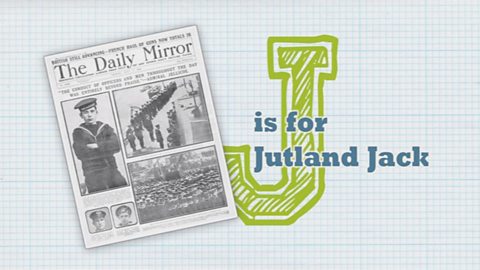
G is for Gas. video
School pupils handle a British gas mask from WW1. Newsreels of the period show soldiers using gas masks in training and at the front.
I is for In Flanders Fields. video
Newsreel, photographs and commentary introduce the Canadia Lieutenant Colonel John McCrae, who wrote the famous poem 'In Flanders Fields'.
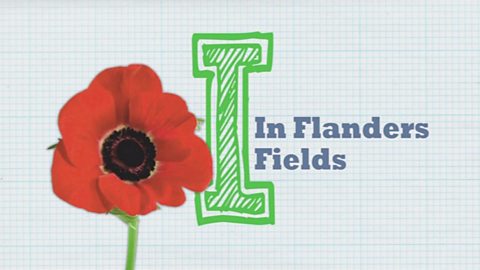
J is for Jutland Jack. video
Newsreel and commentary about the role of patriotic songs in World War One, plus a dramatic monologue about the songwriter Ivor Novello.