This is a gas mask and soldiers used them so they can protect themselves from all gases.
There were three types of poison gas – Chlorine, Phosgene and Mustard.
Some gases were used to injure rather than to kill.
Mustard gas could blind someone or cause blisters.
Bent double, like old beggars under sacks,
Knock-kneed, coughing like hags, we cursed through sludge,
Till on the haunting flares we turned our backs
And towards our distant rest began to trudge.
Men marched asleep. Many had lost their boots
But limped on, blood-shod. All went lame; all blind;
Drunk with fatigue; deaf even to the hoots
Of tired, outstripped Five-Nines that fell behind.
Gas! Gas! Quick, boys!
Video summary
This short film is for teachers and review is recommended before use in class.
In this clip school pupils handle a British gas mask from the World War One period and describe its use in a gas attack.
Newsreels of the period show soldiers using gas masks in training and at the front.
The pupils describe the devastating effects of the various types of gas used.
In a dramatic monologue, a British officer reads an extract from the poem ‘Dulce et Decorum Est’ by Wilfred Owen, which describes a gas attack.
This clip is from the series WW1 A to Z.
Teacher Notes
Pupils could prepare and read aloud further extracts from Wilfred Owen’s ‘Dulce et Decorum Est’.
You could discuss with the class the meaning of individual lines of the poem.
Together, write a summary of what takes place.
Challenge pupils to choose five key words from the poem that sum up Owen’s feelings about the gas.
This short film is suitable for teaching history at Key Stage 2 / Second Level or above.
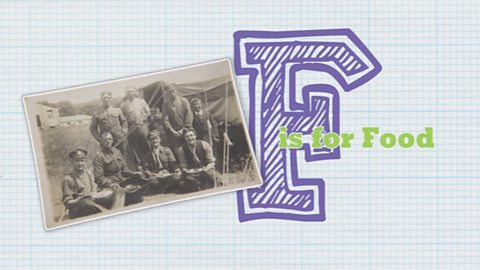
F is for Food. video
Newsreel, commentary and a monologue from an army chef in his field kitchen illustrate what soldiers in the WW1 trenches were given to eat.
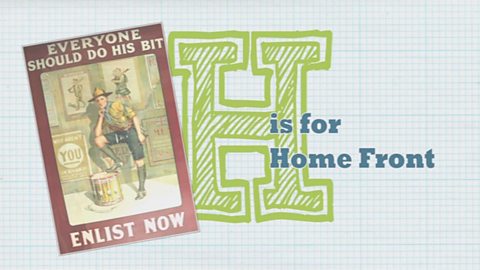
H is for Home Front. video
Newsreel and a dramatic monologue illustrate life on the Home Front in Britain during WW1.
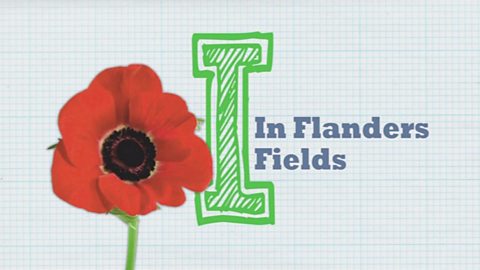
I is for In Flanders Fields. video
Newsreel, photographs and commentary introduce the Canadia Lieutenant Colonel John McCrae, who wrote the famous poem 'In Flanders Fields'.