At the beginning of the War, British soldiers were given 300 grams of meat and 200 grams of vegetables a day, but this didn’t last.
By the Winter of 1916, bread was being made with dried turnips because flour was hard to get.
Sometimes, they only had emergency rations which included tins of meat, cheese and Army biscuits.
Private Arthur Biggs 31. London Regiment. Company cook. People say I got it easy but I tell you this aint an easy job. For a start everybody hates us cooks. Some days the men hate us more than what they do the Germans.
See, the men are supposed to get three meals every day whatever’s going on. Rain, , ice, shells, snow, , shrapnel it don’t matter we’re still supposed to feed ‘em. And that aint easy.
Take this stuff. Brown stew we call it.
It’s been cooking for three hours. It’s got meat, onions, carrots, turnips, flour, and gravy. Smells great and tastes even better. On a winter’s day you’d be happy to get a nice, hot bowl of this.
Trouble is by the time the men get this stew it won’t be nice or hot. Things go wrong see.
FX : Explosion
Sometimes like now we’ve got to wait and by the time it’s safe to go forward my stew’s gone cold. Or it gets spilt on the way and there aint enough to go round. Or even, the Dixie lids fall off and mud gets in. So one way or another my brown stew gets ruined and the men get angry.
You can’t blame ‘em though. See I’ve done my bit at the front. I know what it feels like to be in a fire trench feeling all cold and wet and scared and sorry for yourself. And then a pan of good hot stew turns up and things ain’t so bad. But if the stew’s cold, or there aint enough to go round or it’s got mud in it you feel cheated and angry. And that’s when you have a go at the cooks. So, no, this aint an easy job.
Video summary
This short film is for teachers and review is recommended before use in class.
Newsreel and commentary illustrate the working of the field kitchens that supplied the British trenches in World War One.
The impact of food shortages and rationing is considered.
A dramatic monologue introduces Private Arthur Biggs, a company cook, who shows us his field kitchen and describes his daily duties.
The men grumble about the food but are grateful for it, all the same.
This clip is from the series WW1 A to Z.
Teacher Notes
Pupils could find out more about the diet in the trenches, from books and websites.
They could try a recipe from the war years, or weigh out items of a soldier’s daily ration.
They could improvise a scene in which soldiers complain about the meal they receive, with increasingly unflattering descriptions of its contents.
This short film is suitable for teaching history at Key Stage 2 / Second Level or above.
E is for Empire. video
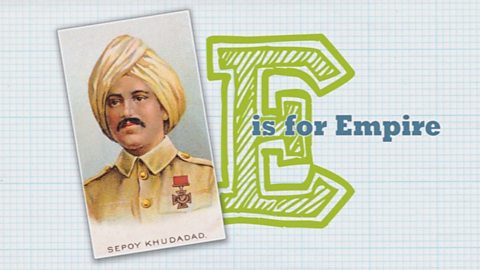
Newsreel and commentary explain how the British Empire helped in WW1. An Indian soldier describes his brave actions in battle in a monologue based on a true story.
G is for Gas. video
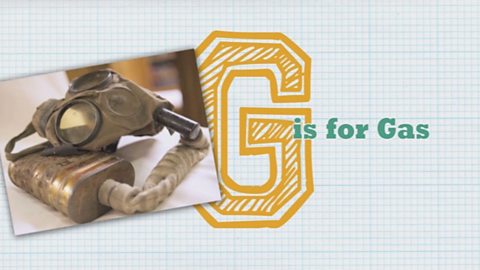
School pupils handle a British gas mask from WW1. Newsreels of the period show soldiers using gas masks in training and at the front.
H is for Home Front. video
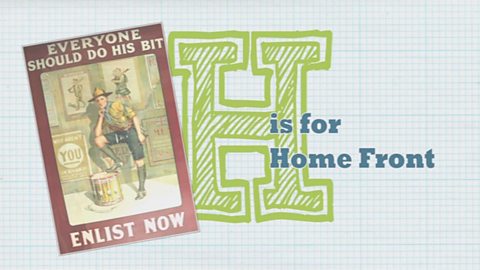
Newsreel and a dramatic monologue illustrate life on the Home Front in Britain during WW1.