Jutland Jack’s full name was John Travis Cornwall, nicknamed Jack.
In 1915, he joined the Royal Navy when he was only 15 years old.
On the 31st May 1916 he fought in the battle of Jutland.
This was the worst sea battle of the War
Over 6000 British people were killed.
Jack died whilst defending his ship and became a hero.
Lily Cornwell. 46 years of age. Mother.
My boy Jack – he was wounded on 31st May 1916. Battle of Jutland. It was the biggest sea battle of the war. He died 2nd June 1916. He was sixteen years old. Just a boy.
We buried him at Manor Park Cemetery here in London. Only about five people came to the funeral. We couldn’t even afford to mark his grave.
Then this letter came. It was from the captain of Jack’s ship. It’s the most precious thing I have. I read it to myself nearly every day.
The letter says that everyone in Jack’s gun crew had been killed or wounded but Jack – he never moved. It says Jack’s courage was an example to everyone cos he stayed in position…
‘standing and waiting, under heavy fire, with just his own brave heart and God's help to support him.’
Well., the captain – he sent a report of what happened to his admiral and the navy decided to give him a proper funeral with a brass band, and full military honours. Suddenly Jack was famous. Jutland jack they called him. And they gave him the Victoria Cross. It was the highest medal you can get. I had to go to Buckingham Palace and the king himself presented it to me.
And there’s a photo of Jack in all the papers but the strange thing is it aint him. See we never had no photos of Jack so we had to put his brother Ernest in a uniform and they photographed him instead. So that picture of Jutland Jack in the paper – it aint our Jack. I don’t suppose it matters. Does it?
Video summary
This short film is for teacher use and contains potentially upsetting content; teacher review is recommended before use in class.
Newsreel and commentary about Jack Cornwell, a boy of sixteen serving on HMS Lancaster, who died at the Battle of Jutland in 1916.
Jack was posthumously awarded the Victoria Cross and his bravery under fire was widely reported, earning him the nickname ‘Jutland Jack’.
A dramatic monologue introduces us to Jack’s mother, who tells us his story.
This clip is from the series WW1 A to Z.
Teacher Notes
Pupils could draw or paint portraits of Jutland Jack and add captions to say why he is still remembered.
The children could go on to find out more about medals of all kinds, from those awarded in war to those awarded in civilian life. Why do pupils think people wear medals?
The children could use fabrics and other materials to make collages showing their favourite medal designs.
Pupils could search online and in the index of textbooks for more details of Jack’s life story. They could also look for information on other young combatants of World War One, using search terms such as ‘boy soldier’. Are there any examples of young Scottish soldiers who were famous for their bravery?
Pupils could also consider how Jack’s example was used to inspire others during the war. In the monologue, Jack’s mother says it doesn’t matter that one of his brothers posed for a press photograph in Jack’s place. Do your pupils agree?
This short film is suitable for teaching history at Key Stage 2 / Second Level or above.
I is for In Flanders Fields. video
Newsreel, photographs and commentary introduce the Canadia Lieutenant Colonel John McCrae, who wrote the famous poem 'In Flanders Fields'.
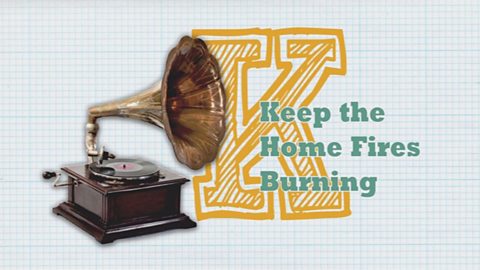
K is for Keep The Home Fires Burning. video
Newsreel and commentary about the role of patriotic songs in World War One, plus a dramatic monologue about the songwriter Ivor Novello.
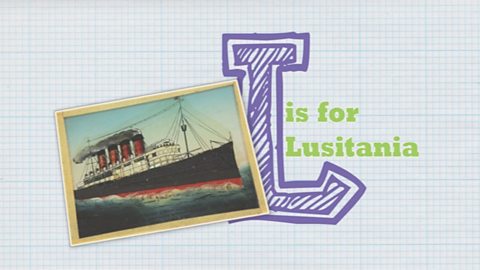
L is for Lusitania. video
Newsreel and a dramatised monologue about the Lusitania, a passenger ship that was sunk by a German U-Boat off the coast of Ireland.