Remembrance is when you remember people from the war who fought for our country.
It’s important to remember them because they fought for our country to keep it safe.
I’m really proud of one of my relatives, who gave their life for me. He was in the railway fusiliers, and he was called James Harlin.
These are my great great uncle’s medals and he got one of them for a Victory medal, and the second one was 1914 – 1915 and this one was for fighting in the trenches abroad
Remembrance day is on the 11th November and that’s where we have two minutes of silence
It’s important because if you don’t its not really respectful because they fought for our country and youre not really saying thankyou back.
I think its important because if you didn’t you might just forget and then that would be sad.
The royal family go and lay wreathes and the Queen has two minutes of silence to remember that she wouldn’t be the Queen of this country if those people had not fought to keep our country the way it is.
Poppies are important because they grow in Flanders Field where one of the biggest battles was.
When I have the two minutes silence I feel happy because I remember them but sad because they died.
Video summary
This short film is for teachers and review is recommended before use in class.
In this short film for primary schools, children describe the national act of remembrance that takes place on 11 November each year.
Children share what remembrance means to them personally, as well as artefacts (such as campaign medals) that are important in their own family histories.
Images of modern-day commemoration follow, including Queen Elizabeth II laying a wreath at the Cenotaph, aerial views of war cemeteries on the battlefields of the Western Front and people observing the two minutes’ silence.
This short film is from the BBC Teach series, The A to Z of WW1.
Teacher Notes
Pupils could search in anthologies of poetry for suitable poems to read out on Remembrance Day.
They could write responses to these poems beginning with the words, ‘This is how we remember…’
Pupils could visit a local war memorial.
Click or tap here to explore more Remembrance-themed classroom resources.
This short film is suitable for teaching history at Key Stage 2 / Second Level or above.
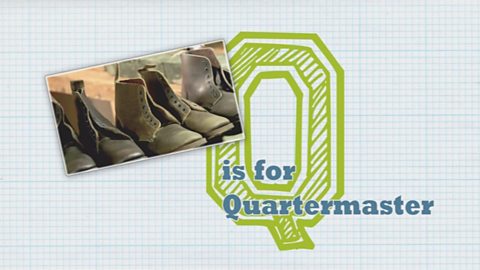
Q is for Quartermaster. video
Newsreel and dramatic monologue explain the role of the quartermaster in keeping British WW1 troops supplied and equipped.
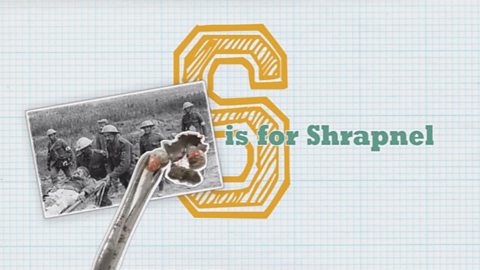
S is for Shrapnel. video
Newsreel and dramatic monologue describe the effects of shrapnel in WW1, and the role of woman doctors in treating its effects.
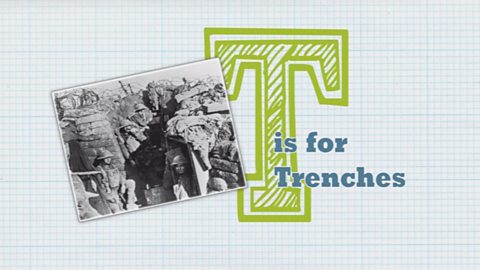
T is for Trenches. video
Newsreel, schoolchildren’s commentary and dramatic monologue describe the conditions of British trenches on WW1's Western Front.