by Bethany Bell, correspondent, Vienna, March 15 2006
‘But what on earth do you report on in Vienna?’ a friend once asked me. ‘Isn’t it all just cakes and waltzing?’
His words came back to me recently, as I was trying to push my way through a scrum of Iranian journalists at the United Nations nuclear watchdog, the IAEA.
They were gathered around Javed Vaeedi, one of Iran’s chief nuclear negotiators.
The IAEA, which is based in Vienna, had just decided to report Iran to the UN Security Council, amid fears Tehran is secretly trying to develop nuclear weapons.
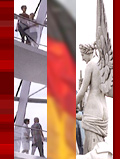
Downtown Vienna
The Iranian delegation was angry. ‘Mr Vaeedi!’ I shouted over the hubbub. ‘Why does Iran want to restart sensitive nuclear work?’
When I first came to Vienna, I never imagined I would be following the intricacies of the Iranian nuclear programme.
But now I spend a great deal of time hanging out in the gloomy orange and brown corridors of the UN headquarters, hoping to be tipped off about the latest developments.
It all feels far removed from ordinary Austrian life. At the UN, you hardly ever hear German. Instead it’s a mixture of English, Arabic, Russian and, these days, Farsi.
In downtown Vienna, Africans and Asians are a rare sight, but not at the UN. But certain Austrian customs have managed to penetrate its bastions.
The IAEA decided to report Iran to the UN Security Council on a Saturday afternoon.
That same evening, its diplomats gathered in the baroque splendours of the Hofburg palace in central Vienna for the IAEA’s annual ball.
Speculation about Iran’s nuclear ambitions was the subject of many a whispered conversation on the dance floor.
Old Nazis
Practically all groups in Austrian society, from fire-fighters to doctors, hold balls during the carnival season.
Most teenagers learn how to waltz – even if they really prefer listening to cutting edge electronic music, another Viennese speciality.
Tradition plays an important role here. Austrians look back on the era of waltz king Johann Strauss with pride – something they can’t do when it comes to the Second World War.
It has been fascinating to watch the struggle as this country tries to face up to its Nazi past - most recently with the trial of David Irving, who was sentenced to three years in jail for denying the Holocaust.
‘I’m really concerned that our law hurts freedom of speech and will make Irving into a martyr for the far right,’ one friend told me.
‘But if we get rid of the law, everyone will say that Austrians are still just a bunch of old Nazis.’
In the past the debate was about whether Austrians were victims or perpetrators of Nazi crimes. These days it is about compensation.
The country is moving on.
Last year, Vienna staged its first production of the Sound of Music - which pulled no punches in its portrayal of how Austrians supported the Nazi regime. Despite, or perhaps because of this, the show was a hit.
Austria is a strange mixture of the deadly serious and the kitsch.
I have to admit that cake does occasionally feature in my reports. I once interviewed a doctor at a thermal spa: as we wandered through the tiled halls watching people in steaming pools, she explained the health benefits of taking the waters.
At the end of the tour we found ourselves in the spa café, where a huge selection of cream cakes was displayed on the marble counter.
‘We are very famous for our pastries,’ said the doctor. ‘All the ingredients are organic.’‘But should you really be encouraging people to eat cake after doing all that exercise?’ I asked. ‘Surely that’s defeating the purpose.’
She looked at me and smiled. ‘Ah no,’ she said. ‘It’s wellness for the body and wellness for the soul.’
^
Back to top