by Andrew North, correspondent, Kabul 29 November 2005
Getting ready for the Afghan winter at the BBC house – which has been the correspondent’s home here for more than a decade – is a serious business in a city with still barely functioning facilities.
We get just a few hours of electricity a day in my neighbourhood, which is one of the better connected areas. Most Kabulis get none.
A former mujahideen commander runs the energy ministry. His success in defeating the Russians was not an obvious qualification yet some hoped his strongman reputation would turn things round. Not so far.
Only a few people have running water. It all comes from wells. We have two. The first one dried out.
It’s hard to believe it’s four years since the Taliban fell and the international community and the government of president Hamid Karzai took over running Afghanistan.
The increasing frustration among Afghans at the slow pace of change has become one of the main themes of the story here.
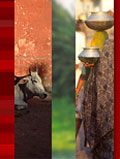
Persian reporters
There has been progress, particularly on the political front, with the second set of elections in two years just completed. But security is worse than four years ago and most Afghans remain very poor. /p>
It’s unclear how this experiment in nation-building is going to turn out.
Part of the problem with the electricity situation is that it’s no problem at all for the UN, the embassies, or the various US and NATO military missions – the ones with the money. They keep their huge generators running 24/7.
But running the BBC’s clanking old genny all the time is not an option. ‘It’s from Alexander the Great’s time,’ is how assistant producer Bilal Sarwary, describes it.
These days, Bilal and I work alongside our Persian and Pashto language service colleagues in a joint office in Kabul.
The newsgathering office used to be in my house. We also work with local Persian or Pashto reporters whenever we travel around Afghanistan. But back in Kabul, I often work from home because of the ever-worsening traffic jams – one sign of progress.
winter
Back to the preparations for winter. What really marks its arrival is not the trees going bare, but Sultan the housekeeper retrieving the wood stoves from the basement.
There’s a stove for Haji’s room. He has been with the BBC almost 14 years, first as driver and now as night-watchman. And another for the bathroom. The one that really matters to me is the big one in the living room. We keep it going most of the day, and use it to heat water in a big drum on top.
Then there’s the garden to be sorted. Bashi, the BBC’s veteran handyman, has spent the past few days digging up and potting the most vulnerable plants, which see out the winter in the top room upstairs.
I’ve been getting quotes from carpenters to build a shelter for night guards Aseel and Sayed. They weren’t working here last winter, when it was below –10 for several weeks.
They won’t be much use as guards if they have to stand out in those temperatures.
A lot of time is spent making day to day life possible for everyone working for the BBC here.
If the generator’s not demanding a new part, the water pump has broken down. We also have to keep the office four-wheel drive in shape. It gets a hammering from all the dust and ruts. Tarmac roads are still a luxury here.
Sometimes, being the correspondent has to take a back seat. But it also helps keep me a bit more in touch with how Afghans are living. Because when the power fails at just the wrong time, I know thousands of other people around Kabul never even had any.
^
Back to top