By Hannah Hennessy, Reporter, Peru and Haiti, 11 January 2005
I was the guinea pig for the guinea pig.
I moved to Peru, vowing to immerse myself in the culture of my new home. But I hadn’t realised one of my first tv features – about Peruvian cuisine – would involve eating something that resembled a family pet.
Forget Paddington Bear, guinea pigs are big business here.
High in the Andes, they are a staple food for people who have little else to eat. Eighteen months after arriving in Peru, I’m still not convinced by guinea pig, but the country has won me over.
I am usually awoken by a man who pedals around the streets outside my home-turned-office, selling food. ‘Tamales, tamales,’ he calls, his voice wafting through the window like a welcome smell.
I check the radio, tv and newspaper headlines and, if there’s no urgent work, I go for a run along the edge of the Pacific, where paragliders swoop over surfers who look like tiny flies riding the waves.
Pristine nannies
During the winter, a sea mist coats the streets and the lungs of its eight million people. Children wheeze from tuberculosis as they press their snotty noses against car windows, selling sweets for less than a penny.
Metres away, nannies in pristine uniforms push toddlers past armed men guarding some of Lima’s most expensive homes.
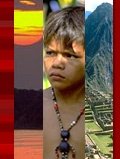
Peru is a country of vast contrasts. Resource rich, but cash poor, it boasts a desert capital on the coast, the Andes and the Amazon jungle as well as the magical Machu Picchu.
The Shining Path rebel group that terrorised Peru in the 80s and 90s is a shadow of its former self and officials say they’re winning the fight against drugs, although Peru is still the world’s second biggest producer of cocaine.
And while its president is one of the least popular leaders in South America, Peru’s economy is growing at one of the fastest rates in the region.
I found little of that optimism in Haiti when I spent three weeks there late last year.
Straight out of Graham Greene
The poorest country in the Western Hemisphere is wracked by violence, illiteracy, malnutrition and some of the highest rates of HIV and Aids infection outside of sub-Saharan Africa.
The first independent black republic, it has been on a knife edge for much of its 200 year history. Since its president fled last February, rival gangs and former soldiers from Haiti’s disbanded army have killed hundreds of people.
Most days, I travelled with a driver around Port-au-Prince, where even outside the gang-controlled shanty towns, life was precarious. Children walked barefoot through festering rubbish that skirted the turquoise ocean. Armed men in pick-up trucks skimmed the kerbs where people wasted away from Aids, oblivious to the signs overhead warning them of the disease.
Near the airport, UN vehicles thundered past women with voodoo paintings and carvings produced for tourists who no longer visit. After dark, I sat at the hotel bar in the hills above Port-au-Prince, talking to characters who could have stepped straight out of a Graham Greene novel.
At weekends, journalists, UN commanders and aid workers rubbed shoulders around the pool, no longer flinching at the periodic crackle of gunfire. Inside the hotel, it was almost, but never quite, possible to forget what was going on down the hill.
I am going back to report from Haiti next month. Seven hours is a long commute from Peru, but I wouldn’t have it any other way.
^
Back to top