By Elliott Gotkine, Buenos Aires correspondent, 14 December 2004
My South American odyssey began as the BBC’s Lima stringer in 2002.
It only really hit me that I was living in a strange new world when I noticed a parrot nibbling on my window frame as I prepared for my first two-way, on a pair of duelling Peruvian politicians.
But for the start of my posting to Buenos Aires – which began a little over a year ago – it was the sight of a rather different sort of bird that made me realise I was now living in the ‘Paris of South America’.
At the time, the BBC’s bureau-cum-home was in Palermo Viejo. This formerly rundown suburb is now bursting with bars. Colonial-style homes have been gentrified. And at night, the streets come alive with over-excitable porteños and, of course, the neighbourhood travestis.
Every evening, they take up their positions like high-heeled sentries in leather thongs. Some prefer the street corners. Others go for the traffic-light spot. One, rather embarrassingly, appeared to be rather partial to the tree outside my front porch.
On cold nights they leave little to the imagination. On warm ones, even less.
Jousting with runaway buses
When my parents came to visit they were more than a little shocked to find that I had chosen to live in such a colourful part of Buenos Aires (though it was my predecessor who found this des res).
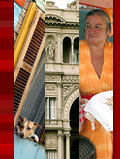
My father noted how attractive some of the women looked, before I pointed out to him that they were, in fact, men.
Since then, I’ve moved home and office. The bureau has gone to the town centre. And I now share it with the BBC Spanish correspondent, the BBC Brasil stringer and my assistant. The finishing touches have been put to a soundproof studio, with an ISDN line.
Weather-permitting, I cycle to work most days. I like the exercise, and I find the challenge of jousting with the city’s runaway buses and tetchy taxi drivers concentrates the mind for the day that lies ahead.
It’s far more dangerous than London, but Buenos Aires drivers are saints next to their Peruvian counterparts.
Unlike London, cycling here isn’t really about saving money: the underground costs 15p for a one-way journey and even a taxi from the suburbs to town sets me back only £2!
Can't beat the craziness
Everything is so cheap – and the main reason is Argentina’s economic crisis, which is coming up for its third anniversary.
Before it struck, a cheese sandwich could cost £2.50. But once the local currency, the peso, was devalued, the price of everything was, in effect, reduced by two thirds, including people’s wages.
Argentina is still tarnished by those tumultuous months at the end of 2001 and the start of 2002.
Memories of rampaging mobs lobbing bricks through bank windows will be hard to erase, as will those of malnourished children in a country that used to be known as the world’s granary. Now it was more basket-case than breadbasket.
‘Have things improved?’ is the question most people ask me. I usually say that it depends on who you talk to.
Almost half the population still lives in poverty. For them, little has changed. For those who didn’t lose their savings, jobs or homes, or who work in the export industry or tourism, things are better.
People often say to me that South America is not as interesting as it used to be: there are no more wars; no more military coups. This is true.
But for colour, craziness and unpredictability, it still can’t be beaten.
^
Back to top