
|
 |
 | | | | | | ||||||||||||||||||||||||||||||||||||||||||||||||||||||||||||||||||||||||||||||||||||||||||||||||||||||||||||||||||||||||||||||||||||||||||||||||||||||||||||||||||||||||||||||||||||||||||||||||
| | | You are in: Talking Point: African Debates | ||||||||||||||||||||||||||||||||||||||||||||||||||||||||||||||||||||||||||||||||||||||||||||||||||||||||||||||||||||||||||||||||||||||||||||||||||||||||||||||||||||||||||||||||||||||||||||||||||
|
| | Tuesday, 19 November, 2002, 10:22 GMT Famine in Ethiopia: How should the world react? 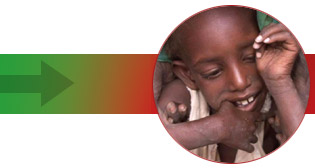 Ethiopia's Prime Minister Meles Zenawi has warned that his country faces a famine worse than that of 1984. The previous famine killed nearly one million people and sparked a big international relief effort. Mr Meles said the looming crisis was "like living through a recurring nightmare". He predicted that the number of people who could be hit as a result of the new drought might be three times the number affected during the earlier famine. Georgia Shaver, the World Food Programme's director in Ethiopia, says that while up to 14 million people needed food aid across six countries in southern Africa, "in Ethiopia we could have the same number in just one country". Why has famine happened again? Should Ethiopia have done more to prevent it? And how should the world community respond? Why is famine still a threat to Africa in the 21st Century? If you're in the region - or you are in contact with people in Ethiopia - please send us your experiences. A selection of your e-mails will be broadcast on Focus on Africa during the 1705 edition on Saturday. This Talking Point was suggested by Lisa Stiller: "How can famines in Third World countries like Ethiopia be avoided?" If you have any suggestions for Talking Points,This Talking Point has now closed. Read a selection of your comments below. Irrespective of who is to blame, one thing is for absolute sure, it's not the people currently dying from starvation. The whole world should act compassionately and help as soon as possible. Then we can look at the underlying issues, which must be resolved by the UN. One commentator said we should just let nature take its course. Shall we do the same with all the over-fed westerners with cancer? Of course not. Have some compassion. If only some of the effort put into saving wealthy people's lives and bolstering military egos were put into helping poor countries problems like this could be dealt with creatively. Where is the world going? Many people here are blaming the government of Ethiopia for the famine, but isn't this government just following the example set by the rest of the world? The US spends billions and billions of dollars on the war on Iraq and ignores the poor in the rest of the world. Ethiopia is just following the example. The only way to end starvation and suffering in Africa is to change priorities in the whole world. Why spend money on killing thousands of people when it can be used to save millions? It is quite simple. Spend money on waging war against Iraq. Make more and more money for the developed world viz acquiring all the oil sources, by hook or by crook. Could we care less for people in Ethiopia and other parts of the Third World? Apparently not. It's high time we accepted the fact. It's us from the developed world who are responsible for most if not all of the problems facing the globe, including the ones facing the Third World nations. It is basically a question of priorities. Waging war and keeping a huge military force is clearly the first priority for the Ethiopian government, keeping the citizens alive is second. If they don't change that priority, nobody can help them.
Sam, USA I can only agree with those of you who put the blame on the corrupt, and dysfunctional so-called "government of Ethiopia" for this preventable disaster. All the help, food and money included, it gets from the rest of the world goes into developing one region in the country - Tigray- where the leaders in the government are from. Remember they also staged the bloodiest war in Africa a few years back. Unless this government is removed, there will be no lasting solution for Ethiopia's famine problems. The experience of dying of hunger is probably one of the worst tortures for a human being. It is time for the rich and powerful countries to support and assist the people of Ethiopia before it's too late and millions will die. The issue of starvation must forcefully be a top priority in the agenda of the international community. If the people of Ethiopia put as much time, effort and energy into digging wells and creating and managing irrigation systems as they currently do in reproducing, then they would have far fewer problems. I read in one of the posts below that someone had 11 children. What does anyone want 11 children for? To have that number of children when you can't afford to feed them is nothing short of irresponsible. Everyone has access to the most efficient form of birth control - abstinence. I see no point in helping people who won't even try to help themselves. I shan't be giving any money to Ethiopia as I think it's just money down the drain.
Louise, Sydney, Australia I read the comments and my hearts mourns for my brothers and sisters, young and old, in Ethiopia and other nations around the world suffering from famine. The Lord said, "Blessed are ye that hunger now: for ye shall be filled. Blessed are ye that weep now: for ye shall laugh." HE will not forget you. When we look on and don't lend a helping hand, always, he says "Woe unto you that are full! for ye shall hunger. Woe unto you that laugh now! for ye shall mourn and weep." Let's not spend $355Billion on defence, but on life and the Living!! The politically naive think that wiping out African debt and pouring billions into Africa will solve the problems arising from incompetence, nepotism, tribalism, religious fundamentalism, corruption, greed, envy and ethnic bigotry and create a thriving, dynamic, land and property owning democratic United States of Africa. First and foremost the debts that Ethiopia owns should be erased or at least put on hold for 10 years. In the meantime organisations those are helping the country so far, together with the Ethiopian government should start long term solution namely irrigation.
May, San Francisco, USA As an Ethiopian, I feel that the most pressing issue about Ethiopia is never dealt with or discussed at all. The issue is the one of the government of Ethiopia. Major Powers know very little about governance or bringing Ethiopia's 80 ethnic groups together. The one that is in power is usually given resources to suppress and persecute all other groups because their rule is illegitimate. Democracy that embraces all ethnic groups including Muslims who make up the majority of the country will be the beginning of a functioning country called Ethiopia. Many of us have not experienced famine. Please think of a prolonged hunger that kills you slowly, and the agony of knowing and witnessing that you and your family are dying of hunger. Six million people are in that condition today. The number will double in few months. It is time to come to their rescue. Blaming or criticising the government might be warranted. But what the people need at the moment is FOOD. Let us save lives first and address other concerns later.
Tony, Addis Ababa, Ethiopia The leadership of most countries live amidst wealth and thus perceive war, disease, and poverty as abstractions. Firsthand experience could form the basis for more humane policymaking. Start with adding an amendment to the US constitution: "A prerequisite for the candidacy of elected officials in the Federal Government shall be one year of field service in an international aid organisation." The same could be done in other countries. It would have a tremendous impact on the world if people like George W. Bush spent a year working in war - and famine-stricken countries.
Christopher, Sydney, Australia The West must start dealing with the political root causes that result in the disasters like this. The prime minister of Ethiopia must be held accountable, and his regime's system of domination is the real responsible agent for this crisis and all impending ones. Ethiopia has being building of the strongest army in Africa. Why? To keep the majority of the people in check - particularly the Oromos. Does the world know that the present government of Ethiopia represents merely 3% of the Ethiopian population? Therefore, the only way the present government can stay in power is by means of violence and that is why Ethiopia remained one of the poorest nation and always begging for food. The famine is happening again because it was not addressed in its entirety. The country is in dire poverty as a result of internal and external factors. Lack of integrated economic policy that addresses the roots of the country's poverty, and lack of cooperation on the part of the international community to encourage fair trade. As a result of the slash in coffee price, Ethiopia has not only lost its revenue, but also small business transactions in urban and rural areas. Two years ago, the food crop producing population complained of a price fall. If they had been subsidised on time, half of today's millions would have been reduced. Now the reality is that Ethiopia's children are starving to death. It needs concerted effort of both internal and external communities to address the problem in its objective and subjective dimensions. The famine is recurring because these are not spelt equally. The cause of the problem may be many but I am sure of one thing. If we Ethiopians don't figure out what is wrong with us and solve it ourselves, nobody is gonna figure it out for us. A temporary solution that will make some people "survive" may come from outside but the permanent solution should come from us. If we always expect help from outside, then we are doomed forever.
Alemu, Addis Ababa, Ethiopia So much has been said that is right, so much has been said here that is questionable, but I agree that we in the "civilised world" need to give generously and without making petty judgements. That is a start, but without debt relief, a change in our economic activity that pushes African nations into producing cash crops, and a commitment by us to remove the agricultural protectionist policies that deny Africa entry into our markets nothing will change. The root cause of poverty and food insecurity in Ethiopia is very complex. The suggested solution from many people such as population control, land reform and agricultural policies are very important and valid suggestions. But it is not the only solution and it does not bring food today. Millions of people have no food and children are dying of malnutrition. Do we really want to see children dying of starvation? Blaming one another is not the solution but donors, NGOs and the government should look at the problem not only in sort term through food distribution but also to address the root cause of poverty and food insecurity simultaneously.
Meyissaw, Klagenfurt, Austria Africa is a disgrace. Since 1960, Africa's share of world GDP has declined from 3% to 1%. Further, Africa has 2/3rds of all poor people on the planet. Why? Authoritarian tribal cultures with an overlay of Marxist/socialist economics. This sure recipe for disaster has given us the situation today. Africa should be helped, but only if governments mend their ways and the populace shows that they are willing and able to change their belief systems.
There are many such stories to tell and I felt so sad, so desperate, that I could not eat myself while doing field-work there. To solve such a problem in the long run is not an easy task: much more important than food is the water issue. People in the North Afar have never learned the technique of building simple wells to catch ground water. This could be used not only for drinking, but for watering 1-2 dairy cows/goats to provide nutrition for the children, to water some trees and vegetables in the backyard which can be used as food supply. High birth rates are a problem in African countries but they are not without reason. Many countries have no or inadequate welfare provisions and so children are the only source of security for most African families. It is all too easy to be judgmental and measure the world against Western standards but what right do we have to assume our way is the right way? If people started to listen to Africa before deciding on projects and initiatives maybe the continent wouldn't be in such a bad situation now.
Jess Whitworth, UK The popular line that Ethiopia needs less people is completely bogus. Africa is, if anything, under populated. Some of us see people as a valuable resource - for farming, for industry, for the economy. What the country needs is for its economy to be allowed to grow - it needs debt cancellation, fairer international trade rules, and higher levels of aid going into nation building. Ethiopians also have a responsibility to put their own house in order, but forcing family planning down their throats is wrong.
John Storey, Tetovo, Macedonia The Group G8 countries should write off the debt of countries like Ethiopia. On top of this if all families in Europe gave �10 to the United Nations Relief Fund, the government in Ethiopia, could manage this affair with a little help from charity workers. We have so much we can share with people; �10 is only two packets of cigarettes. What ever happened to our tradition of Christian charity and compassion or are we now ashamed of these traditions? Richard Wise: Why allow the Ethiopian Government to abdicate responsibility for its people? By the looks of things they can still afford to have a well equipped army. Why should the gullible citizens of Europe keep on paying and paying into charity with no real changes taking place? Aid does not work. If it did, we would have solved this problem with Live Aid. Enough is enough.
Mimi Tedela, USA It is unfortunate the issues regarding Ethiopia are always war and famine. We have virgin natural resources and favourable environmental conditions to combat drought. Our problem is we don't have the initiatives to work hard to change our situation. Moreover, we need to have practical development oriented leadership! It is no wonder that people are starving under the corrupt and repressive Ethiopian regime. Most of the famine could have been averted had the authorities worked closely with the local people. If Western countries really care about the people, they should stop selling arms to corrupt regimes, support a genuine democratic process in Africa, particularly in Ethiopia, and cut diplomatic ties with regimes which do not have respect for human rights.
Yonas Kebede, Ethiopia I will be watching self-appointed world statesmen Blair and Bush very closely to see if they think that saving 15 million lives is a lesser priority than removing an oil rich dictator who used to be our friend. It will tell me so much more about them. People have commented about the high birth-rate in Ethiopia - but poverty often causes high birth-rates, not necessarily vice versa. How do you combat poverty? Well, how about starting with land reform? Farmers don't own their land in Ethiopia, they just have use rights. The limited land reforms introduced by the EPRDF after the Dergue were removed haven't gone far enough. The answers to Ethiopia's problems will have to come from within. Changing a system that gives no incentive for farmers to invest or innovate would be a start. We agree with Mat: overpopulation is the cause of poverty, not vice-versa. Women education is a key answer. You may think Ethiopia is culturally slow, but we have seen the Ethiopian Orthodox church adopt preservatives much faster than the Italian Catholic one. Attention to food production in the country is vital. Did you know Ethiopia exported ingent quantities of cereals last year? We rented 100 hectares in south Ethiopia. To no surprise we are the only foreign cereal producers in the South of the country. We can stock our harvest and wait for a better price, the other 300 modern farmers down there can't. So they've been ruined by food aid. We would like not to see international food aid rapidly hit the Capital's market. Yet it seems inevitable.
Richard Johnson, Australia Countries should spend less on developing weapons and armies. Why is it that when a country needs money to finance a war, it is readily available, but when millions of people are starving, suddenly no-one knows how to help? Administrative inefficiencies and government corruption have shown many times in the recent past that spending millions on aid is futile unless it can be ensured that it will be used effectively in reaching those in most desperate need as opposed to the pockets of a corrupt "elite". It is, of course, quite painful for a person who knows Ethiopia to hear that people are dying of starvation when the country is endowed with a gigantic water resource and arable land. Since the history of the country began, all those who have been on the throne have little worked to the good of its people. Instead they all have been busy with the security of their power and have always diverted the countries resource towards building up unnecessary military power, just for the very purpose of suppressing their own people. The current government is no different.
TJ, USA My heart goes to the starving people of my country. I really do not understand why our government is not doing something to help solve this problem for good. We have been having this problem periodically and is not new. We have several rivers which can be irrigated, rather than spending millions of dollars killing one another for no good reason. Why do not we spend some on pumps? Ethiopia depends for 60% of its export earnings on coffee. The world price for this has sunk to a thirty year low. The coffee market should be reformed so that growers get a fairer price for their labours. We pay a high price in our shops but retailers and coffee companies get huge profits whilst growers get 6%. With increased share Ethiopia could invest in more sustainable long term development
Debebe D, UK Cancelling debts may help, but it does nothing to solve one of the major causes. Until the people of Africa stop accepting the blatant mismanagement, nepotism and embezzlement by a large proportion of their Governments all it will do is give those Governments even more opportunity to steal and fund pointless wars. On the other hand, if we cancel debt then maybe those creaming off the funds won't be able to hide behind blaming the Developed World for everything quite so easily, although sadly I wouldn't bank on it Here is the link where you can donate money for food to the people. Of course immediate relief is necessary (so lets all be generous in this season of goodwill) and cancellation of Ethiopia's debt would be a big help. But I have also got to ask, what good (long term) did Live Aid do? Yes it saved millions at the time, but here we are again with all the same problems. Will we be in the same situation again a decade from now? And didn't Ethiopia have a fairly savage war with its neighbour Eritrea in the last few years? It might not be politically correct, but I sometimes wonder what is the point of helping people who refuse to help themselves? But I will send money anyway, for the children if for no one else.
Afichacha, Ethiopia Besides shipping food there is not much we can do. We cannot change Ethiopia's climate, we cannot prevent soil erosion, we cannot educate Ethiopian population, we cannot build them a modern infrastructure, we cannot reduce their birth rate and, last but not least, we cannot replace their corrupt and inept leaders with slightly less corrupted ones. Besides, when does it ends? Today it's Ethiopia, tomorrow Sudan, day after Mali, Angola or Mozambique. The list is endless. The African nations are either unable or unwilling to impose draconian population control measures in their countries, such as was done in China. Until they do, children doomed to starvation will continue to be born - victims of a natural process of climate change which affects all life on Earth. Aid only postpones their suffering.
Oumer Sayid, Ethiopia Aid alone is not the solution - Ethiopia will only continue to survive on this culture of dependency. Ethiopia must be able to stand on its own two feet. Debt relief is obviously a basic requirement here but perhaps this should be linked to improvements in the political environment. Perhaps if Ethiopia were to sign mutual recognition and mutual defence treaties with its neighbours Ethiopia could cut defence spending and become more viable economically. First and foremost, countries such as Ethiopia should intensify water harvesting activities, in particular through the development of irrigation schemes. Secondly, there must be an enabling environment conducive for agricultural production and development. Political wranglings among the elite ethnocentric forces are creating diversion of resources and time. Such endless political turmoils are consuming much of the production time. These must be avoided through the enhancement of the democratization process. Thirdly, the developed world that spends more on the rights and health of animals than on destitute fellow human beings of Africa should stop its hypocrisy and try to pay more attention to the plight of Africans.
James Stanton, Swindon, Wilts, UK The way to avoid such famine is to have an international law which states countries must invest the equivalent of a large percentage of their defence budget on helping developing nations. Of course the US will not comply but it would be a start. I can't stand to watch innocents die in Africa from starvation, and more about to die in Iraq from US missile strikes. Peace on earth and an end to human suffering is what every human being should aspire to and strive for. The international community cannot just keep ignoring the plight in Africa. A way to solve this could be to give the countries in Africa a fresh start by wiping away the debt.
Neil Wallace, Northern England If ever there was a reason to cancel their debts... Why is this happening again? I thought the point of Live Aid, etc was not just to feed people but to improve infrastructure to ensure that this wouldn't happen again. Michael Houlsby asks "why is this happening again?" Well, it's happening because of drought. All the infrastructure in the world can't grow crops if no rain falls. What's needed is short term aid, medium term debt relief, and long term population reduction - the population of Ethiopia is already 65 million, an unsustainably high level for a country that climate change is gradually turning into a desert. | |
See also:  11 Nov 02 | Africa Top African Debates stories now: Links to more African Debates stories are at the foot of the page. | ||||||||||||||||||||||||||||||||||||||||||||||||||||||||||||||||||||||||||||||||||||||||||||||||||||||||||||||||||||||||||||||||||||||||||||||||||||||||||||||||||||||||||||||||||||||||||||||||
| |
|  E-mail this story to a friend E-mail this story to a friend |
|  |
| Links to more African Debates stories |
| | | ||
 | ||||
 | | Back to top
| ||
| ---------------------------------------------------------------------------------- To BBC Sport>> | To BBC Weather>> | To BBC World Service>> ---------------------------------------------------------------------------------- © MMIII | News Sources | Privacy |






