|
 |
 | | | | | | ||||||||||||||||||||||||||||||||||||||||||||||||||||||||||||||||||||||||||||||||||||||||||||||||||||||||||||||||||||||||||||||||||||||||||||||||||||||||||||||||||||||||||||||||||||||||||||||||
| | | You are in: Africa | ||||||||||||||||||||||||||||||||||||||||||||||||||||||||||||||||||||||||||||||||||||||||||||||||||||||||||||||||||||||||||||||||||||||||||||||||||||||||||||||||||||||||||||||||||||||||||||||||||
|
| | Tuesday, 5 November, 2002, 10:14 GMT Millions of Eritreans risk famine  The crops are failing, like in Southern Africa and Western Sahel
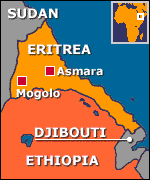
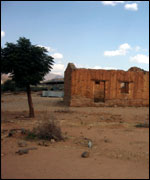
In the fertile plains of western Eritrea, the traditional breadbasket of the country, the scale of the drought is clear. In fields where sorghum should stand tall ready for harvest, are the stunted dried stalks of failed crops.
Head of the Ministry of Agriculture for the western region of Gash Barka, Abraha Garza, explains what went wrong. "The rains came late and stopped early, that's why it's so dry. Some plants managed to flower, but these soon died. In some places farmers will not even get any seeds back," he says. Millions in need An estimated 1.4 million Eritreans will be affected by the drought alone, about half of the country's population. The Eritrean Relief and Refugee Commission (ERREC) states that another 900,000 Eritreans need food assistance, including returning refugees, those still affected by the impact of the war, and food to cover the long-awaited demobilisation programme.
This brings the total appeal to 2.3 million Eritreans in need of food assistance. Teklemichael Woldegerghis, Deputy Commissioner of the ERREC, says this is the worst situation since the massive drought of the 1980s. "We are facing the most difficult situation in the last 15 years," he says. "The fact this is the best soil and there is nothing, is an indication of the worst case scenario at a national level. The situation is hopeless." No commitment The Eritrean Government and the UN say there has been no commitment to provide food aid for the drought from international donors.
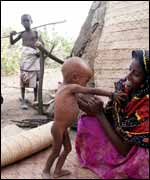
However, the ERREC and the UN say the seriousness of the drought is clear, that the most important thing is to pledge at least some food aid now to make sure it arrives by the beginning of next year at the latest, when the situation is expected to be critical. Malnutrition "Whatever the figures are, there is, without any doubt, a serious food deficit, there is a serious water problem and serious malnutrition," argues Musa Bungudu, head of the UN Office for Coordination of Humanitarian Affairs (OCHA).
"We want to avoid seeing children dying, this is the time to respond. We know how long it takes for the food to arrive and be distributed. This support was required yesterday, not just today." UN officials estimate that at least 400,000 tonnes of food will be needed for the coming year. Musa Bungudu said the other effects of the drought would also have to be addressed, with a focus on providing clean water, sanitation and health. Political tension It sounds rather optimistic, when currently there are an estimated 14 million people affected by drought in the Horn of Africa. Eritrea's problems are exacerbated as the border with Sudan is currently closed due to Sudanese opposition activity in north-east Sudan and tension between Sudan and Eritrea.
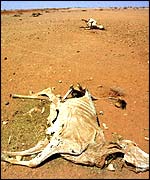
Sudan is one of the main routes for imports of food, such as sorghum. However, even with food aid, one of the key concerns is that livestock, crucial to the livelihoods of so many rural communities, will become diseased and die due to lack of food and water. "The problem is that we can feed people if we get food aid, but how can we feed the animals?" Abraha Garza asks. Thin cattle Already the price of cattle has dropped 75% from around 8,000 nakfa ($400) to just 2,500. Farmers are selling now because they know that their animals will not make it through till next year's rain.
Meanwhile, prices for grains and cereals are rising fast. Miriam Mohammed, a local farmer, says she has already started selling her animals but they are worth nothing, and she and her husband have no choice but to travel long distances, in search of grazing land. "We will take our livestock to the Gash river. It's a long way. Maybe we will find grass, but you never know. If it's dry here, it may be dry there, whatever of our animals survives, we will bring back." "We sell our livestock, we buy grass or straw to feed the livestock that is left, but what we sell is worthless, you don't get any price because the animals are not healthy, they are skinny." As farmers and livestock move to new areas, there is likely to be a knock-on effect on communities and the environment. Even if food aid does arrive to stop a famine, the wider, long-term impact of the drought on rural Eritrea will be difficult to alleviate. | |
See also:  01 Nov 02 | Africa 01 Oct 02 | Africa 27 Sep 02 | Africa 06 Aug 02 | Africa 26 Jul 02 | Africa 25 Jul 02 | Africa Top Africa stories now: Links to more Africa stories are at the foot of the page. | ||||||||||||||||||||||||||||||||||||||||||||||||||||||||||||||||||||||||||||||||||||||||||||||||||||||||||||||||||||||||||||||||||||||||||||||||||||||||||||||||||||||||||||||||||||||||||||||||
 | |
|  E-mail this story to a friend E-mail this story to a friend |
| |
| Links to more Africa stories |
| | | ||
 | ||||
 | | Back to top
| ||
| ---------------------------------------------------------------------------------- To BBC Sport>> | To BBC Weather>> | To BBC World Service>> ---------------------------------------------------------------------------------- © MMIII | News Sources | Privacy |






 We are facing the most difficult situation in the last 15 years