|
 |
 | | | | | | ||||||||||||||||||||||||||||||||||||||||||||||||||||||||||||||||||||||||||||||||||||||||||||||||||||||||||||||||||||||||||||||||||||||||||||||||||||||||||||||||||||||||||||||||||||||||||
| | | You are in: Programmes: From Our Own Correspondent | ||||||||||||||||||||||||||||||||||||||||||||||||||||||||||||||||||||||||||||||||||||||||||||||||||||||||||||||||||||||||||||||||||||||||||||||||||||||||||||||||||||||||||||||||||||||||||||
|
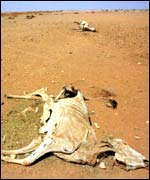
| | Saturday, 11 January, 2003, 12:54 GMT Ethiopia's long wait for rain  The drought is one of the worst in the country's history
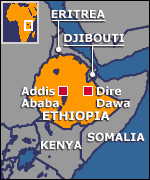
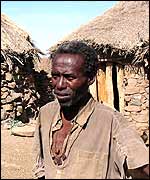
We had seen him as we raced past in our Land Rover five hours earlier. He had been walking patiently behind his ox, cracking the whip above the animal's head, as he urged it on. The thick, brown earth only parted reluctantly to the wooden plough, with its sharp metal point. Now Chekole Ferede came out of his hut, blinking in the clear, bright air of the Ethiopian highlands.
After exchanging pleasantries he explained why. No, he wasn't going anywhere. This was the land of his fathers and of his forefathers before him. And yes, the rains had failed. He had planted once, twice and then a third time. Each time the crop had withered. But as for going to town in search of work, or accepting the government's offer of resettlement - no, that wasn't for him. Defiant Chekole stood with his hands on his hips. His shirt had been mended so often that there were more patches than original cloth. He had no shoes on his feet. But he was proud, and even a little defiant. No one, but no one was going to tell him what to do.
I could only admire his spirit. And he's not alone. The people of this region are immensely proud of their past. It's not hard to see why. At the time of Christ, Ethiopians were already hewing 500-tonne blocks of solid granite from their quarries, and transporting them with elephants, before erecting these giant statues to their kings. In Axum they still stand, over 20 metres tall, testament to the engineers who levered them into place. This was an extraordinary civilisation. The only problem is, it seems to have become frozen in time.
The agricultural practices that served them so well are now well and truly exhausted. All over the Ethiopian highlands farms have been divided and subdivided so often they are little more than scraps of land. Farmers cultivate tiny plots, some of which are so steep no European farmer would ever contemplating growing vines on them, let alone attempting to put a plough across them. Population boom So many farmers still work their patch of land, and then wait for rain. If it comes, all well and good. If it fails, then starvation looms. Since the first major drought of recent times, the famine of 1974 that led to the overthrow of the imperial system and the murder of the Emperor Haile Selassie, Ethiopia's population has doubled.
Yet Ethiopia is a land surprisingly rich in resources, and I don't just mean the gold that has been mined since the times of King Soloman, or the oil deposits that are rumoured to exist. This is a land that sends water to all of its neighbours. Rivers flow out of the Ethiopian highlands in all directions, generously donating the precious water that its parched fields so badly need. This is a land of giant lakes. Lake Tana alone covers more than 3,600 square kilometres. Its 37 islands are home to ancient monasteries. From here the Blue Nile starts its 4,000 km journey to Egypt by leaping, roaring over a cliff. The spray from the Blue Nile Falls waters the perennial rain forests at its foot. Calls for land reform Yet just a few kilometres away crops shrivel and die in the dust. Irrigation systems that might have brought life and plenty are just not available. In Addis Ababa ambassadors call for land reform. Change the system of land holding they say. Allow farmers to own their own land, and they will provide the investments that are needed. But if land can be owned, it can also be bought and sold. The rich will buy out the poor, and then where will they go?
Somehow the system stumbles on. Farm sizes shrink. Soils are exhausted. As we turned to leave, Chekole Ferede invited us in for coffee. We declined. We were in a hurry, and the Ethiopian coffee ceremony is something not to be rushed. As we got back into our Land Rover and roared into the distance, Chekole went back to his ploughing. This year at least he has his ox. Next year it'll probably be gone. Selling it will be what the aid agencies call a "coping mechanism". I think it deserves a simpler name. It's called suffering. | |
See also:  04 Dec 02 | Africa 11 Nov 02 | Africa 12 Nov 02 | Africa Internet links: The BBC is not responsible for the content of external internet sites Top From Our Own Correspondent stories now: Links to more From Our Own Correspondent stories are at the foot of the page. | ||||||||||||||||||||||||||||||||||||||||||||||||||||||||||||||||||||||||||||||||||||||||||||||||||||||||||||||||||||||||||||||||||||||||||||||||||||||||||||||||||||||||||||||||||||||||||
 | |
|  E-mail this story to a friend E-mail this story to a friend |
|  |
| Links to more From Our Own Correspondent stories |
| | | ||
 | ||||
 | | Back to top
| ||
| ---------------------------------------------------------------------------------- To BBC Sport>> | To BBC Weather>> | To BBC World Service>> ---------------------------------------------------------------------------------- © MMIII | News Sources | Privacy |