|
 |
 | | | | | | |||||||||||||||||||||||||||||||||||||||||||||||||||||||||||||||||||||||||||||||||||||||||||||||||||||||||||||||||||||||||||||||||||||||||||||||||||||||||||||||||||||||||||
| | | You are in: South Asia | |||||||||||||||||||||||||||||||||||||||||||||||||||||||||||||||||||||||||||||||||||||||||||||||||||||||||||||||||||||||||||||||||||||||||||||||||||||||||||||||||||||||||||||
|
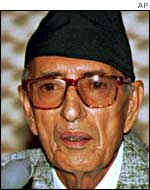
| | Wednesday, 19 June, 2002, 11:19 GMT 12:19 UK Nepal ruling party rift deepens Deuba insists he is acting constitutionally Nepal's ruling party has moved closer to a formal split after supporters of Prime Minister Sher Bahadur Deuba elected him president of the Nepali Congress.
The convention also reinstated Mr Deuba to the party, three months after he was himself expelled by Mr Koirala and his faction. Mr Koirala, a former prime minister, has said both the meeting and the no-confidence vote were illegal, and his supporters have accused Mr Deuba of misusing government machinery to influence party members. The rift arose from Mr Deuba's decision last month to dissolve parliament and call early elections when party leaders refused to back his plan to extend a state of emergency aimed at dealing with an insurgency by Maoist rebels. Constitutional crisis The prime minister's faction insists that it is acting within the law. "The election of Deuba is legal and constitutional since there are enough delegates here," Technology Minister Bahadur Balayar told the AFP news agency.
Analysts say the split in the Nepali Congress will undermine the party's chances of winning parliamentary elections, scheduled for November. The country's communist opposition is set to benefit from the division in the party, which also raises questions about Mr Deuba's status, they say. The Supreme Court has begun hearing four separate petitions filed by opposition MPs and Mr Koirala's supporters against the dissolution of parliament. Mr Deuba has said the court cannot intervene, because dissolving parliament is the premier's prerogative. But his opponents accuse him of violating previous rulings. The BBC's Sushil Sharma in Kathmandu says the supreme court has in fact given contradictory verdicts on similar petitions in the past. It overturned a dissolution of parliament seven years ago, but upheld another in an earlier verdict. Bitter row The state of emergency was re-imposed in Nepal in late May by royal decree on Mr Deuba's recommendation, two days after it lapsed amid a bitter row over moves to extend it.
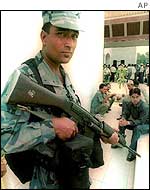
Mr Deuba had attempted to win parliamentary approval for extending the emergency, aimed at bolstering the military offensive against the Maoists. But when it became clear that parliament would not back him, he dissolved it and called elections. The rebels have been waging an armed struggle to establish a communist state for six years. Accurate casualty figures are almost impossible to establish, but thousands are thought to have died during the insurgency. Mr Deuba, who took over from Mr Koirala in 2001 with a pledge to end the rebellion peacefully, has ruled out negotiations with the rebels since they broke a ceasefire in November and resumed attacks. Mr Koirala and his faction oppose the state of emergency, saying parliament has already passed adequate measures to deal with the insurgency. | |
See also:  14 Jun 02 | South Asia 27 May 02 | South Asia 23 May 02 | South Asia 17 May 02 | South Asia 04 Apr 02 | South Asia 23 May 02 | South Asia 23 Apr 02 | Country profiles Internet links: The BBC is not responsible for the content of external internet sites Top South Asia stories now: Links to more South Asia stories are at the foot of the page. | |||||||||||||||||||||||||||||||||||||||||||||||||||||||||||||||||||||||||||||||||||||||||||||||||||||||||||||||||||||||||||||||||||||||||||||||||||||||||||||||||||||||||||
| |
|  E-mail this story to a friend E-mail this story to a friend |
| |
| Links to more South Asia stories |
| | | ||
 | ||||
 | | Back to top
| ||
| ---------------------------------------------------------------------------------- To BBC Sport>> | To BBC Weather>> | To BBC World Service>> ---------------------------------------------------------------------------------- © MMIII | News Sources | Privacy |