|
 |
 | | | | | | ||||||||||||||||||||||||||||||||||||||||||||||||||||||||||||||||||||||||||||||||||||||||||||||||||||||||||||||||||||||||||||||||||||||||||||||||||||||||||||||||||||||||||||||||||||||
| | | You are in: South Asia | ||||||||||||||||||||||||||||||||||||||||||||||||||||||||||||||||||||||||||||||||||||||||||||||||||||||||||||||||||||||||||||||||||||||||||||||||||||||||||||||||||||||||||||||||||||||||
|
| | Saturday, 1 June, 2002, 09:59 GMT 10:59 UK Nepal's year of chaos  The royal deaths left the nation in shock
A traumatic year has passed since Nepal witnessed one of its worst tragedies in recent history.
The palace massacre was blamed on Crown Prince Dipendra, who shot his relatives before killing himself. Things have gone from bad to worse since that fateful night on 1 June, 2001. But signs of revival have also begun to emerge.
It also cast a shadow on the credibility of an institution that has endured many challenges over the years in maintaining the independence of the small country, sandwiched between the world's two most populous nuclear rivals, India and China. Economy 'bleeding' The tragedy rubbed salt on the wounds inflicted by a long-running leftist insurgency aimed at toppling the monarchy and establishing a communist state.
As the security forces and the rebels fought more frequently, the body count mounted and the economy bled. Increases in security spending, a fall in key exports such as carpets and garments and the setback to the vital tourism industry took a heavy toll on the country's largely subsistence economy. 'Resilient' Nepal But as Nepal has struggled to recover from the shock of the palace massacre and its aftermath, there are many signs of hope for the future.
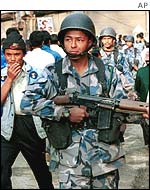
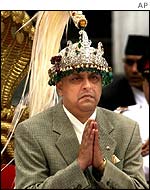
Despite the unprecedented circumstances, the change of guard in the most revered institution, the Crown, went off without major disturbance. This, many say, is reflective of the resilient character of Nepali society. The new King, Gyanendra, has played by the rules as a constitutional monarch in winning back the confidence of the people. The real challenge ahead is to tackle the Maoist insurgency, in which 4,000 people have died over the past six years. Army unleashed And there are already some positive signs.
It was the first time in six years of civil war that the military had been deployed. The rebels had until then had little difficulty in over-running the poorly-trained and equipped civil police. Signs of hope Also for the first time, international donors, including the United States, Britain and neighbouring India, have pledged economic and military assistance to crush the rebels, whom the authorities have branded terrorists.
There are indications that the government is gaining the upper hand in the fight against the rebels. Once the Maoist insurgency is tackled, Nepal should soon be on the road to recovering its lost glory and Shangri-la image. It has abundant natural resources, such as water, and huge tourism potential waiting to be tapped. Things may have gone from bad to worse in the aftermath of the palace massacre - but having overcome the shock, Nepal can now hope to leave the bitter past behind and look forward to a better future. | |
See also:  06 Jan 02 | South Asia 26 Dec 01 | Review of 2001 14 Jun 01 | South Asia 23 May 02 | South Asia 23 Apr 02 | Country profiles Internet links: The BBC is not responsible for the content of external internet sites Top South Asia stories now: Links to more South Asia stories are at the foot of the page. | ||||||||||||||||||||||||||||||||||||||||||||||||||||||||||||||||||||||||||||||||||||||||||||||||||||||||||||||||||||||||||||||||||||||||||||||||||||||||||||||||||||||||||||||||||||||
 | |
|  E-mail this story to a friend E-mail this story to a friend |
| |
| Links to more South Asia stories |
| | | ||
 | ||||
 | | Back to top
| ||
| ---------------------------------------------------------------------------------- To BBC Sport>> | To BBC Weather>> | To BBC World Service>> ---------------------------------------------------------------------------------- © MMIII | News Sources | Privacy |






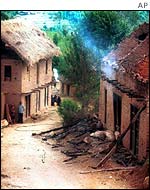
 The Maoist insurgency took advantage... to spread its wings across the country