
|
 |
 | | | | | |||||||||||||||||||||||||||||||||||||||
| | You are in: World: South Asia | |||||||||||||||||||||||||||||||||||||||||
 | | Thursday, 4 April, 2002, 09:13 GMT 10:13 UK Nepal eases emergency rules 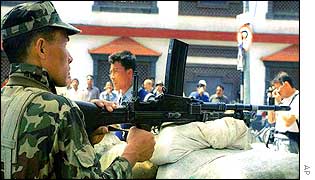 There could be more scope to report the conflict
The Nepalese monarch, King Gyanendra, has approved a set of directives that spell out details of the emergency regulations. Two of them allow slightly more scope for reporting by the media and for protest and public meetings by legal political parties. The state of emergency is aimed at quelling a violent Maoist rebellion that has claimed three thousand lives in the past six years. Amnesty report The new regulations were imposed as the human rights group, Amnesty International, issued a report strongly condemning both the Nepalese security forces and the Maoists for alleged human rights violations.
But in the past weeks, Amnesty and other groups have been harshly critical of the suspension of freedom of the press and the arrest of journalists in the months since the emergency was declared last November. Local human rights activists say around 100, some affiliated with now banned Maoist publications, have been arrested. Most, including a regional reporter for the BBC, were released after questioning. Lack of access Of more concern to human rights groups, aid donor countries and the press is the lack of access to areas where the security forces and the Maoists have been fighting and the almost total reliance on official statements from the government about casualties. There are many unconfirmed reports of civilians being hurt or killed by both sides or in cross fire but the authorities have yet to allow independent reporting from war zones. One editor said the new regulations might allow for such reporting but it was not clear. While the government has relaxed some restrictions, it still explicitly bans anything that might encourage the Maoists or lower moral in the security forces. A prominent Nepalese journalist commented there still appeared to be plenty of scope for officials to try to control reporting. | |
See also:  Internet links: The BBC is not responsible for the content of external internet sites Top South Asia stories now:  Links to more South Asia stories are at the foot of the page. | |||||||||||||||||||||||||||||||||||||||
|
Links to more South Asia stories |
 | | ^^ Back to top News Front Page | World | UK | UK Politics | Business | Sci/Tech | Health | Education | Entertainment | Talking Point | In Depth | AudioVideo ---------------------------------------------------------------------------------- To BBC Sport>> | To BBC Weather>> ---------------------------------------------------------------------------------- © MMIII|News Sources|Privacy  |




 E-mail this story to a friend