|
 |
 | | | | | | ||||||||||||||||||||||||||||||||||||||||||||||||||||||||||||||||||||||||||||||||||||||||||||||||||||||||||||||||||||||||||||||||||||||||||||||||||||||||||||||||||||||||||||||||||||||||||||||||||||||||||||||||||||||||||||||||
| | | You are in: Europe | ||||||||||||||||||||||||||||||||||||||||||||||||||||||||||||||||||||||||||||||||||||||||||||||||||||||||||||||||||||||||||||||||||||||||||||||||||||||||||||||||||||||||||||||||||||||||||||||||||||||||||||||||||||||||||||||||||
|
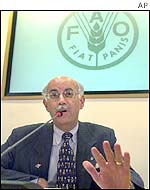
| | Tuesday, 11 June, 2002, 22:30 GMT 23:30 UK Hunger solution splits UN summit Most Western leaders are not attending the summit Leaders of developing countries at a United Nations food summit in Rome, Italy, have urged the European Union and the United States to remove farm subsidies and open their markets.
"We don't want charity, we want the chance to grow", said the Colombian President, Andres Pastrana. But the US sees the solution to the problem in greater use of genetically modified (GM) foods and biotechnology.
The meeting - hosted by the UN's Food and Agriculture Organisation (FAO) - is a follow-up to a summit five years ago which pledged to cut the number of people starving around the world by half by the year 2015. Only a fraction of this target has been reached so far and hopes that efforts to combat hunger would be revived have been undermined by the fact that only two leaders from Western nations - Spain and Italy - are attending the meeting. GM argument The US have brought to Rome the Nobel Peace Prize winner, Norman Borlaug, who laid the groundwork of the so-called Green Revolution in the 1960s.
He developed in Mexico varieties of grain that dramatically increased crop yields. His work has allowed many developing countries to become agriculturally self-sufficient. At a news conference at the summit, Mr Borlaug supported the US Government's argument that the new biotechnology, or GM crops, can help solve world hunger. Mr Borlaug's views were supported by a government minister from Nigeria, the most populous nation in Africa, speaking on behalf of President Olusegun Obasanjo. The Nigerian president avoided, however, declaring his unconditional support for the American proposals. Subsidy row The Americans are justifying their farm subsidies and urging more extensive use of biotechnology in agriculture as a way of producing more food of higher quality. But leaders of developing countries dismiss the American arguments as untrue.
Ugandan President Yoweri Museveni said African farmers needed to raise their sights beyond mere subsistence agriculture. In order to meet its aim of reducing the number of hungry people to 400 million by 2015, the FAO is seeking an additional $24bn a year in agricultural and rural investment. Since 1996, when the target was set, the number of hungry people has only dropped from 840 million to 815 million. To reach the target, the number has to decline by 22 million people each year, but the UN says the figure is dropping by only six million a year. | |
See also:  09 Jun 02 | Americas 08 Jun 02 | Africa 07 Jun 02 | Africa 17 May 02 | Africa 06 Jun 02 | Africa Internet links: The BBC is not responsible for the content of external internet sites Top Europe stories now: Links to more Europe stories are at the foot of the page. | ||||||||||||||||||||||||||||||||||||||||||||||||||||||||||||||||||||||||||||||||||||||||||||||||||||||||||||||||||||||||||||||||||||||||||||||||||||||||||||||||||||||||||||||||||||||||||||||||||||||||||||||||||||||||||||||||
| |
|  E-mail this story to a friend E-mail this story to a friend |
| |
| Links to more Europe stories |
| | | ||
 | ||||
 | | Back to top
| ||
| ---------------------------------------------------------------------------------- To BBC Sport>> | To BBC Weather>> | To BBC World Service>> ---------------------------------------------------------------------------------- © MMIII | News Sources | Privacy |