
|
 |
 | | | | | | |||||||||||||||||||||||||||||||||||||||||||||||||||||||||||||||||||||||||||||||||||||||||||||||||||||||||||||||||||||||||||||||||||||||||||||||||||||
| | | You are in: Business | |||||||||||||||||||||||||||||||||||||||||||||||||||||||||||||||||||||||||||||||||||||||||||||||||||||||||||||||||||||||||||||||||||||||||||||||||||||||
|
| | Thursday, 5 December, 2002, 08:02 GMT Pressure grows for eurozone rate cut 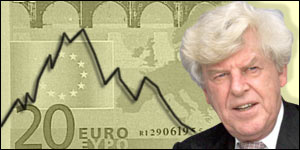
The European Central Bank (ECB) is coming under growing pressure ahead of its rate-setting meeting on Thursday to cut interest rates to help revive the flagging European economy. A decision is expected at 1245 GMT.
Now a leading group of academics says that the ECB should have cut interest rates nearly in half, from 3.25% to 1.85%, to boost growth. Professor David Begg, who becomes the head of the Imperial College Business School in April, says that the ECB has been much slower than the US central bank, the Federal Reserve, in reacting to a sharp slowdown in growth. He says that the ECB's excessive fear of inflation has meant that the bank was "dicing with disinflation in a time of recession - a dangerous business." An ECB rate cut is now widely expected after the bank's president, Wim Duisenberg, told the European Parliament that inflationary pressures were "easing" and that the risks "on the downside" of a further recession was increasing. Bank divided At its last meeting, the ECB's 18-member board could not agree whether or not to cut rates. The cumbersome decision-making body, which includes the central bank governors from all eurozone states, has been strongly influenced by the ECB's chief economist, Otmar Issing. Mr Issing, who formerly worked for the German central bank, the Bundesbank, is an inflation hawk. Earlier in the week, he was still warning that stagflation, not deflation was a greater threat to the eurozone. He argued that only structural reform by EU countries of their rigid labour markets and swollen budget deficits could bring prosperity. Pact under attack The growing budget deficits in some of the biggest countries in the eurozone, including Germany and France is causing concern. While the ECB fears that spending increases involved could be inflationary, politicians, executives and academics are calling for a modification of the Stability and Growth Pact, which limits eurozone countries to a maximum budget deficit equivalent to 3% of GDP. The deal was put in place - at the insistence of Germany - when the euro was launched in 1999. It was designed to prevent countries getting around strict controls on inflation that the ECB, in setting interest rates across the eurozone, was tasked to enforce. But now critics - including the president of the European Commission, Romano Prodi - say the pact is inhibiting a European recovery. Centre for Economic Policy Research academics, led by David Begg, have suggested that the pact should be made less rigid, with an independent body of experts deciding whether a country's deficit was due to recession or structural factors such as overspending on the pensions system. This would mean countries would be allowed to run bigger deficits in a recession - helping the recovery - but would have to keep a tighter control of spending during the boom years. It is similar to the system operated in the UK, where Chancellor Gordon Brown has promised not to run a budget deficit over the whole economic cycle - but not in any one particular year. Call for reform The European Commission has suggested a different set of changes to the pact. The key proposal involves allowing countries in a sound overall financial position to run bigger deficits to fund long-term spending, but also introduces new disciplinary measures applying to cut overall public debt. The plans have been backed by the ECB's Wim Duisenberg, who says they represent a "good starting point for rebuilding confidence." The proposals would give more leeway to countries that have low debt to borrow to finance investment or reforms. But there would also stricter action, with fines as the ultimate sanction, against countries which did not make enough progress in cutting debt. The UK would benefit from such a system if it were a member of the eurozone, as its public debt (at 30% of GDP) is the lowest in Europe. Professor Begg also favours the use of debt as well as deficit ceilings - but he warns that the measurement of public debt is fraught with difficulties, and open to fudging of the figures. | | See also:  04 Dec 02 | Business 04 Dec 02 | Business 26 Nov 02 | Business 20 Nov 02 | Business 19 Nov 02 | Business 21 Oct 02 | Business Internet links: The BBC is not responsible for the content of external internet sites Top Business stories now: Links to more Business stories are at the foot of the page. | |||||||||||||||||||||||||||||||||||||||||||||||||||||||||||||||||||||||||||||||||||||||||||||||||||||||||||||||||||||||||||||||||||||||||||||||||||||
| |
|  E-mail this story to a friend E-mail this story to a friend |
| |
| Links to more Business stories |
| | | ||
 | ||||
 | | Back to top
| ||
| ---------------------------------------------------------------------------------- To BBC Sport>> | To BBC Weather>> | To BBC World Service>> ---------------------------------------------------------------------------------- © MMIII | News Sources | Privacy |






