
|
 |
 | | | | | | ||||||||||||||||||||||||||||||||||||||||||||||||||||||||||||||||||||||||||||||||||||||||||||||||||||||||||||||||||||||||||||||||||||||||||||||
| | | You are in: Business | ||||||||||||||||||||||||||||||||||||||||||||||||||||||||||||||||||||||||||||||||||||||||||||||||||||||||||||||||||||||||||||||||||||||||||||||||
|
| | Tuesday, 19 November, 2002, 14:40 GMT Budget sanctions hit Germany and France 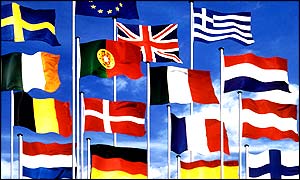 Excessive deficits could threaten the stability of the eurozone The European Commission has said it will initiate sanctions procedures against Germany and France because their budget deficits are rising too fast. In essence, the Commission is criticising the countries for borrowing excessively in order to spend, thereby leaving large debts which must be paid back in the future.
Both countries have pledged to improve and voiced strong support for the stability and growth pact - set up alongside introduction of the euro - which stipulates the upper limit. 'Damaging consequences' "If we're going to have a single currency, if we're going to abide by the system that we've adopted for ourselves, we must be consistent," said EU economic and monetary affairs commissioner Pedro Solbes. He called on eurozone finance ministers to do their duty vis-a-vis reining in deficits "otherwise we'll be shooting ourselves in the foot and this will have very damaging consequences for us all".
Germany's economics and labour minister, Wolfgang Clement, said the country recognised the need for the pact and its aims. French economy minister Francis Mer said: "It is critical that we realize that we cannot continue to act collectively in increasing, year after year, the indebtedness that we leave to our children." Threat Last week, the Commission predicted that Germany's deficit would reach 3.8% of gross domestic product (GDP) this year and fall to 3.1% next year. France's situation is somewhat better. The Commission expected that the French deficit would reach 2.7% this year and rise to 2.9% next year, just below the 3% limit. European Union member states are concerned that excessive deficits could threaten the stability of the eurozone. So in 1997, member countries agreed to the pact in order to make sure the zone's economies keep in step with each other. Under the pact, deficits should not rise above 3% of gross domestic product (GDP). Order Under the Commission's Excessive Deficit Procedure, which Germany is facing, a report about the country's deficit will be presented to the European Union's Economic and Financial Committee. Germany will then be told by the Committee to "take effective action". If this is not done, sanctions could be imposed. Disgruntlement The Commission's sanctions procedure was first used earlier this year when Portugal was reprimanded for its ballooning deficit. But, overall, the Commission is loath to use it unless it has to. In recent months, moves have been made in Brussels to relax budget rules to give member countries more freedom to fuel economic growth with public investment. Several European Union member states have been angered by what they see as the Commission's meddling with their national spending plans. | | See also:  13 Nov 02 | Business 10 Nov 02 | Business 17 Oct 02 | Business 02 Sep 02 | Business 26 Jul 02 | Business 10 Jul 02 | Business 12 Feb 02 | Business 12 Feb 02 | Business Internet links: The BBC is not responsible for the content of external internet sites Top Business stories now: Links to more Business stories are at the foot of the page. | ||||||||||||||||||||||||||||||||||||||||||||||||||||||||||||||||||||||||||||||||||||||||||||||||||||||||||||||||||||||||||||||||||||||||||||||
| |
|  E-mail this story to a friend E-mail this story to a friend |
| |
| Links to more Business stories |
| | | ||
 | ||||
 | | Back to top
| ||
| ---------------------------------------------------------------------------------- To BBC Sport>> | To BBC Weather>> | To BBC World Service>> ---------------------------------------------------------------------------------- © MMIII | News Sources | Privacy |





