|
 |
 | | | | | | ||||||||||||||||||||||||||||||||||||||||||||||||||||||||||||||||||||||||||||||||||||||||||||||||||||||||||||||||||||||||||||||||||||||||||||
| | | You are in: Business | ||||||||||||||||||||||||||||||||||||||||||||||||||||||||||||||||||||||||||||||||||||||||||||||||||||||||||||||||||||||||||||||||||||||||||||||
|
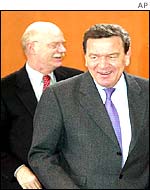
| | Wednesday, 4 December, 2002, 15:55 GMT Germany slashes defence spending 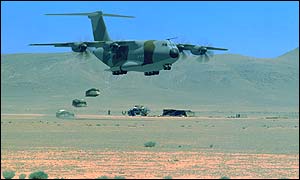 The A400M deal was one of the biggest in recent history The cash-strapped German Government is sharply reducing one of the biggest defence orders in recent history. Defence Minister Peter Struck told parliament that that Germany will be buying far fewer Airbus military transport planes and missiles than it previously intended. The defence ministry has been allowed no increase in its budget for 2003, and needs to trim back its investment plans. The government is casting around for ways to reduce spending, as its budget deficit is likely to breach European Union rules this year and in 2003. By cutting defence spending, the government hopes, there may be less need to raise taxes, a highly unpopular move. Order disorder The biggest cut - leaked widely to the German press - is in an order for 73 Airbus A400M transport planes, which is to be reduced to 60 aircraft.
Germany's order was never formally ratified by parliament, and so is easily junked. At the same time, a German order to some 1,400 Meteor missiles is being cut by two-thirds. Fighter foiled? Previous reports that Mr Struck may attempt to cut back on Germany's order of 180 Eurofighters have not yet been confirmed. Mr Struck is due to elaborate on the cuts at a press conference on Thursday. The Eurofighter, a plane put together by a consortium of BAE Systems, France's EADS and Indra Espania, is a cornerstone of the European defence industry. Nor is there confirmation of reported reduction to Germany's order for 3,000 GTK armoured vehicles, intended to replace Germany's ageing fleet. On its own The news may rile Germany's strategic allies, which have come to rely on German muscle in international operations since the Kosovo campaign.
Germany has already said it will not participate in any war on Iraq, but its commitment to various international initiatives - including the European Union's planned 60,000-strong rapid reaction force - could be hampered by any decline in investment. Both France and Britain are currently increasing defence spending, making Germany even more isolated. But Chancellor Gerhard Schroeder's government has little choice but to cut expenditure in some way, given the strong opposition to tax hikes. On Wednesday, Mr Schroeder committed himself to blocking any increases in value-added tax, or to a wealth tax planned by some states. | | See also:  02 Dec 02 | Business 20 Nov 02 | Business 19 Nov 02 | Business 18 Nov 02 | Business 13 Nov 02 | Business 29 Oct 02 | Business 17 Oct 02 | Business 20 Mar 02 | Business Internet links: The BBC is not responsible for the content of external internet sites Top Business stories now: Links to more Business stories are at the foot of the page. | ||||||||||||||||||||||||||||||||||||||||||||||||||||||||||||||||||||||||||||||||||||||||||||||||||||||||||||||||||||||||||||||||||||||||||||
| |
|  E-mail this story to a friend E-mail this story to a friend |
| |
| Links to more Business stories |
| | | ||
 | ||||
 | | Back to top
| ||
| ---------------------------------------------------------------------------------- To BBC Sport>> | To BBC Weather>> | To BBC World Service>> ---------------------------------------------------------------------------------- © MMIII | News Sources | Privacy |