|
 |
 | | | | | | ||||||||||||||||||||||||||||||||||||||||||||||||||||||||||||||||||||||||||||||||||||||||||||||||||||||||||||||||||||||||||||||||||||||||||||||||||||||||||||||||||||||||||||
| | | You are in: Asia-Pacific | ||||||||||||||||||||||||||||||||||||||||||||||||||||||||||||||||||||||||||||||||||||||||||||||||||||||||||||||||||||||||||||||||||||||||||||||||||||||||||||||||||||||||||||||
|
| | Monday, 18 November, 2002, 14:16 GMT N Korean nuclear 'admission' in doubt 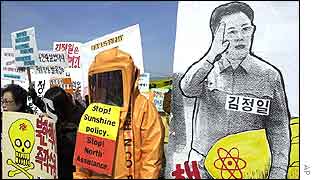 The alleged weapons programme has shocked the world South Korea has cast doubt on a North Korean radio transmission that appeared to acknowledge for the first time that the country has nuclear weapons. South Korean officials said the radio announcer's key phrase could have been spoken in error or a verb may have been misheard by monitors, leading to the statement being misinterpreted.
That view appeared to be backed up on Monday when a new transmission changed the wording of the key phrase to say that North Korea was merely "entitled" to own nuclear weapons. North Korea is widely believed to possess enough nuclear materials to make a small number of bombs, but in the past it has always refused to confirm or deny this.
Last week, Washington and its allies agreed to halt fuel oil to North Korea, arguing that Pyongyang's admission constituted a breach of a 1994 pact under which it agreed to freeze its nuclear programme in return for aid. Russia's foreign ministry has added its voice to mounting worries about North Korea, expressing "serious concerns" about the "contradictory" messages coming from Pyongyang. The North Korean broadcast on Sunday said that the country had "come to have powerful military countermeasures, including nuclear weapons, in order to defend our sovereignty and right to existence". But the South Korean news agency, Yonhap, quoted a unification ministry official as saying that the North Korean announcer's accent had confused Southern listeners monitoring the broadcast. Only one syllable turned "is entitled to have" (kajige tui-o-itta) into "has come to have" (kajige tui-otta), the official explained.
BBC Monitoring said four of its monitors had double-checked the disputed passage and were confident there was no missing syllable. Brinkmanship? North Korea's official media often contains hostile rhetoric when the country's leadership is actually in an apparent process of engagement with the outside world. Sunday's broadcast also repeated Pyongyang's demands that the US must sign a non-aggression pact, insisting it was the only way to resolve the nuclear issue. The timing of the broadcast fits in with a pattern of North Korean "confession", according to Michael Yahuda, professor of International Relations at the London School of Economics and Political Science. He told BBC News Online, it appeared they wanted to clear the way for talks. "The US is threatening and, by responding, Pyongyang is sending out a message: 'We have nuclear weapons as well, so lets find a way to negotiation'," he said. North Korea followed Sunday's controversial broadcast with a repeated threat on Monday to end its moratorium on missile testing if Japan continues to push for development of a missile defence system with the US. | |
See also:  21 Oct 02 | Asia-Pacific 21 Oct 02 | Americas 16 Nov 02 | Asia-Pacific Internet links: The BBC is not responsible for the content of external internet sites Top Asia-Pacific stories now: Links to more Asia-Pacific stories are at the foot of the page. | ||||||||||||||||||||||||||||||||||||||||||||||||||||||||||||||||||||||||||||||||||||||||||||||||||||||||||||||||||||||||||||||||||||||||||||||||||||||||||||||||||||||||||||
| |
|  E-mail this story to a friend E-mail this story to a friend |
| |
| Links to more Asia-Pacific stories |
| | | ||
 | ||||
 | | Back to top
| ||
| ---------------------------------------------------------------------------------- To BBC Sport>> | To BBC Weather>> | To BBC World Service>> ---------------------------------------------------------------------------------- © MMIII | News Sources | Privacy |