|
 |
 | | | | | | ||||||||||||||||||||||||||||||||||||||||||||||||||||||||||||||||||||||||||||||||||||||||||||||||||||||||||||||||||||||||||||||||||||||||||||||||||||||||||||||||||||||||||||||||||
| | | You are in: Asia-Pacific | ||||||||||||||||||||||||||||||||||||||||||||||||||||||||||||||||||||||||||||||||||||||||||||||||||||||||||||||||||||||||||||||||||||||||||||||||||||||||||||||||||||||||||||||||||||
|
| | Saturday, 7 September, 2002, 21:18 GMT 22:18 UK High emotions in Korea's football stands 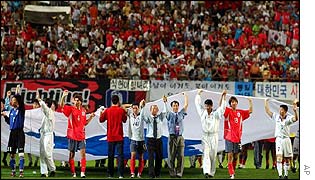 The match conveniently ended in a goalless draw
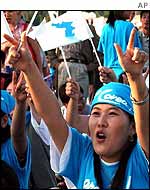
The scenes outside Seoul's World Cup stadium for the inter-Korean football match were almost a replay of the excitement in South Korea in June, when it created history by becoming the first Asian side to reach the World Cup semi-finals. Thousands began arriving at the stadium hours before the event - dubbed the Reunification Games. The stall holders were there - selling plastic trumpets, flags and t-shirts. The face-painting stalls had long queues. But this time, there was a difference. Fresh hopes Instead of the sea of red - the colour of the T-shirts worn of the national supporters club, the Red Devils, many were wearing sky blue T-shirts. This was the colour of the joint flag that the footballers would be using as they entered the stadium, showing a united Korea. Many had the words: One Corea, printed on it. The country's name is spelt with a "C" in footballing circles, following the World Cup, because of Fifa's French origins. "Both North and South Korea have gone through a lot of tension and trouble. By having this match, we can show North Korea that it can bring positive effects", said Kim Si Yang, head of a cheering group for North Korea.
"We hope the two Koreas will eventually become one. That's why we have these shirts." "I don't care who wins. This is just a good chance for Koreans to come together," she said. No national anthems But not everyone was happy. Elderly war veterans draped in banners of the South Korean flag, the Taegukki, were handing out paper flags to passers-by. "I came here to hand out the South Korean flag. We are veterans who fought in the Korean War. We are two different countries. We are against using a united flag when we have a flag of our own," said 76-year-old Lee Kee Ha. "I'm not against the match itself," he said. "But we should raise our own flag." The authorities, though, were hoping to keep politics away from the football pitch. The two Korean teams walked onto the pitch carrying the flag of a united Korea, with the traditional Korean folk song, Arirang, playing out - instead of national anthems. Flying the North Korean flag or singing its national anthem are banned under the South's strict anti-Communist National Security law. By design? One man in the audience was watching the game with mixed emotions.
"It's regrettable that I can't be the head coach for either side. I can't lead either side, the North or the South now. In 1990, I came to Seoul bringing the North Korean side to play its friendly. "But despite my personal regrets, I think this is a good idea, for the two sides to play together. Whoever wins or loses isn't so important. This is a friendly match." That was also the view of most of the spectators in the near-capacity crowd. "No matter which side wins, we're one nation," read one banner in the stadium. Despite a strong South Korean team which included six World Cup stars, the match ended in a goalless draw. Coincidence, or design? It may have been a politically-engineered result, but it underlined the feeling of most attending this game that all Koreans emerged as winners from this milestone event. It's hoped that this match will mark the start of a series of more sports exchanges between the two Koreas. Despite their ideological differences, football can act as a bridge - helping the people from North and South Korea put politics aside and unite as one. | |
See also:  05 Sep 02 | Asia-Pacific 05 Sep 02 | Asia-Pacific 07 Feb 02 | Asia-Pacific 09 Feb 02 | Asia-Pacific 19 Jul 02 | Country profiles 22 Jul 02 | Country profiles 07 Sep 02 | Asia-Pacific Internet links: The BBC is not responsible for the content of external internet sites Top Asia-Pacific stories now: Links to more Asia-Pacific stories are at the foot of the page. | ||||||||||||||||||||||||||||||||||||||||||||||||||||||||||||||||||||||||||||||||||||||||||||||||||||||||||||||||||||||||||||||||||||||||||||||||||||||||||||||||||||||||||||||||||
| |
|  E-mail this story to a friend E-mail this story to a friend |
| |
| Links to more Asia-Pacific stories |
| | | ||
 | ||||
 | | Back to top
| ||
| ---------------------------------------------------------------------------------- To BBC Sport>> | To BBC Weather>> | To BBC World Service>> ---------------------------------------------------------------------------------- © MMIII | News Sources | Privacy |