|
 |
 | | | | | | ||||||||||||||||||||||||||||||||||||||||||||||||||||||||||||||||||||||||||||||||||||||||||||||||||||||||||||||||||||||||||||||||||||||||||||||||||||||||||||||||||||||||||||||||||||||||||||||||||||||||||||
| | | You are in: Asia-Pacific | ||||||||||||||||||||||||||||||||||||||||||||||||||||||||||||||||||||||||||||||||||||||||||||||||||||||||||||||||||||||||||||||||||||||||||||||||||||||||||||||||||||||||||||||||||||||||||||||||||||||||||||||
|
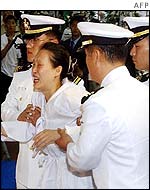
| | Tuesday, 2 July, 2002, 08:54 GMT 09:54 UK S Korea demands apology from North A South Korean boat was sunk in the incident South Korean President Kim Dae-jung has demanded that North Korea apologise for the "provocation" that sparked a naval battle that killed four South Korean sailors. "We cannot contain our anger at the provocation," he told reporters on his return from a trip to Japan.
It was the worst maritime clash between the two sides for three years. There is growing anger in South Korea over the battle, which left a fifth sailor missing and injured 19 others. "We strongly demand an apology, the punishment of those responsible and steps to prevent it from happening again," said Mr Kim. North Korea has blamed both South Korea and the United States for the incident. 'Armed provocation' A North Korean foreign ministry statement said the US was trying to "drive a wedge" between the two Koreas, and must have known what was happening because of its close links with the South Korean military. A State Department spokesman in Washington dismissed the claim.
"We are examining the situation in the aftermath of this incident," he told French news agency AFP. State Department spokesman Richard Boucher demanded an explanation from North Korea for what he called an "armed provocation".
North Korea had earlier accused the South of trying to "orchestrate a shocking incident". The Koreas remain technically at war as the 1950-53 Korean War ended in a truce, not a peace treaty. But in recent year efforts have been made at reconciliation, including a series of organised reunions of families split up by the North-South divide. The 20-minute sea battle took place on the border unilaterally imposed by the United Nations after the war, and which the North does not recognise. Both sides say the other side fired first, although South Korean says it broadcast warnings before opening fire, in line with battle rules adopted by President Kim Dae-jung to try to prevent all-out war. South Korea's Defence Minister, Kim Dong-shin, on Monday proposed changing the rules of engagement to allow southern forces to fire first. | |
See also:  30 Jun 02 | Media reports 30 Jun 02 | Asia-Pacific 29 Jun 02 | Asia-Pacific 07 May 02 | Asia-Pacific 29 Jun 02 | Media reports Internet links: The BBC is not responsible for the content of external internet sites Top Asia-Pacific stories now: Links to more Asia-Pacific stories are at the foot of the page. | ||||||||||||||||||||||||||||||||||||||||||||||||||||||||||||||||||||||||||||||||||||||||||||||||||||||||||||||||||||||||||||||||||||||||||||||||||||||||||||||||||||||||||||||||||||||||||||||||||||||||||||
| |
|  E-mail this story to a friend E-mail this story to a friend |
| |
| Links to more Asia-Pacific stories |
| | | ||
 | ||||
 | | Back to top
| ||
| ---------------------------------------------------------------------------------- To BBC Sport>> | To BBC Weather>> | To BBC World Service>> ---------------------------------------------------------------------------------- © MMIII | News Sources | Privacy |