|
 |
 | | | | | | |||||||||||||||||||||||||||||||||||||||||||||||||||||||||||||||||||||||||||||||||||||||||||||||||||||||||||||||||||||||||||||||||||||||||||||||||||||||||||||||||||||||||||||||||||||||||||||||
| | | You are in: Americas | |||||||||||||||||||||||||||||||||||||||||||||||||||||||||||||||||||||||||||||||||||||||||||||||||||||||||||||||||||||||||||||||||||||||||||||||||||||||||||||||||||||||||||||||||||||||||||||||||
|
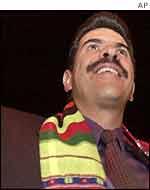
| | Monday, 1 July, 2002, 10:24 GMT 11:24 UK Bolivian election too close to call Bolivia is one of Latin America's poorest countries A former army captain and a right-wing ex-president are vying for the lead in Bolivia's presidential election, exit polls show. Former president Gonzalo Sanchez de Lozada declared himself the winner after three exit polls showed him leading with between 21.7% and 23% of the vote.
Since no candidate was near the 50% needed to win outright, the fate of the presidency is almost certain to be decided by the 157 members of Congress in time for the 6 August inauguration. First official counts are expected to trickle out early on Monday, but the final tally may not be known for several days. Policy shift The BBC's correspondent Peter Greste says that whoever wins, Bolivia is likely to move away from free market policies - which have so far failed to improve its position as one of the poorest countries in Latin America. Mr Reyes Villa, the former mayor of Cochabamba city, has been promising "no more of the same". That is a reference to the International Monetary Fund-inspired economic policies of the past two decades.
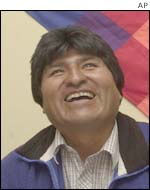
Whoever wins will probably need to form an alliance with other anti-IMF candidates like the leader of a group of coca-growers, Evo Morales. He too has been calling for the protection of local industries, a revival of traditional coca production and an end to US-backed market reforms. Mr Morales, an Andean Indian who has previously led violent protests against US-led coca eradication programmes, is apparently place. He and former president Jaime Paz Zamora were estimated to have 16% of the vote each. Mr Morales is likely to have benefited from public frustration with what many Bolivians see as foreign interference in their country. His campaign received a healthy boost when the US ambassador in Bolivia, Manuel Rocha, recently warned that Washington could cut off aid if Bolivians chose candidates like Mr Morales. But even if Mr Morales is left out of the post-election horse trading, the new president will almost certainly have to take account of the popular swing away from free market economics and towards greater protectionism. | |
See also:  28 Jun 02 | Americas 29 Jun 02 | Americas 21 Jun 01 | Business 20 Dec 00 | Americas 05 May 02 | Americas 28 Mar 02 | Country profiles Internet links: The BBC is not responsible for the content of external internet sites Top Americas stories now: Links to more Americas stories are at the foot of the page. | |||||||||||||||||||||||||||||||||||||||||||||||||||||||||||||||||||||||||||||||||||||||||||||||||||||||||||||||||||||||||||||||||||||||||||||||||||||||||||||||||||||||||||||||||||||||||||||||
| |
|  E-mail this story to a friend E-mail this story to a friend |
| |
| Links to more Americas stories |
| | | ||
 | ||||
 | | Back to top
| ||
| ---------------------------------------------------------------------------------- To BBC Sport>> | To BBC Weather>> | To BBC World Service>> ---------------------------------------------------------------------------------- © MMIII | News Sources | Privacy |